Chen Zhitao, Lin Xiaohong, Chen Chuanbao, Chen Yinghua, Zhao Qiang, Wu Linwei, Wang Dongping, Ma Yi, Ju Weiqiang, Chen Maogen, He Xiaoshun
Organ Transplant Center, First Affiliated Hospital of Sun Yat-sen University, Guangzhou, China.
Guangdong Provincial Key Laboratory of Organ Donation and Transplant Immunology, Guangzhou, China.
Ann Transl Med. 2020 Sep;8(17):1067. doi: 10.21037/atm-20-2751.
Liver transplantation (LT) is an effective option for hepatocellular carcinoma (HCC) and end-stage liver cirrhosis. However, organ shortage and tumor recurrence are the main obstacles limiting its popularization and application in HCC patients. Testing for circulating tumor cells (CTCs) would be a valuable strategy to predict the recurrence and metastasis of HCC after LT. Various CTCs detection methods have different advantages and disadvantages. This study aims to investigate the predictive value of testing for CTCs based on immunofluorescence in situ hybridization of peripheral blood cells in patients with HCC after LT.
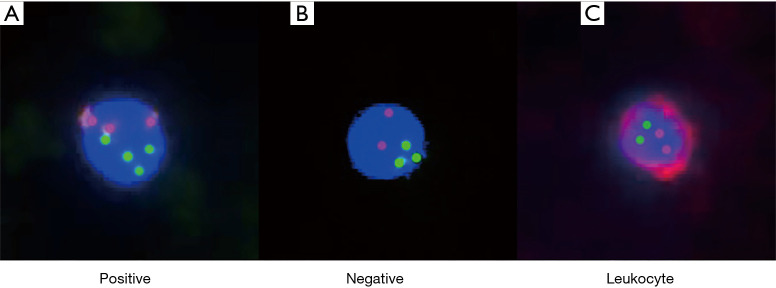
A total of 50 patients who received testing for CTCs and then underwent LT were enrolled in this study. Negative enrichment and immunofluorescence in situ hybridization (imFISH) methods were introduced to detect CTCs.
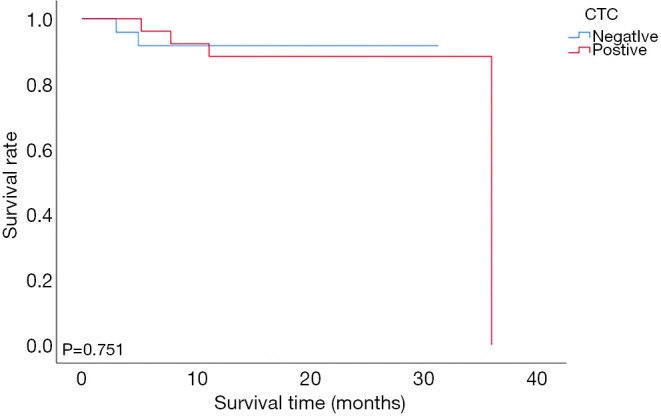
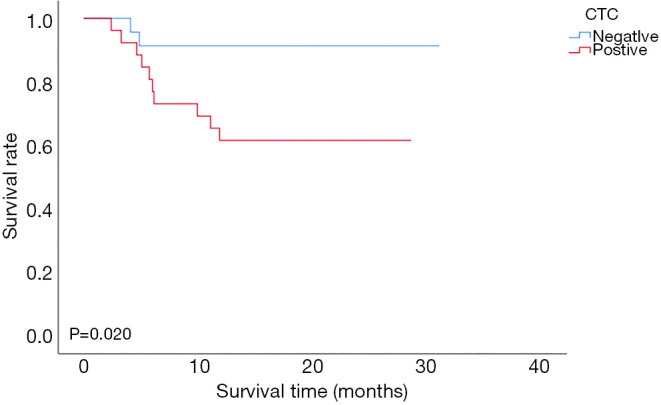
Twenty-six (52%) patients were CTC-positive, and 24 (48%) patients were CTC-negative. The results showed that CTCs result was correlated with tumor size (ꭓ=5.773, P=0.016), AFP level (ꭓ=5.454, P=0.020), tumor grade (ꭓ=6.478, P=0.039) and Recurrence(ꭓ=6.211, P=0.013).Twelve patients had recurrence after LT within one year. The results showed that the CTCs result (P=0.034) was the only independent factor impacting long-term survival. The 1-year disease-free survival rates of CTC-negative and CTC-positive patients were 91.6% and 61.5%, respectively (P=0.020). The 1-year overall survival of CTC-positive patients and CTC-negative was 88.5% and 91.7%, respectively (P=0.751).
CTCs result was closely related to the early recurrence of patients with HCC after LT. CTC-positive patients had a worse prognosis after LT than the CTC-negative group.
肝移植(LT)是肝细胞癌(HCC)和终末期肝硬化的有效治疗选择。然而,器官短缺和肿瘤复发是限制其在HCC患者中推广应用的主要障碍。检测循环肿瘤细胞(CTC)将是预测LT术后HCC复发和转移的一种有价值的策略。各种CTC检测方法各有优缺点。本研究旨在探讨基于外周血细胞免疫荧光原位杂交检测CTC对LT术后HCC患者的预测价值。
本研究共纳入50例接受CTC检测后行LT的患者。采用阴性富集和免疫荧光原位杂交(imFISH)方法检测CTC。
26例(52%)患者CTC阳性,24例(48%)患者CTC阴性。结果显示,CTC结果与肿瘤大小(χ=5.773,P=0.016)、甲胎蛋白水平(χ=5.454,P=0.020)、肿瘤分级(χ=6.478,P=0.039)和复发(χ=6.211,P=0.013)相关。12例患者LT术后1年内复发。结果显示,CTC结果(P=0.034)是影响长期生存的唯一独立因素。CTC阴性和阳性患者的1年无病生存率分别为91.6%和61.5%(P=0.020)。CTC阳性和阴性患者的1年总生存率分别为88.5%和91.7%(P=0.751)。
CTC结果与LT术后HCC患者的早期复发密切相关。LT术后CTC阳性患者的预后较CTC阴性组差。