Universidade Estadual de Londrina, Londrina, PR, Brazil.
Rev Paul Pediatr. 2020 Oct 28;39:e2020005. doi: 10.1590/1984-0462/2021/39/2020005. eCollection 2020.
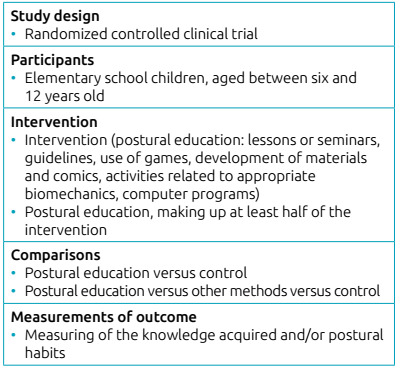
To determine the effect of postural education on the learning and postural habits of elementary school children without physical intervention.
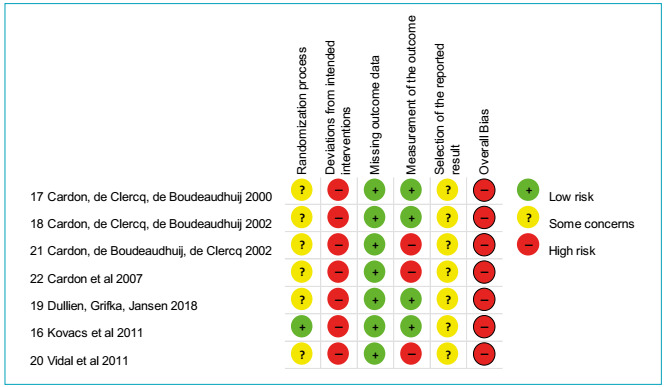
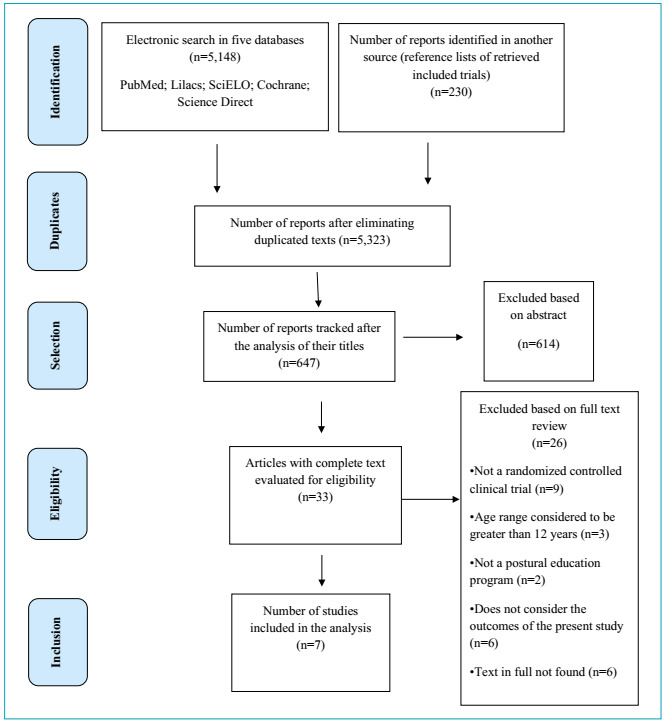
We searched PubMed, Lilacs, SciELO, Cochrane, and Science Direct data bases and reference lists of studies in February 2020. The eligibility criteria were randomized clinical trials related to the effect of postural education in children aged between 6 and 12 years old. Two authors independently assessed trials for inclusion and risk of bias: randomization process, deviations from intended interventions, missing outcome data, measurement of the outcome, and selection of the reported result. Data were extracted in standardized tables including information on author, publication year, country, sample size, age, sex, intervention characteristics, outcome measurements and results.
We found seven clinical trials (involving 2,568 children) for the review. The studies were conducted between 2000 and 2018: four in Belgium, two in Spain, and one in Germany. All seven included trials underwent evaluation: only one had a clear process of randomization and allocation concealment. All included studies were judged as having high risk of bias in at least one domain or have concerns for multiple domains.
The positive effects of acquired knowledge and postural habits found in the studies cannot be used to reliably support postural education in elementary school children due to a high risk of bias in the evaluated studies.
在没有身体干预的情况下,确定姿势教育对小学生学习和姿势习惯的影响。
我们于 2020 年 2 月检索了 PubMed、Lilacs、SciELO、Cochrane 和 Science Direct 数据库以及研究的参考文献列表。纳入标准为与 6 至 12 岁儿童姿势教育效果相关的随机临床试验。两名作者独立评估试验的纳入和偏倚风险:随机化过程、与预期干预措施的偏差、缺失的结局数据、结局测量和选择报告的结果。数据以标准化表格提取,包括作者、出版年份、国家、样本量、年龄、性别、干预措施特征、结局测量和结果的信息。
我们共发现 7 项临床研究(涉及 2568 名儿童)进行了综述。这些研究于 2000 年至 2018 年期间进行:4 项在比利时,2 项在西班牙,1 项在德国。所有 7 项纳入的试验均经过评估:仅有 1 项具有明确的随机化和分配隐藏过程。所有纳入的研究均在至少一个领域或在多个领域存在偏倚风险。
由于评估研究中的偏倚风险较高,因此研究中发现的获得的知识和姿势习惯的积极影响不能可靠地支持小学生的姿势教育。