Liu Ning, Guo Ningning, Sun Lin, Liu Shixian, Wang Guan, Zhao Yuan
Henan Key Laboratory of Polyoxometalate Chemistry, Institute of Molecular and Crystal Engineering, College of Chemistry and Chemical Engineering, Henan University, Kaifeng, Henan, China.
The Key Laboratory of Natural Medicine and Immuno-Engineering, Henan University, Kaifeng, Henan, China.
Nanoscale Res Lett. 2020 Nov 4;15(1):205. doi: 10.1186/s11671-020-03431-9.
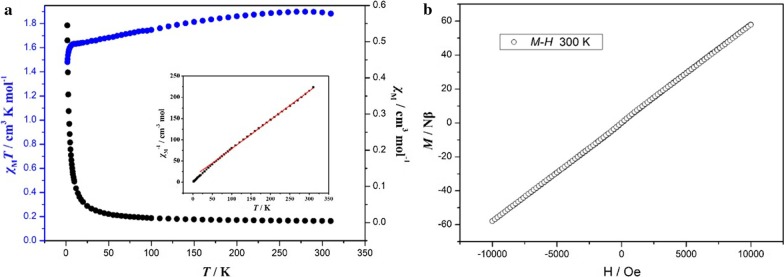
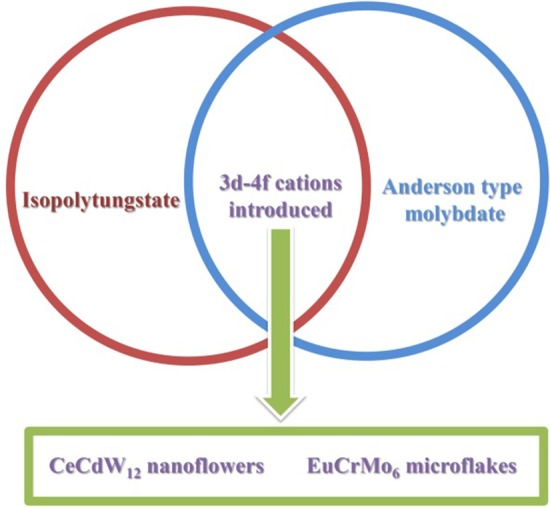
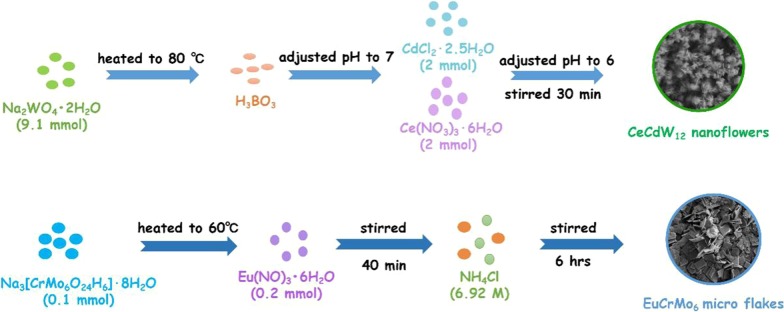
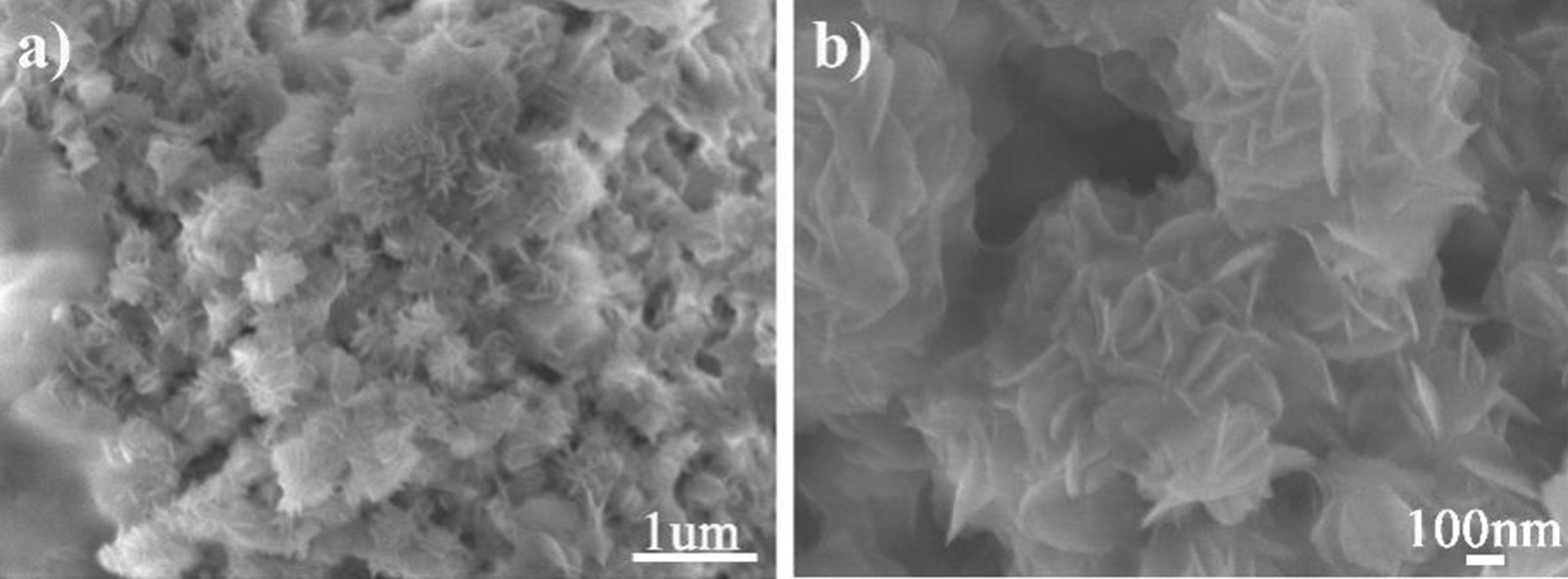
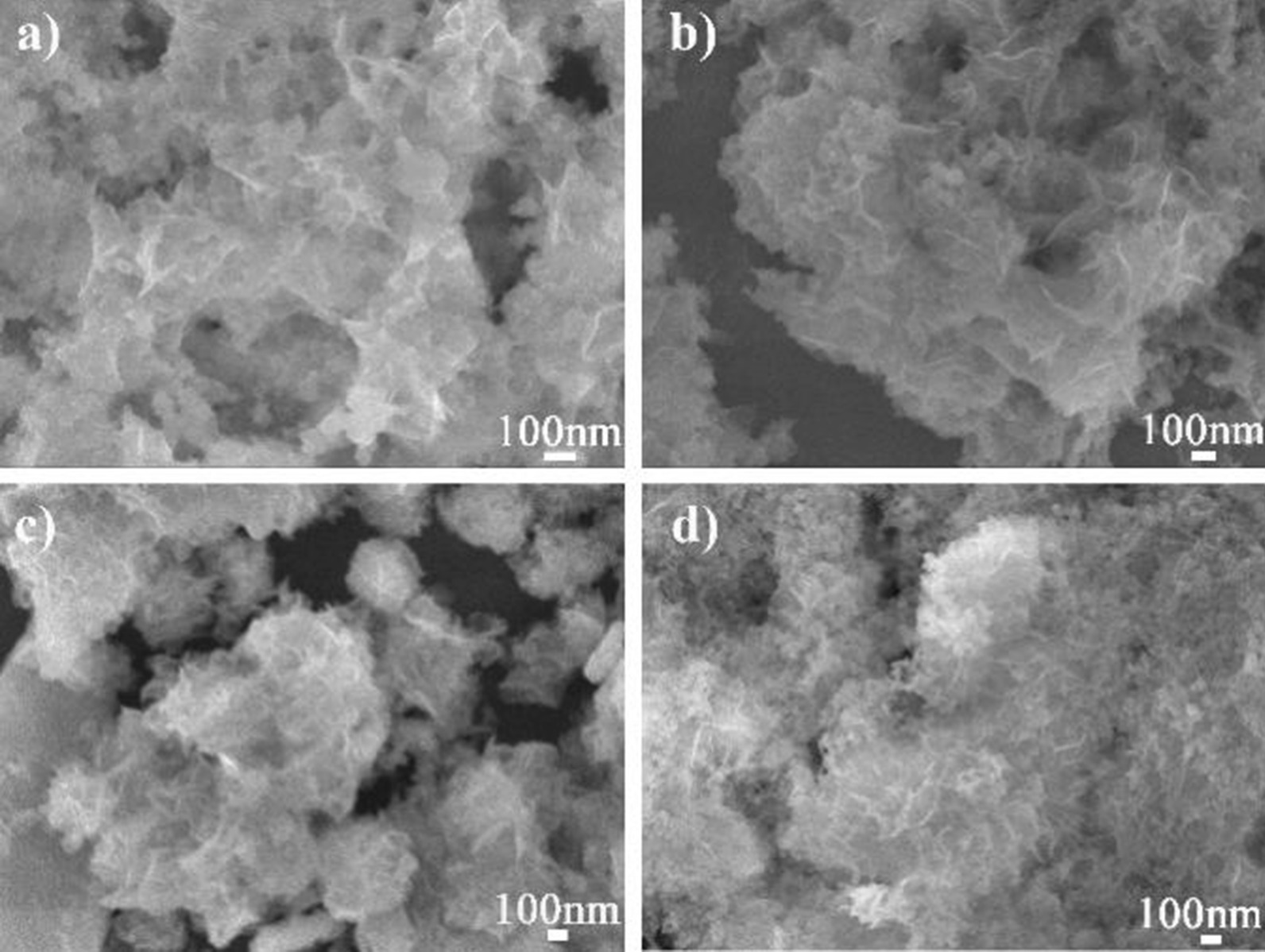
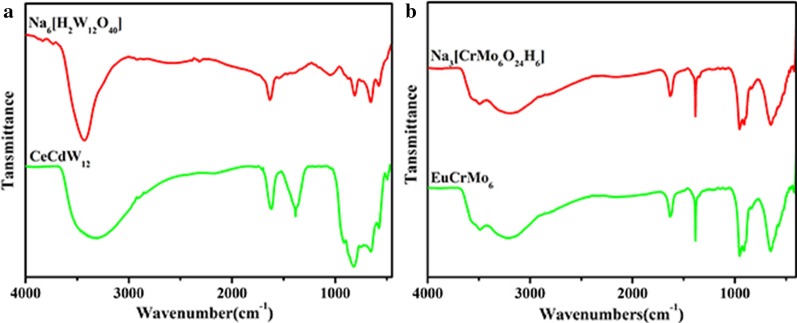
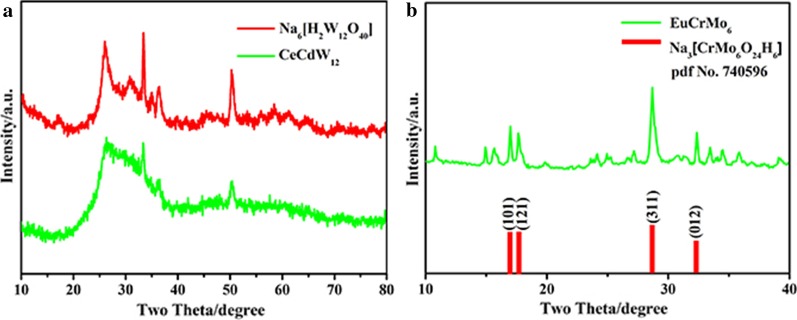
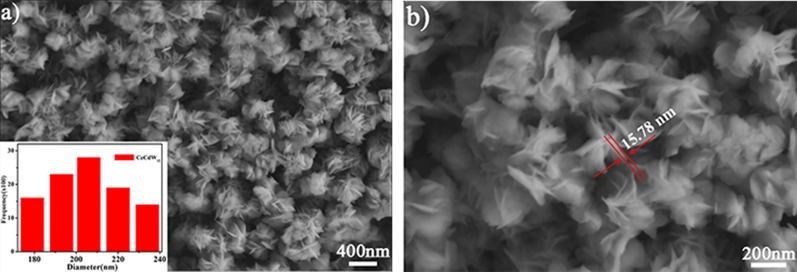
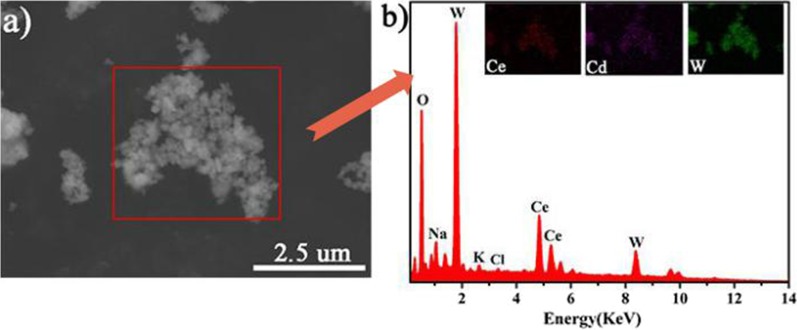
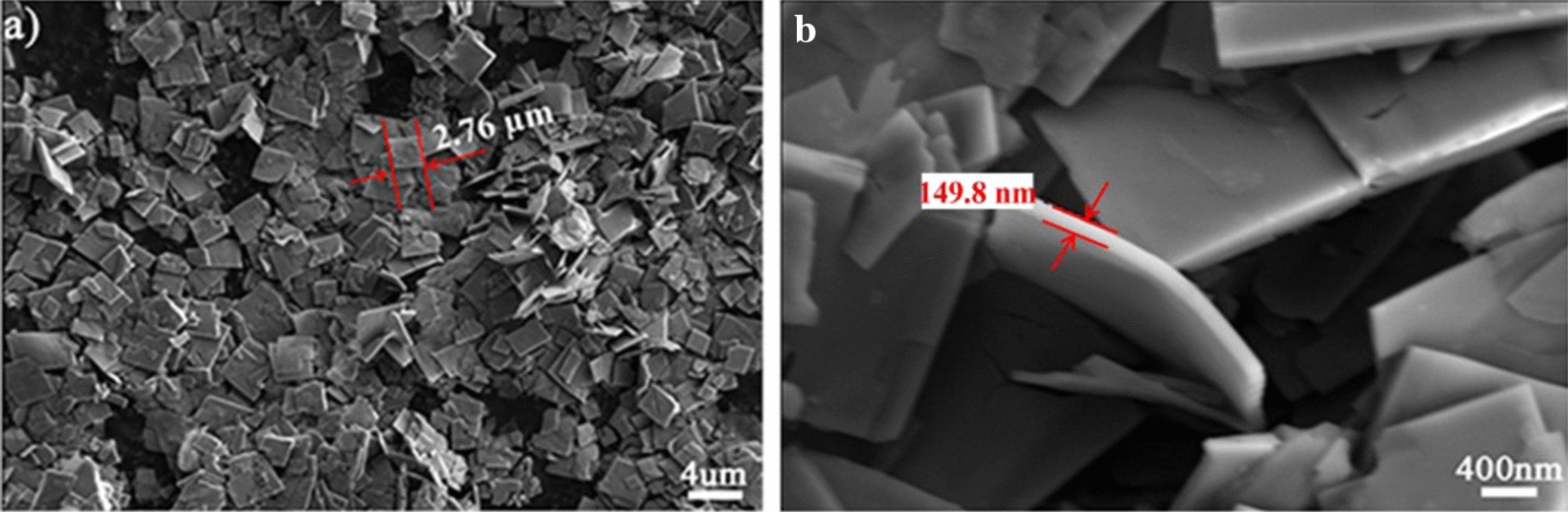
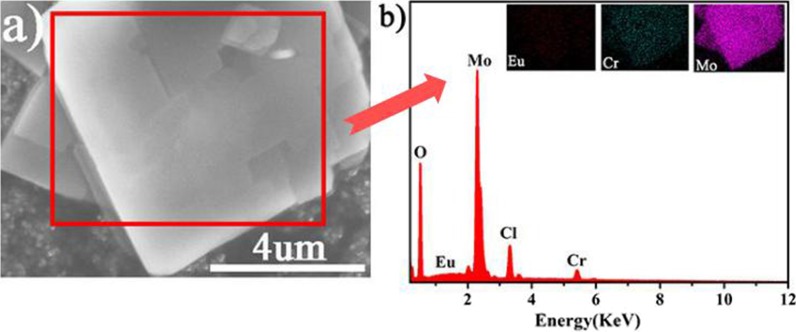
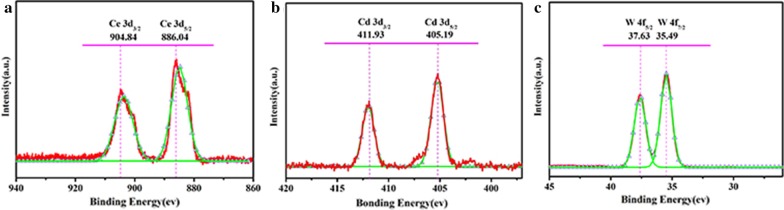
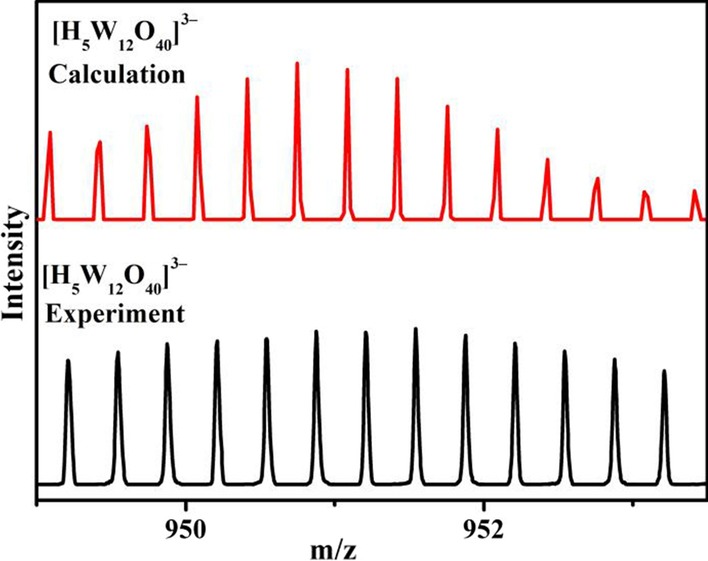
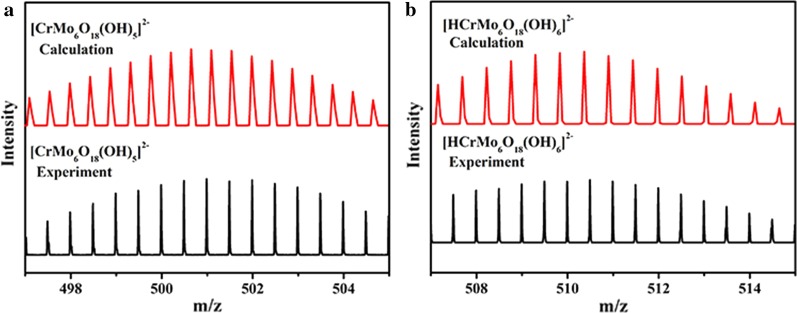
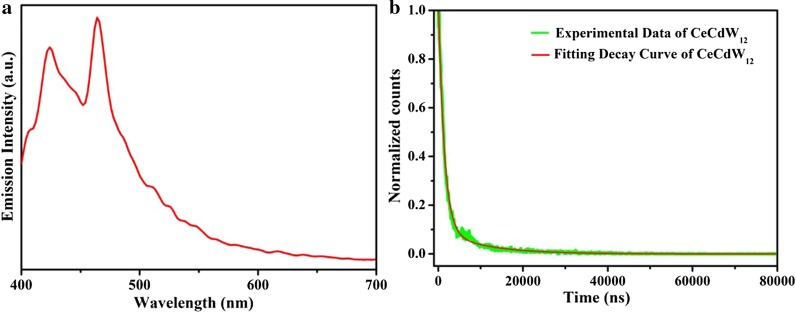
It is challenging to explore and prepare polyoxometalates-based nanomaterials (PNMs) with controllable morphologies and diversiform components. Herein, 3d-4f metals are introduced into isopolyoxometalates and Anderson-type polyoxometalates, CeCdW nanoflower and EuCrMo microflaky have been fabricated respectively. A series of control experiments are carried out to identify the impact factors on the rare morphologies in PNMs. Furthermore, upon excitation at 396 nm, the emission spectrum of EuCrMo displays five prominent f - f emitting peaks at 674, 685, 690, 707, and 734 nm that are assigned to EuD → F (J = 0, 1, 2, 3, 4) transitions. Meanwhile, the VSM results show that the Cr ions in EuCrMo display anti-ferromagnetic interactions when the temperature is lower than - 17.54 K. After rising temperature, this material exhibits paramagnetic property. This work opens up strategies toward the brand new morphologies and components of PNMs, endowing this kind of material with new functions.
探索和制备具有可控形态和多样组分的基于多金属氧酸盐的纳米材料(PNMs)具有挑战性。在此,将3d - 4f金属引入同多金属氧酸盐和安德森型多金属氧酸盐中,分别制备出了CeCdW纳米花和EuCrMo微片状材料。进行了一系列对照实验以确定影响PNMs中罕见形态的因素。此外,在396 nm激发下,EuCrMo的发射光谱在674、685、690、707和734 nm处显示出五个突出的f - f发射峰,这些峰归属于EuD → F(J = 0、1、2、3、4)跃迁。同时,VSM结果表明,当温度低于 - 17.54 K时,EuCrMo中的Cr离子表现出反铁磁相互作用。温度升高后,这种材料呈现顺磁性。这项工作为PNMs的全新形态和组分开辟了策略,赋予了这类材料新功能。