Department of Medicine, Division of Cardiology, University of Ottawa Heart Institute, Ottawa, Canada.
PLoS One. 2020 Nov 4;15(11):e0241643. doi: 10.1371/journal.pone.0241643. eCollection 2020.
Post-operative atrial fibrillation (POAF) is a frequent cardiothoracic surgery complication that increases hospital stay, mortality and costs. Despite decades of research, there has been no systematic overview and meta-analysis of preclinical therapies for POAF in animal models.
We performed a systematic search of MEDLINE and EMBASE from their inception through September 2020 to determine the effect of preclinical POAF therapies on primary efficacy outcomes using a prospectively registered protocol (CRD42019155649). Bias was assessed using the SYRCLE tool and CAMARADES checklist.
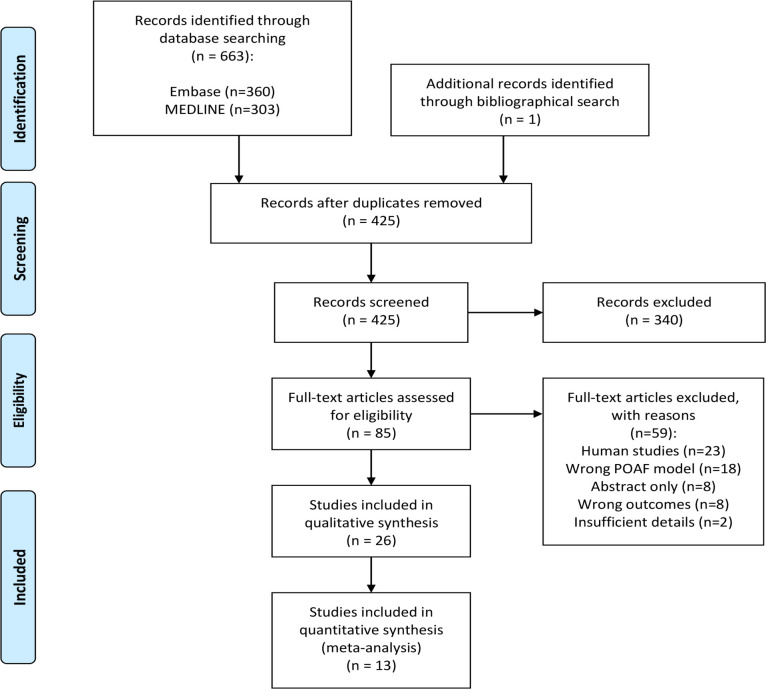
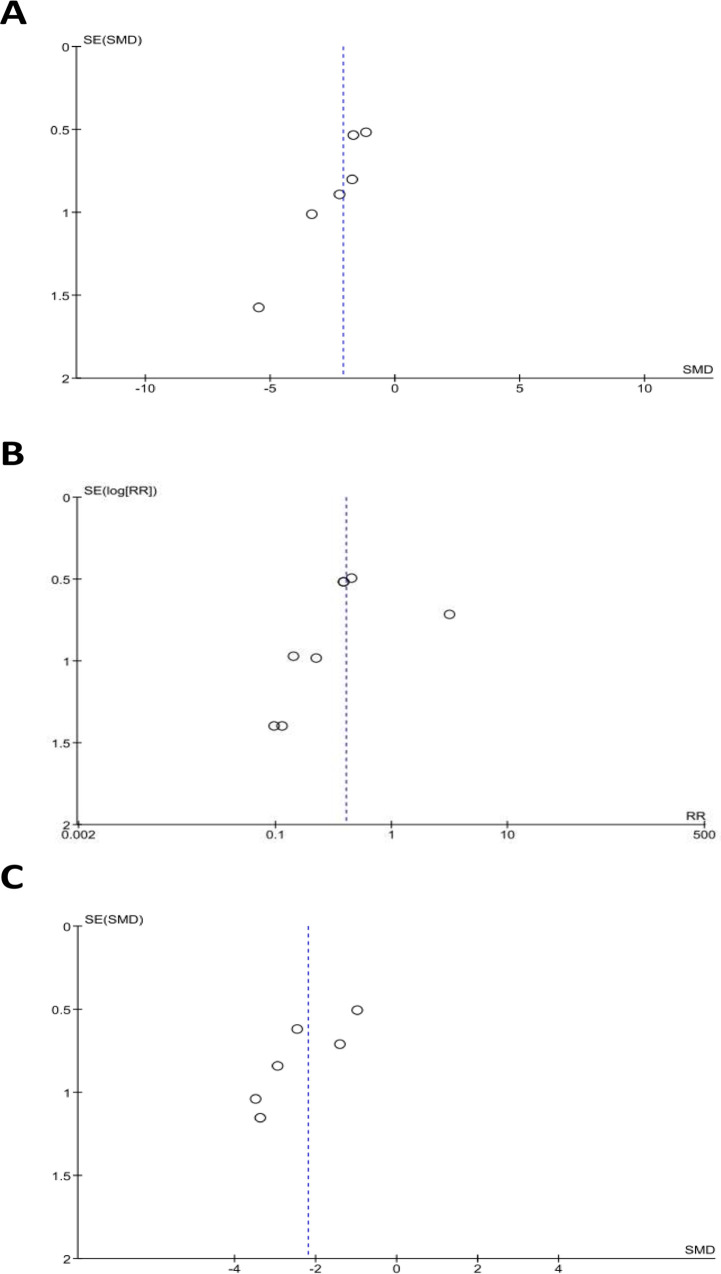
Within the 26 studies that fulfilled our inclusion criteria, we identified 4 prevention strategies including biological (n = 5), dietary (n = 2), substrate modification (n = 2), and pharmacological (n = 17) interventions targeting atrial substrate, cellular electrophysiology or inflammation. Only one study altered more than 1 pathophysiological mechanism. 73% comprised multiple doses of systemic therapies. Large animal models were used in 81% of the studies. Preclinical therapies altogether attenuated atrial fibrosis (SMD -2.09; 95% confidence interval [CI] -2.95 to -1.22; p < 0.00001; I2 = 47%), AF inducibility (RR 0.40; 95% CI 0.21 to 0.79; p = 0.008; I2 = 39%), and AF duration (SMD -2.19; 95% CI -3.05 to -1.32; p < 0.00001; I2 = 50%). However, all the criteria needed to evaluate the risk of bias was unclear for many outcomes and only few interventions were independently validated by more than 1 research group.
Treatments with therapies targeting atrial substrate, cellular electrophysiology or inflammation reduced POAF in preclinical animal models compared to controls. Improving the quality of outcome reporting, independently validating promising approaches and targeting complimentary drivers of POAF are promising means to improve the clinical translation of novel therapies for this highly prevalent and clinically meaningful disease.
术后心房颤动(POAF)是心胸外科手术后常见的并发症,会增加住院时间、死亡率和医疗费用。尽管经过几十年的研究,针对动物模型中 POAF 的临床前治疗方法仍没有系统的综述和荟萃分析。
我们按照预先注册的方案(CRD42019155649),通过系统检索 MEDLINE 和 EMBASE 从成立到 2020 年 9 月的数据,以确定临床前 POAF 治疗方法对主要疗效结果的影响。使用 SYRCLE 工具和 CAMARADES 清单评估偏倚。
在符合纳入标准的 26 项研究中,我们确定了 4 种预防策略,包括生物(n=5)、饮食(n=2)、基质修饰(n=2)和药理学(n=17)干预,针对心房基质、细胞电生理学或炎症。只有一项研究改变了超过 1 种病理生理机制。73%的研究包含多次全身治疗剂量。81%的研究使用了大型动物模型。临床前治疗方法总体上减轻了心房纤维化(SMD-2.09;95%置信区间 [CI] -2.95 至-1.22;p<0.00001;I2=47%)、房颤易感性(RR 0.40;95%CI 0.21 至 0.79;p=0.008;I2=39%)和房颤持续时间(SMD-2.19;95%CI -3.05 至-1.32;p<0.00001;I2=50%)。然而,对于许多结果,许多评估偏倚风险的标准仍不明确,只有少数干预措施得到了超过 1 个研究小组的独立验证。
与对照组相比,针对心房基质、细胞电生理学或炎症的治疗方法可减少临床前动物模型中的 POAF。提高结果报告的质量、独立验证有前途的方法并针对 POAF 的补充驱动因素,是改善针对这种高度普遍且具有临床意义的疾病的新型治疗方法临床转化的有希望的手段。