School of Medicine, Ilam University of Medical Science, Ilam, Iran.
Rajaie Cardiovascular Medical and Research Center, Iran University of Medical Sciences, Tehran, Iran.
BMC Cardiovasc Disord. 2020 Nov 4;20(1):474. doi: 10.1186/s12872-020-01723-7.
Leptin can have a direct effect on endothelial and vascular smooth muscle cells and high level of leptin is involved in the pathogenesis of atherosclerosis. This study aimed to determine the relationship between leptin/adiponectin (L/A) ratio and the extent and severity of coronary artery disease (CAD).
This case-control study was conducted in an educational hospital in Ilam, Iran from June 2014 to September 2015. Totally 300 participants including 150 patients with CAD (case group) and 150 healthy individuals (control group) were selected and their plasma leptin, adiponectin and leptin/adiponectin ratio was measured. The extent and severity of coronary artery disease were assayed based on the number of involved vessels and Gensini score (GS) and the relation between scores and L/A findings were compared between cases and controls.
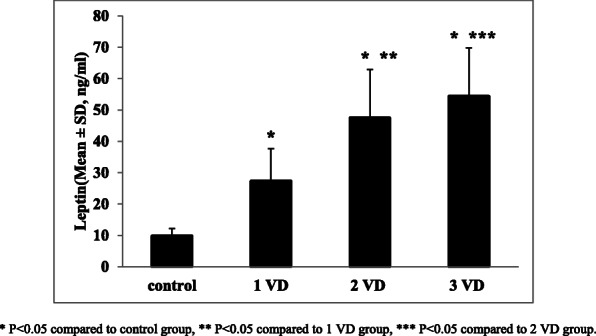
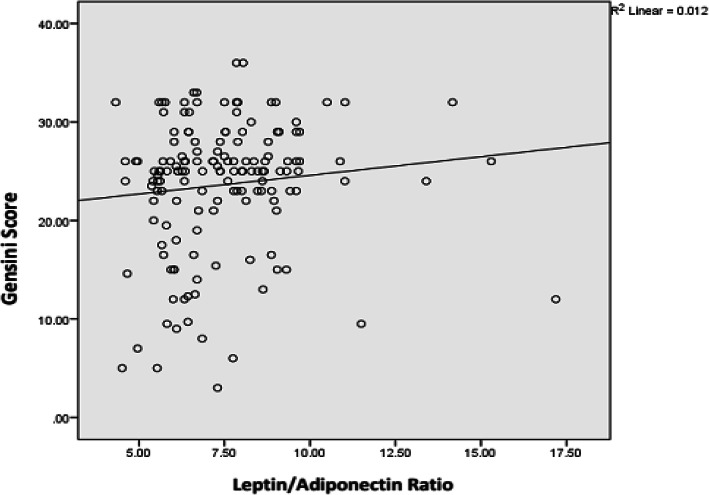
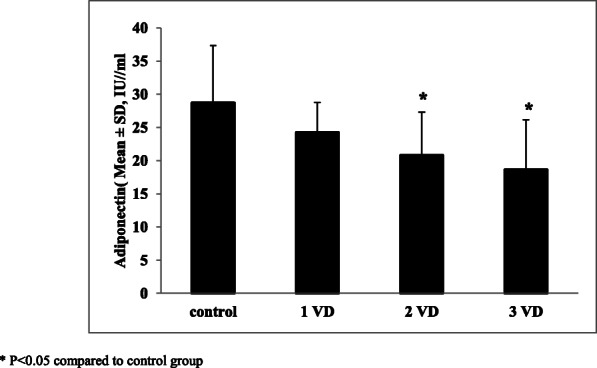
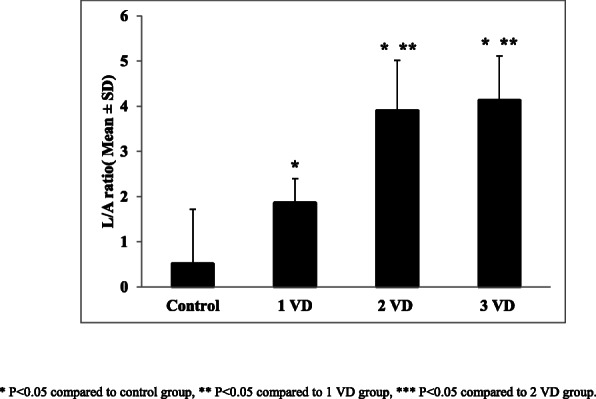
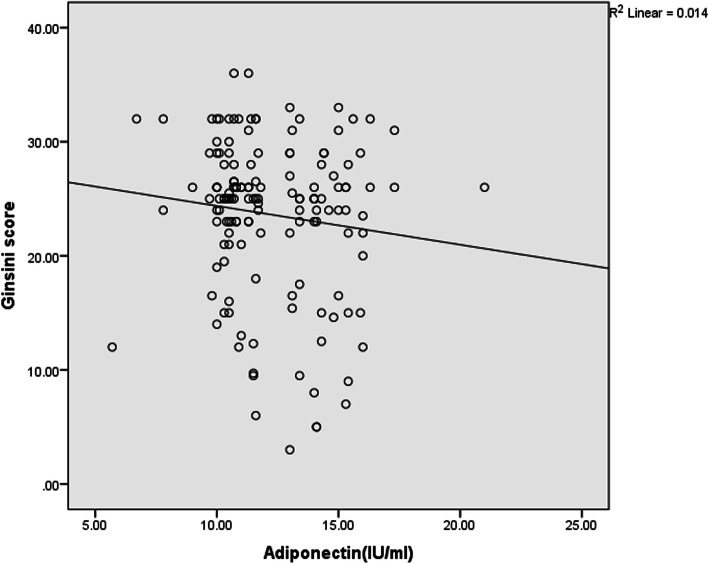
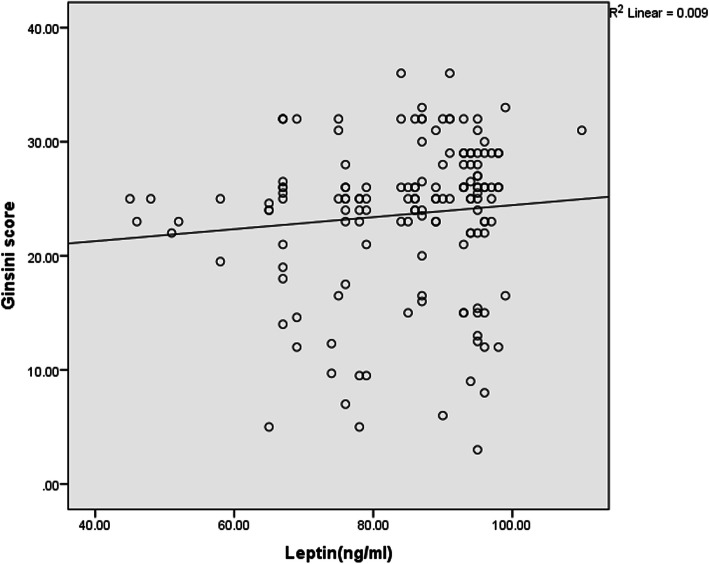
Totally, 300 participants including 150 (42.7% male), mean age 59.5 ± 11.4 years as cases and 150 (50.7% male), mean age 59.8 ± 10.7 as controls were analyzed. Plasma level of leptin and L/A ratio were higher in cases compared to controls, but level of adiponectin was significantly lower in CAD patients than the control group. More number of involved coronary vessels was significantly correlated to higher level of plasma leptin, L/A ratio and lower level of adiponectin among case group. Moreover, adiponectin was negatively and leptin or L/A ratio were positively correlated with number of involved vessels. 7.3% of cases had only one involved vessel, 42.7% had two involved vessels, and 50% of total patients had involved vessels and the mean ± SD of GS in the case group was 23.6 ± 6.9.
Plasma levels of leptin, and adiponectin can indicate the extent of coronary artery diseases but leptin may be a better marker of extent of CAD than either L/A ratio or adiponectin separately.
瘦素可以直接作用于内皮细胞和血管平滑肌细胞,高水平的瘦素参与动脉粥样硬化的发病机制。本研究旨在确定瘦素/脂联素(L/A)比值与冠状动脉疾病(CAD)的程度和严重程度之间的关系。
本病例对照研究于 2014 年 6 月至 2015 年 9 月在伊朗伊拉姆的一所教学医院进行。总共选择了 300 名参与者,包括 150 名 CAD 患者(病例组)和 150 名健康个体(对照组),测量了他们的血浆瘦素、脂联素和瘦素/脂联素比值。根据受累血管的数量和 Gensini 评分(GS)评估冠状动脉疾病的程度和严重程度,并比较病例组和对照组之间评分与 L/A 发现之间的关系。
总共分析了 300 名参与者,包括 150 名(42.7%为男性),平均年龄为 59.5±11.4 岁作为病例组和 150 名(50.7%为男性),平均年龄为 59.8±10.7 岁作为对照组。与对照组相比,病例组的血浆瘦素和 L/A 比值较高,但 CAD 患者的脂联素水平明显较低。病例组中受累冠状动脉数量越多,血浆瘦素、L/A 比值越高,脂联素水平越低。此外,脂联素与受累血管数量呈负相关,瘦素或 L/A 比值与受累血管数量呈正相关。7.3%的病例仅涉及一个受累血管,42.7%涉及两个受累血管,50%的总患者有受累血管,病例组的平均 GS 为 23.6±6.9。
血浆瘦素和脂联素水平可以表明冠状动脉疾病的程度,但瘦素可能是 CAD 程度的更好标志物,而不是 L/A 比值或脂联素单独。