Health Sciences Department, Anna Meyer Children's University Hospital, University of Florence, Viale Pieraccini 24, 50139, Florence, Italy.
Anna Meyer Children's University Hospital, Viale Pieraccini 24, 50139, Florence, Italy.
Ital J Pediatr. 2020 Nov 4;46(1):165. doi: 10.1186/s13052-020-00931-3.
The timing of puberty in girls is occurring at an increasingly early age. While a positive family history is recognised as a predisposing factor for early or precocious puberty, the role of environmental factors is not fully understood.
To make a retrospective evaluation of the incidence of newly diagnosed central precocious puberty (CPP) and the rate of pubertal progression in previously diagnosed patients during and after the Italian lockdown for COVID-19, comparing data with corresponding data from the previous 5 years. To determine whether body mass index (BMI) and the use of electronic devices increased during lockdown in these patients.
The study included 49 females with CPP. We divided the patients into two groups: group 1, patients presenting a newly diagnosed CPP and group 2, patients with previously diagnosed slow progression CPP whose pubertal progression accelerated during or after lockdown. We collected auxological, clinical, endocrinological and radiological data which were compared with data from two corresponding control groups (patients followed by our Unit, March to July 2015-2019). Patients' families completed a questionnaire to assess differences in the use of electronic devices before and during lockdown.
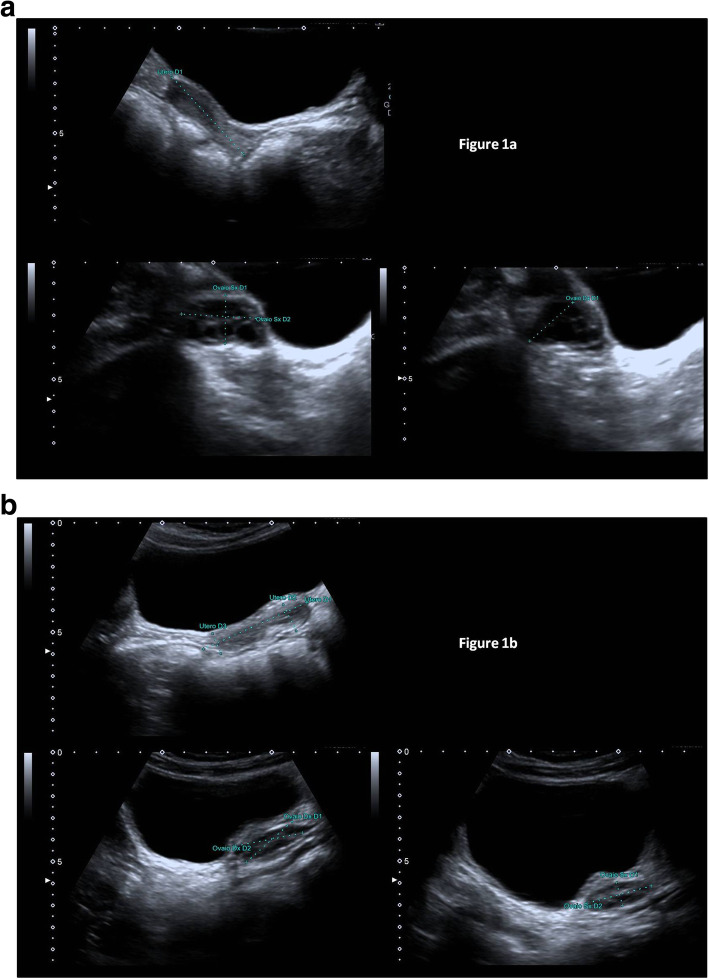
Thirty-seven patients presented newly diagnosed CPP (group 1) and 12, with previously diagnosed but untreated slow progression CPP presented an acceleration in the rate of pubertal progression (group 2). The number of new CPP diagnoses was significantly higher than the mean for the same period of the previous 5 years (p < 0.0005). There were no significant differences between patients in group 1 and control group 1 regarding time between appearance of B2 and CPP diagnosis, although group 1 patients had a significantly earlier chronological age at B2, a more advanced Tanner stage at diagnosis (p < 0.005), higher basal LH and E2 levels, higher LH peak after LHRH test (p < 0.05) and increased uterine length (p < 0.005) and ovarian volume (p < 0.0005). The number of patients with previously diagnosed CPP whose pubertal development accelerated was also statistically higher compared to controls (p < 0.0005). In this group, patients' basal LH (p < 0.05) and E2 levels (p < 0.0005) became more markedly elevated as did the LH peak after LHRH test (p < 0.05). These patients also showed a significantly accelerated progression rate as measured by the Tanner scale (p < 0.0005), uterine length (p < 0.005), and ovarian volume (p < 0.0005). In both group 1 and group 2, BMI increased significantly (p < 0.05) and patients' families reported an increased use of electronic devices (p < 0.0005).
Our data show an increased incidence of newly diagnosed CPP and a faster rate of pubertal progression in patients with a previous diagnosis, during and after lockdown compared to previous years. We hypothesize that triggering environmental factors, such as the BMI and the use of electronic devices, were enhanced during lockdown, stressing their possible role in triggering/influencing puberty and its progression. However, more studies are needed to determine which factors were involved and how they interacted.
女孩的青春期开始时间越来越早。虽然家族史被认为是早熟或性早熟的一个诱发因素,但环境因素的作用尚未完全了解。
回顾性评估意大利 COVID-19 封锁期间和之后新诊断的中枢性性早熟(CPP)的发生率和先前诊断的CPP 患者的青春期进展速度,并将数据与前 5 年的相应数据进行比较。确定这些患者在封锁期间的体重指数(BMI)和电子设备的使用是否增加。
本研究纳入了 49 例 CPP 女性患者。我们将患者分为两组:组 1,新诊断为 CPP 的患者;组 2,先前诊断为进展缓慢的 CPP 患者,其青春期进展在封锁期间或之后加速。我们收集了人体测量学、临床、内分泌学和影像学数据,并与两组相应的对照组(在我们的单位接受随访的患者,2015-2019 年 3 月至 7 月)的数据进行了比较。患者的家属完成了一份问卷,以评估封锁前后电子设备使用情况的差异。
37 例患者新诊断为 CPP(组 1),12 例先前诊断但未经治疗的进展缓慢的 CPP 患者青春期进展速度加快(组 2)。新诊断 CPP 的患者数量明显高于前 5 年同期的平均值(p<0.0005)。组 1 患者的 B2 出现时间与 CPP 诊断之间无显著差异,但组 1 患者的 B2 出现时的实际年龄更早,诊断时的 Tanner 分期更先进(p<0.005),基础 LH 和 E2 水平更高,LH 峰后 GnRH 试验(p<0.05)更高,子宫长度(p<0.005)和卵巢体积(p<0.0005)增加。与对照组相比,先前诊断为 CPP 的患者中,青春期发育加速的患者数量也具有统计学意义(p<0.0005)。在该组中,患者的基础 LH(p<0.05)和 E2 水平(p<0.0005)以及 GnRH 试验后的 LH 峰(p<0.05)明显升高。这些患者的 Tanner 评分(p<0.0005)、子宫长度(p<0.005)和卵巢体积(p<0.0005)的进展速度也明显加快。在组 1 和组 2 中,BMI 均显著增加(p<0.05),患者家属报告电子设备使用量增加(p<0.0005)。
与前几年相比,我们的数据显示,在封锁期间和之后,新诊断的 CPP 患者和先前诊断的 CPP 患者的青春期进展速度更快。我们假设触发环境因素,如 BMI 和电子设备的使用,在封锁期间得到了增强,强调了它们在触发/影响青春期及其进展中的可能作用。然而,还需要更多的研究来确定哪些因素参与其中,以及它们是如何相互作用的。