Division of Molecular Embryology, DKFZ-ZMBH Alliance, Deutsches Krebsforschungszentrum (DKFZ), 69120, Heidelberg, Germany.
Institute of Molecular Biology (IMB), 55128, Mainz, Germany.
Nat Commun. 2020 Nov 4;11(1):5570. doi: 10.1038/s41467-020-19373-w.
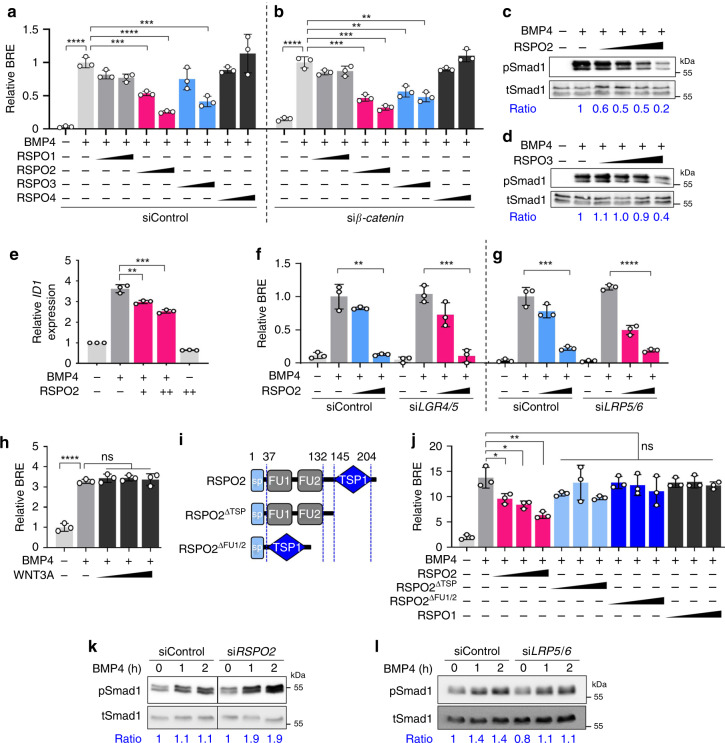
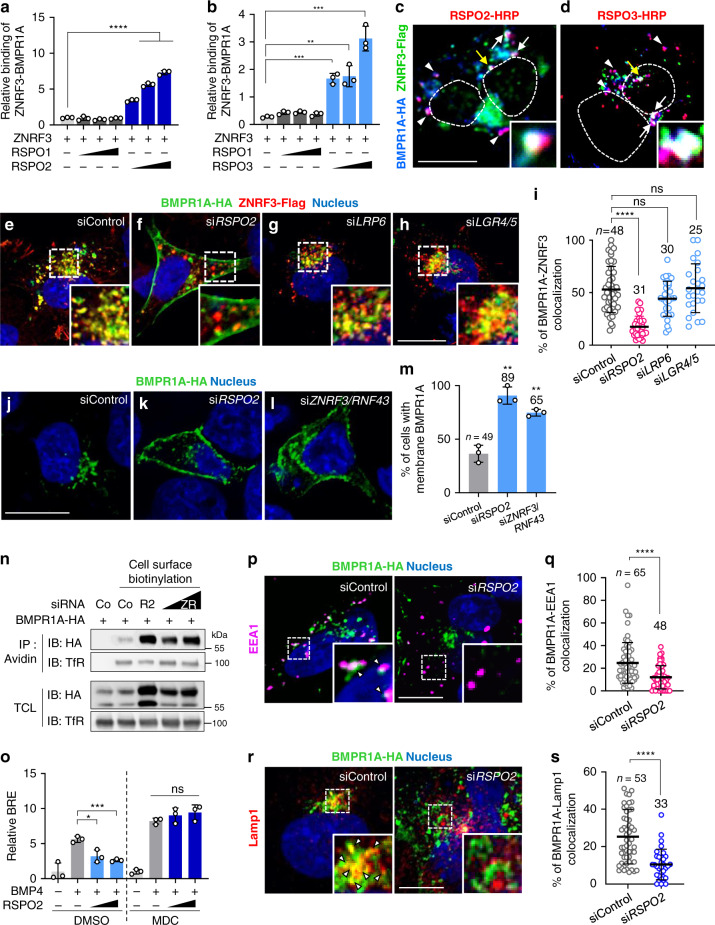
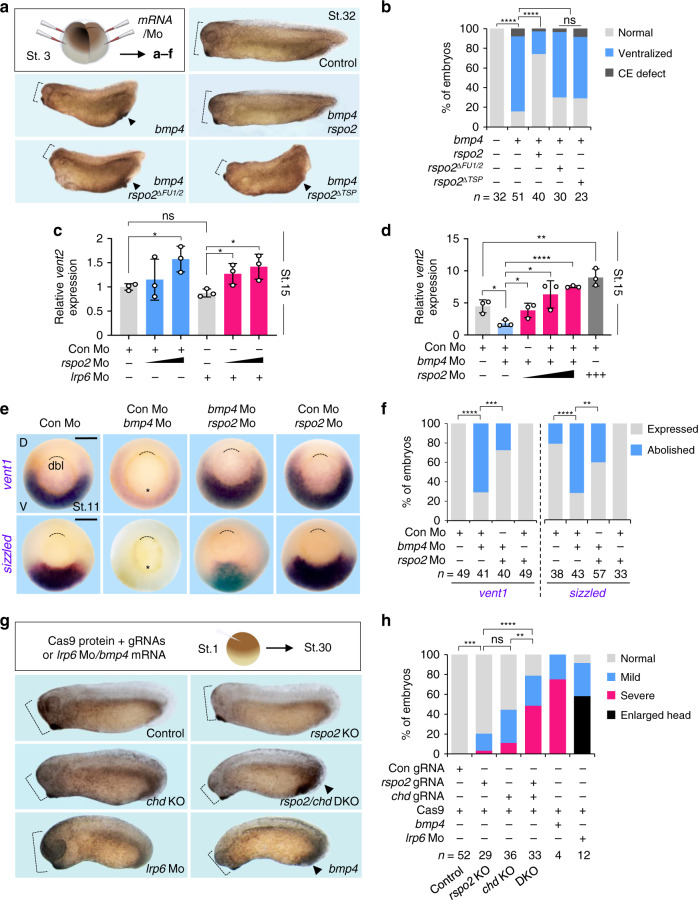
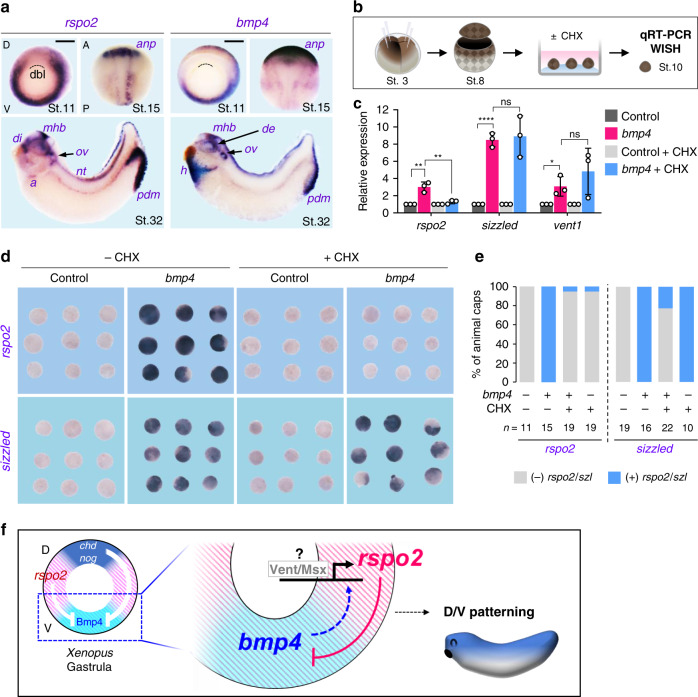
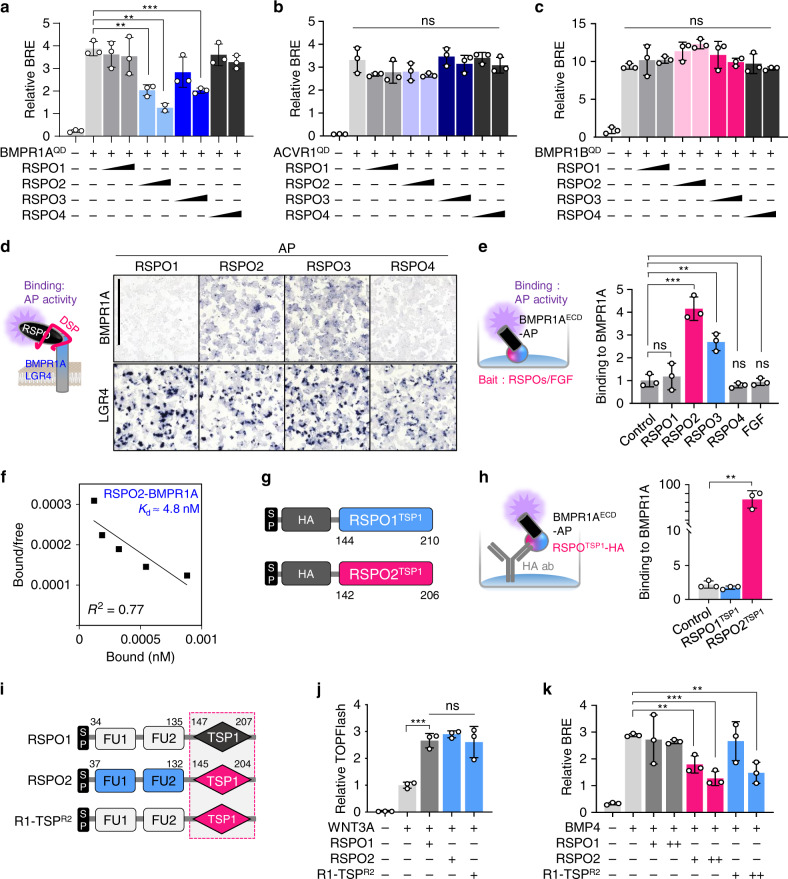
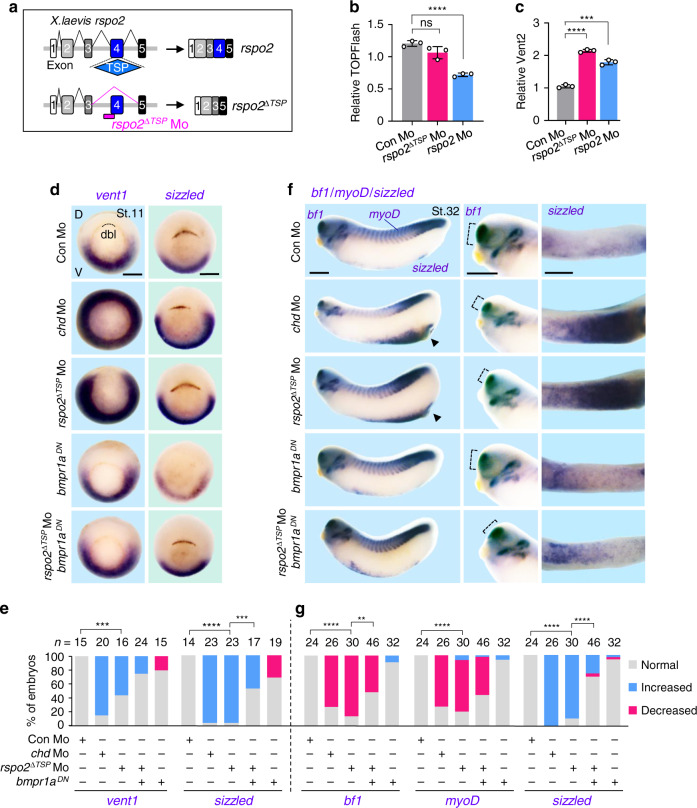
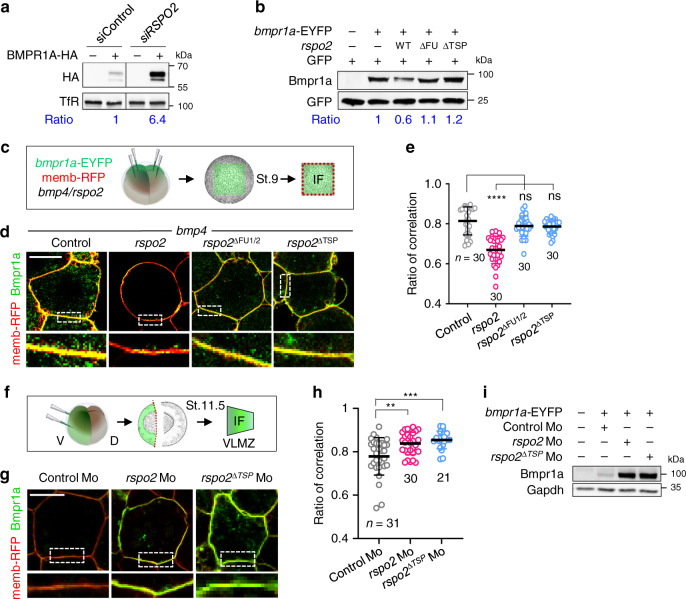
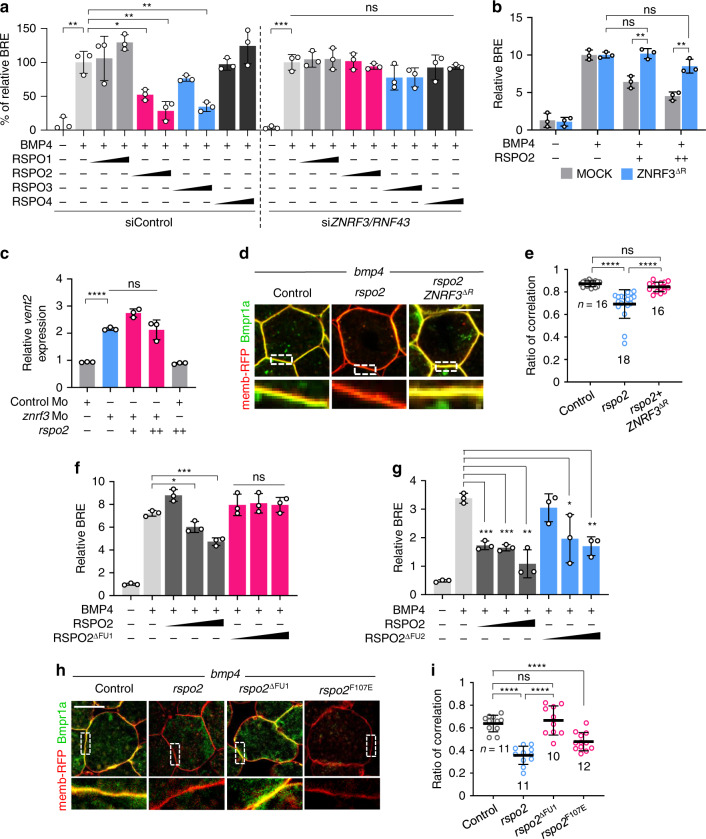
BMP signaling plays key roles in development, stem cells, adult tissue homeostasis, and disease. How BMP receptors are extracellularly modulated and in which physiological context, is therefore of prime importance. R-spondins (RSPOs) are a small family of secreted proteins that co-activate WNT signaling and function as potent stem cell effectors and oncogenes. Evidence is mounting that RSPOs act WNT-independently but how and in which physiological processes remains enigmatic. Here we show that RSPO2 and RSPO3 also act as BMP antagonists. RSPO2 is a high affinity ligand for the type I BMP receptor BMPR1A/ALK3, and it engages ZNRF3 to trigger internalization and degradation of BMPR1A. In early Xenopus embryos, Rspo2 is a negative feedback inhibitor in the BMP4 synexpression group and regulates dorsoventral axis formation. We conclude that R-spondins are bifunctional ligands, which activate WNT- and inhibit BMP signaling via ZNRF3, with implications for development and cancer.
BMP 信号在发育、干细胞、成人组织稳态和疾病中发挥关键作用。因此,BMP 受体如何在细胞外被调节以及在哪些生理环境下被调节,这一点非常重要。RSPO(R-spondin)是一个小的分泌蛋白家族,能够共同激活 WNT 信号,并作为有效的干细胞效应子和癌基因发挥作用。越来越多的证据表明,RSPO 能够独立于 WNT 发挥作用,但具体机制和在哪些生理过程中发挥作用仍然是个谜。在这里,我们表明 RSPO2 和 RSPO3 也作为 BMP 拮抗剂发挥作用。RSPO2 是 I 型 BMP 受体 BMPR1A/ALK3 的高亲和力配体,它与 ZNRF3 结合,触发 BMPR1A 的内化和降解。在早期的非洲爪蟾胚胎中,Rspo2 是 BMP4 共表达组中的负反馈抑制剂,调节背腹轴的形成。我们得出结论,RSPO 是一种双功能配体,通过 ZNRF3 激活 WNT 并抑制 BMP 信号,这对发育和癌症具有重要意义。