MRC Centre for Reproductive Health, The Queen's Medical Research Institute, The University of Edinburgh, 47 Little France Crescent, Edinburgh, EH16 4TJ, Scotland, UK.
Faculty of Science, University of Newcastle, Callaghan, Australia.
Sci Rep. 2020 Nov 4;10(1):19022. doi: 10.1038/s41598-020-75803-1.
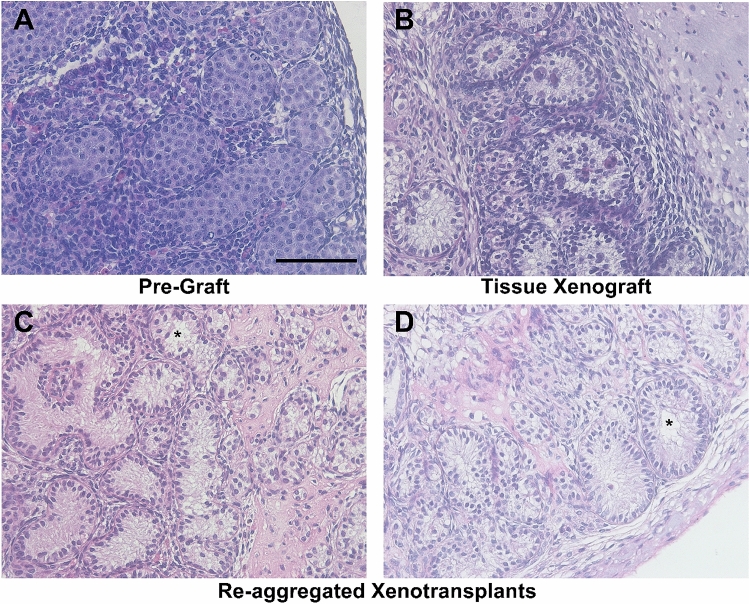
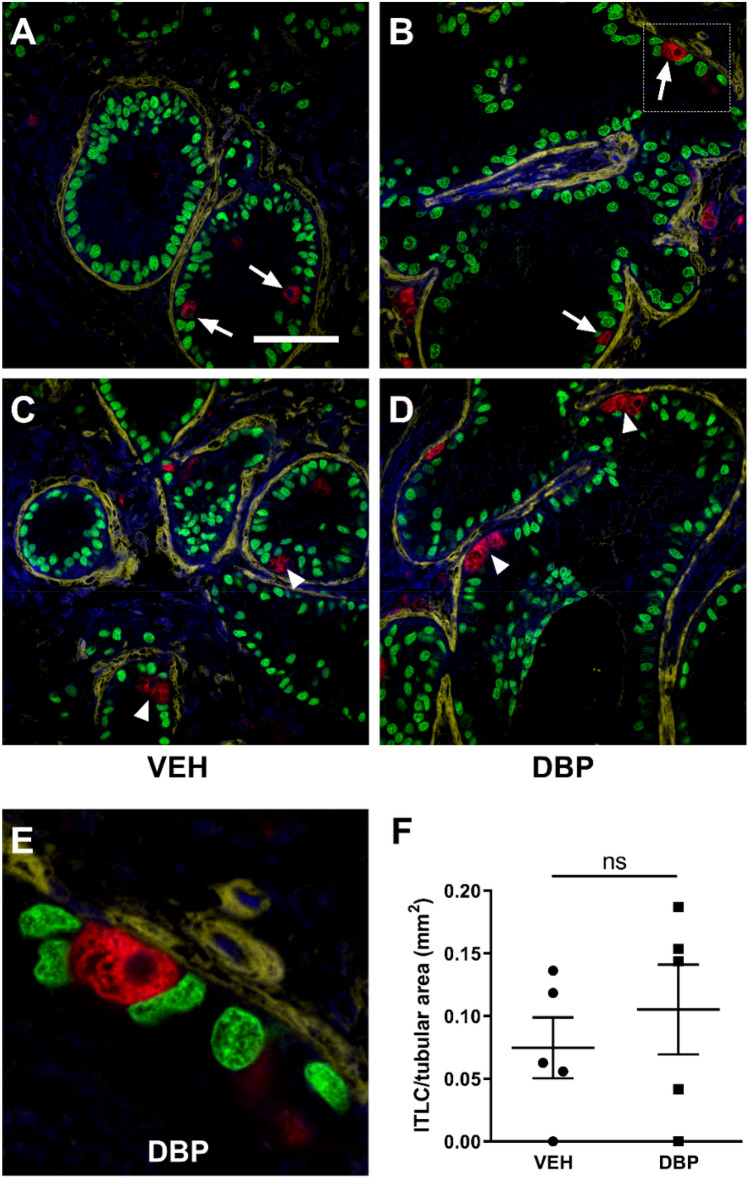
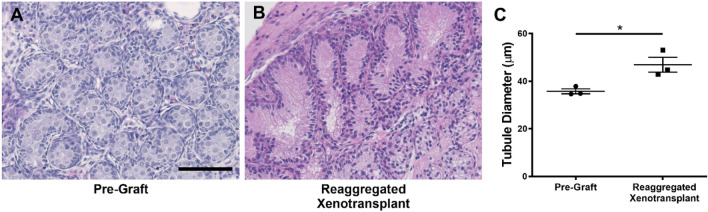
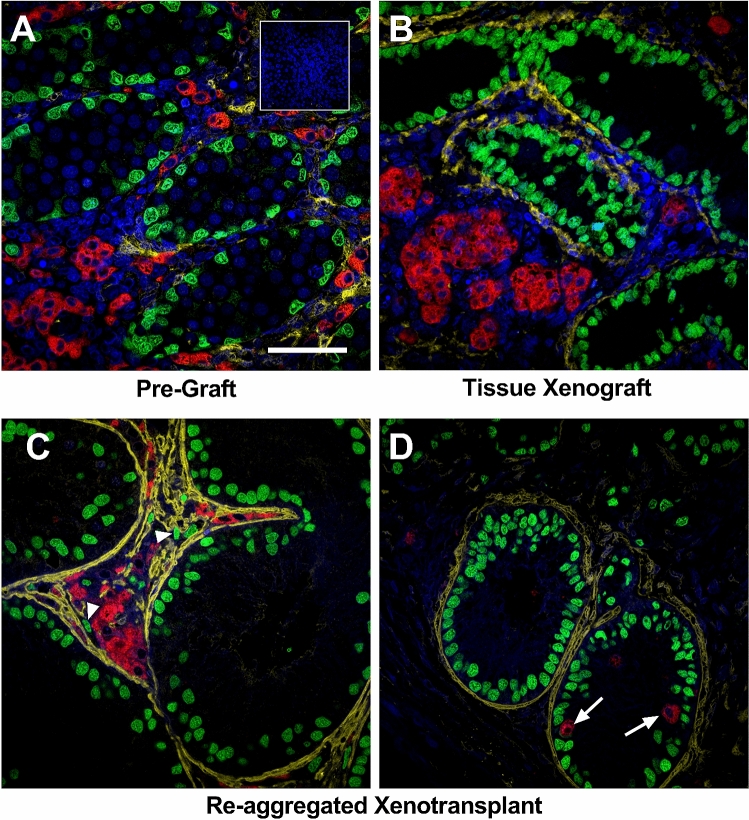
Focal dysgenesis is a consistent feature of testicular dysgenesis syndrome (TDS) in humans. Rodent studies show that perturbation of androgens (e.g. following phthalate exposure) during a fetal masculinisation programming window (MPW) predisposes to a TDS phenotype. This study aimed to determine whether dissociation and reconstitution of rat fetal testis tissue during the MPW can be used to model and manipulate seminiferous cord development, including induction of focal dysgenesis, as described in TDS. Dissociated fetal rat testes were xenotransplanted subcutaneously into recipient mice for 4 weeks. Transplanted mice were treated with vehicle or di-n-butyl-phthalate (DBP, a plasticising chemical known to induce testicular dysgenesis in vivo in rats). Testosterone production by the transplants was measured in recipient mice and immunofluorescence was performed on the retrieved transplants to identify features consistent with focal testicular dysgenesis. Re-aggregation of rat fetal testis tissue xenotransplants during the MPW results in reconstitution of seminiferous cords. Features of focal testicular dysgenesis were present in re-aggregated testis, including ectopic Sertoli cells and intratubular Leydig cells (ITLCs). DBP exposure of recipient mice reduced androgen-dependent seminal vesicle weight (8.3 vs 26.7 mg; p < 0.05), but did not enhance features of focal dysgenesis including number of ITLCs (0.07 vs 0.10 cells/mm; p > 0.05). We conclude that seminiferous cord reformation during the MPW results in development of focal dysgenesis. The system may be used to separate specific effects (e.g. androgen suppression) of individual chemical exposures from other mechanisms that may be conserved in TDS.
局灶性发育不良是人类睾丸发育不良综合征(TDS)的一个一致特征。啮齿动物研究表明,雄激素的干扰(例如邻苯二甲酸酯暴露后)在胎儿雄性化编程窗口(MPW)期间易导致 TDS 表型。本研究旨在确定在 MPW 期间是否可以分离和重建大鼠胎儿睾丸组织,以模拟和操纵精曲小管发育,包括诱导局灶性发育不良,如 TDS 中所述。分离的胎儿大鼠睾丸在 4 周内被异种移植到受体小鼠的皮下。移植的小鼠用载体或邻苯二甲酸二丁酯(DBP,一种已知在体内诱导大鼠睾丸发育不良的增塑化学物质)处理。在受体小鼠中测量移植物的睾酮产生,并对取回的移植物进行免疫荧光,以鉴定与局灶性睾丸发育不良一致的特征。在 MPW 期间,大鼠胎儿睾丸组织异种移植的再聚集导致精曲小管的重建。再聚集的睾丸中存在局灶性睾丸发育不良的特征,包括异位支持细胞和管内间质细胞(ITLC)。DBP 暴露于受体小鼠减少了雄激素依赖性精囊重量(8.3 对 26.7mg;p<0.05),但并未增强局灶性发育不良的特征,包括 ITLC 数量(0.07 对 0.10 个细胞/mm;p>0.05)。我们得出结论,在 MPW 期间精曲小管的重建导致局灶性发育不良的发展。该系统可用于将单个化学暴露的特定效应(例如雄激素抑制)与可能在 TDS 中保守的其他机制分开。