Manikandan Saranya, Behera Subasish, Karthikeyan Radhakrishnan, Niranjana Arumugasamy, Bharathan Rajendran, Mohammed Omar Farooq Burhanuddin
Department of Oral Pathology, Vivekanandha Dental College for Women, Tiruchengode, Tamil Nadu, India.
Department of Conservative Dentistry and Endodontics, Hi-Tech Dental College and Hospital, Bhubaneswar, Odisha, India.
J Pharm Bioallied Sci. 2020 Aug;12(Suppl 1):S404-S409. doi: 10.4103/jpbs.JPBS_119_20. Epub 2020 Aug 28.
The aim of the study was to assess the efficacy of probiotic and green tea mouthrinse on salivary pH.
This study was conducted over a period of 1 month among 40 healthy schoolchildren aged between 6 and 8 years. The subjects who fulfilled inclusion criteria were selected and randomly divided into two groups, namely probiotic and green tea groups. Salivary pH was recorded at baseline (0 day) and at the end of the specified time using GC pH strips. Statistical analysis was done using paired test. < 0.05 was considered statistically significant.
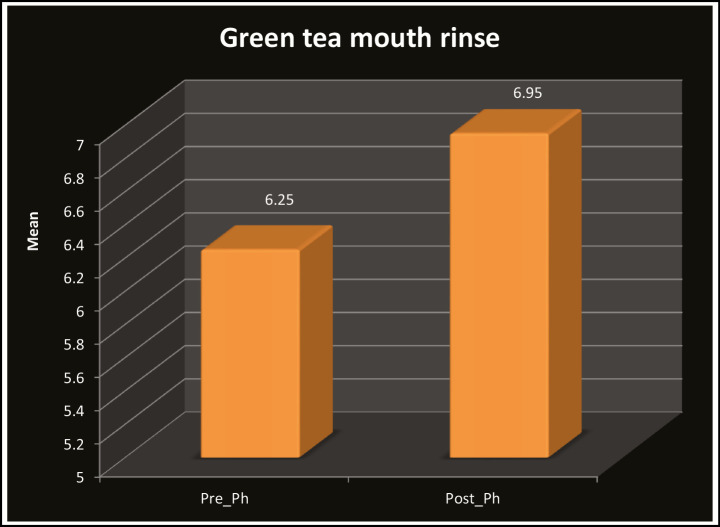
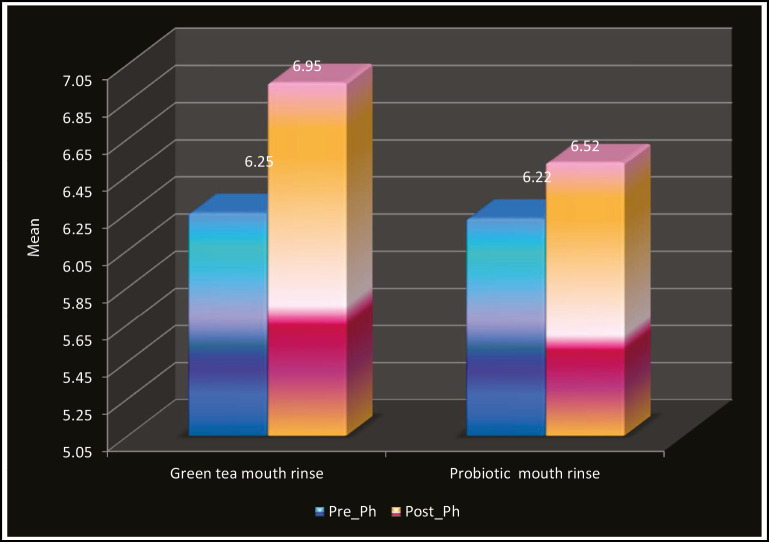
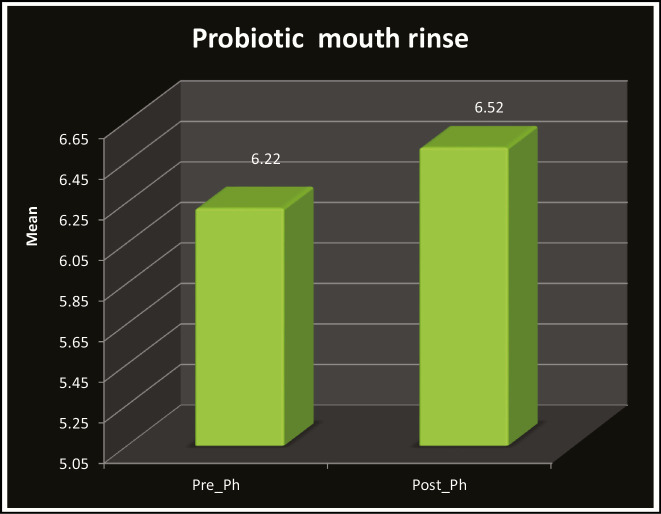
The comparison of mean pH scores for green tea showed that the pH of saliva was increased in the children after rinsing with green tea (6.00-7.60) and was statistically significant ( < 0.001). Similarly, when pre- and post-mean pH was compared in the probiotic group, the pH was found to be higher in the probiotic rinse group (5.60-7.20). The results were statistically significant.
The study conducted shows the beneficial effects of green tea in providing a alkaline environment, which is conducive to the oral health of children.
本研究旨在评估益生菌漱口水和绿茶漱口水对唾液pH值的影响。
本研究在40名6至8岁的健康学童中进行,为期1个月。选取符合纳入标准的受试者并随机分为两组,即益生菌组和绿茶组。使用GC pH试纸在基线(第0天)和指定时间结束时记录唾液pH值。采用配对t检验进行统计分析。P<0.05被认为具有统计学意义。
绿茶组平均pH值得分的比较表明,儿童用绿茶漱口后唾液pH值升高(6.00 - 7.60),具有统计学意义(P<0.001)。同样,比较益生菌组的平均pH值前后变化时,发现益生菌漱口水组的pH值更高(5.60 - 7.20)。结果具有统计学意义。
本研究表明绿茶在提供碱性环境方面具有有益作用,有利于儿童口腔健康。