Darr Adnan, Senior Andrew, Argyriou Kalliopi, Limbrick Jack, Nie Huimin, Kantczak Ada, Stephenson Kate, Parmar Amit, Grainger Joe
Birmingham Women's and Children's NHS Foundation Trust, United Kingdom.
Birmingham Women's and Children's NHS Foundation Trust, United Kingdom.
Int J Pediatr Otorhinolaryngol. 2020 Nov;138:110383. doi: 10.1016/j.ijporl.2020.110383. Epub 2020 Sep 24.
Virtual outpatient clinics (VOPC) have been integrated into both paediatric and based adult outpatient services due to a multitude of factors, including increased demand for services, technological advances and rising morbidity secondary to ageing populations. The novel coronavirus disease (COVID-19) has accentuated pressures on the National Health Service (NHS) infrastructure, particularly elective services, whilst radically altering patterns of practice.
To evaluate the impact of the COVID-19 pandemic on paediatric otolaryngology outpatient services whilst collating patient feedback to elicit long-term sustainability post COVID-19.
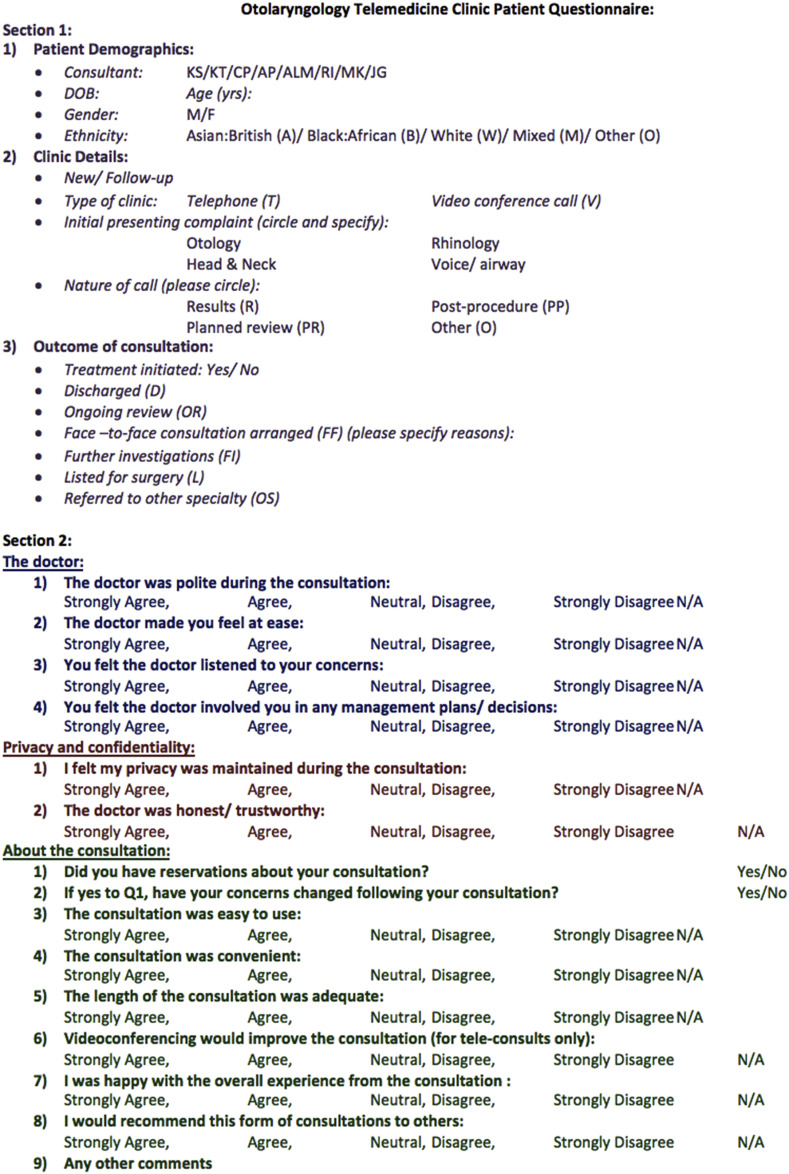
A retrospective analysis of VOPCs was undertaken at a tertiary paediatric referral centre over a 3-month capture period during the COVID-19 pandemic. Demographic, generic clinic (presenting complaint, new vs. follow-up, consultation type), as well as outcome data (medical or surgical intervention, discharge vs. ongoing review, onward referral, investigations, and conversion to face-to-face) was collated. Additionally a modified 15-point patient satisfaction survey was created. The Paediatric Otolaryngology Telemedicine Satisfaction survey (POTSS), was an adaptation of 4 validated patient satisfaction tools including the General Medical Council (GMC) patient questionnaire, the telehealth satisfaction scale (TESS), the telehealth usability questionnaire (TUQ), and the telemedicine satisfaction and usefulness questionnaire (TSUQ).
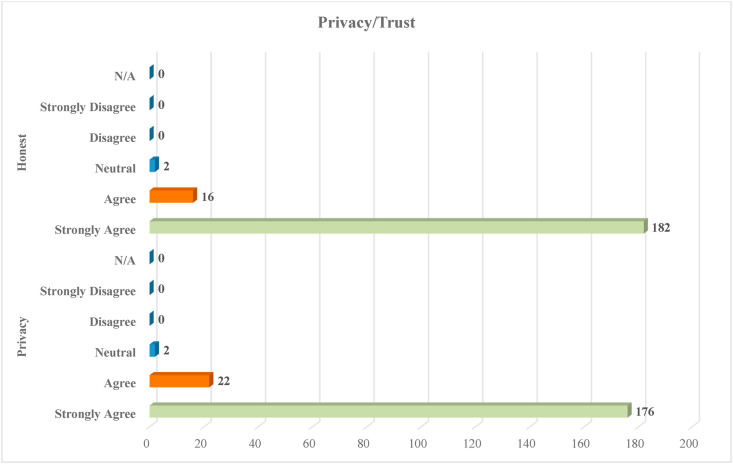
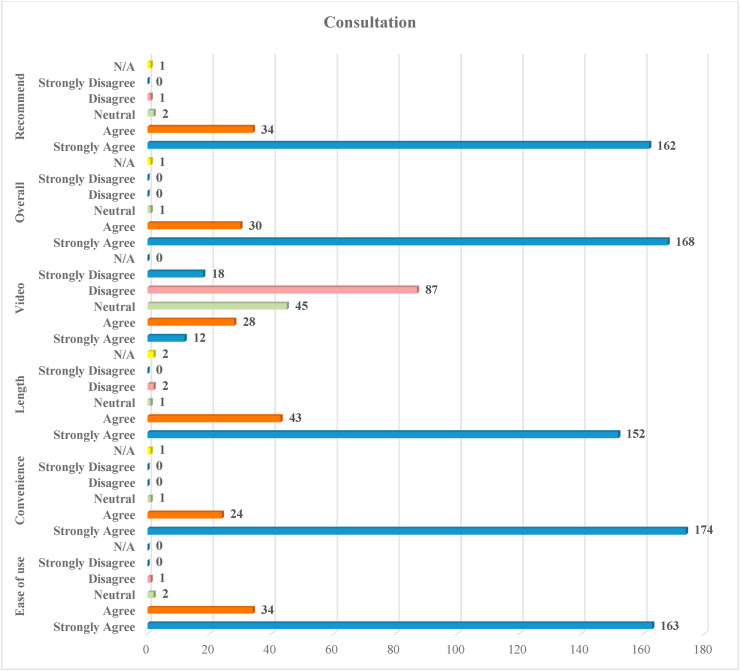
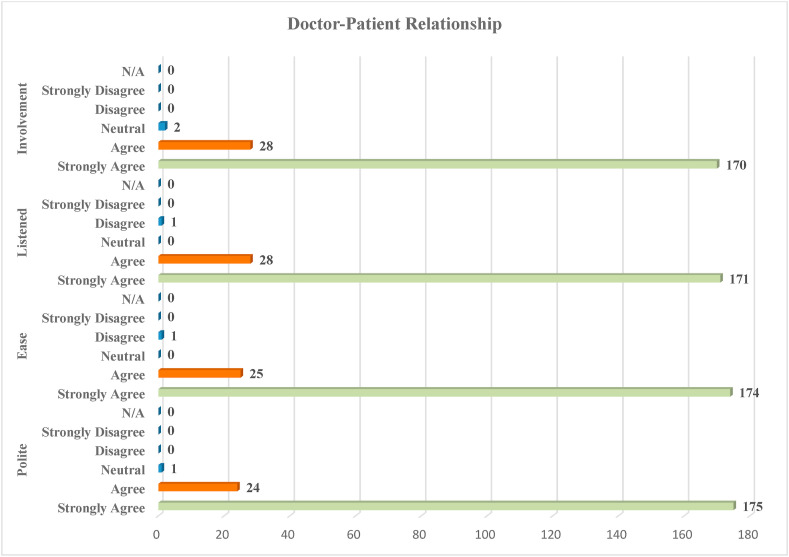
Of 514 patients reviewed virtually over a 3-month period, 225 (45%) were randomly selected to participate, of which 200 met our inclusion criteria. The most common mode of consultation was telephony (92.5%, n = 185). Non-attendance rates were reduced when compared to face-to-face clinics during an equivalent period prior to the COVID-19 pandemic. A significant proportion of patients (29% compared to 26% pre-VOPC) were discharged to primary care. Nine percent were listed for surgery compared to 19% pre-VOPC. A subsequent face-to-face appointment was required in 10% of participants. Overall, the satisfaction when assessing the doctor-patient relationship, privacy & trust, as well as consultation domains was high, with the overwhelming majority of parents' content with the future integration and participation in VOPCs.
An evolving worldwide pandemic has accelerated the need for healthcare services to reform in order to maintain a steady flow of patients within an elective outpatient setting without compromising patient care. Solutions must be sustainable long-term to account for future disruptions, whilst accounting for evolving patient demographics. Our novel survey has demonstrated the vast potential that the integration of VOPCs can offer paediatric otolaryngology services within a carefully selected cohort of patients.
由于多种因素,包括服务需求增加、技术进步以及人口老龄化导致的发病率上升,虚拟门诊诊所(VOPC)已被纳入儿科和成人门诊服务。新型冠状病毒病(COVID-19)加剧了国民保健服务(NHS)基础设施的压力,尤其是择期服务,同时从根本上改变了诊疗模式。
评估COVID-19大流行对儿科耳鼻喉科门诊服务的影响,同时收集患者反馈,以了解COVID-19后服务的长期可持续性。
在一家三级儿科转诊中心对COVID-19大流行期间3个月的VOPC进行回顾性分析。整理了人口统计学、一般诊所信息(就诊主诉、新患者与复诊患者、会诊类型)以及结果数据(医疗或手术干预、出院与持续复诊、转诊、检查以及转为面对面就诊)。此外,还创建了一份经过修改的15分患者满意度调查问卷。儿科耳鼻喉科远程医疗满意度调查(POTSS)改编自4种经过验证的患者满意度工具,包括英国医学总会(GMC)患者问卷、远程医疗满意度量表(TESS)、远程医疗可用性问卷(TUQ)以及远程医疗满意度和有用性问卷(TSUQ)。
在3个月内接受虚拟诊疗的514名患者中,随机选择了225名(45%)参与,其中200名符合纳入标准。最常见的会诊方式是电话会诊(92.5%,n = 185)。与COVID-19大流行前同期的面对面诊所相比,未就诊率有所降低。相当一部分患者(29%,而VOPC前为26%)被转诊至初级保健机构。9%的患者被列入手术名单,而VOPC前为19%。10%的参与者需要后续进行面对面预约。总体而言,在评估医患关系、隐私与信任以及会诊领域时,满意度较高,绝大多数家长对VOPC未来的整合和参与表示满意。
一场不断演变的全球大流行加速了医疗服务改革的必要性,以便在不影响患者护理的情况下,在择期门诊环境中保持患者的稳定就诊量。解决方案必须具有长期可持续性,以应对未来的干扰,同时考虑不断变化的患者人口统计学特征。我们的新调查表明,VOPC的整合在精心挑选的患者群体中可为儿科耳鼻喉科服务带来巨大潜力。