Department of Sports Science and Clinical Biomechanics, University of Southern Denmark Faculty of Health Sciences, Odense, Denmark
Department of Radiology, Lillebaelt Hospital Vejle, Vejle, Denmark.
BMJ Open. 2020 Nov 5;10(11):e038643. doi: 10.1136/bmjopen-2020-038643.
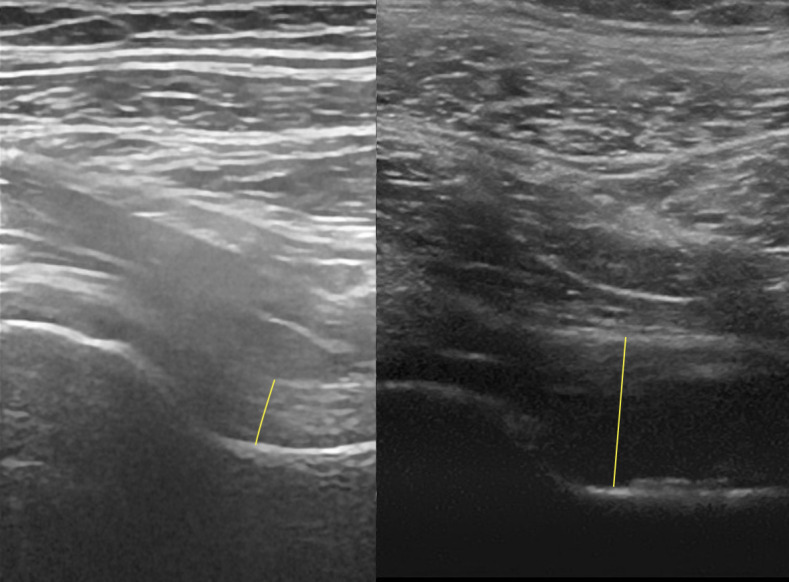
The objectives of this study were to asses (1) inter-rater and intrarater reliability of ultrasound imaging in patients with hip osteoarthritis, and (2) agreement between ultrasound and X-ray findings of hip osteoarthritis using validated Outcome Measures in Rheumatology ultrasound definitions for pathology.
An inter-rater and intrarater reliability study.
A single-centre study conducted at a regional hospital.
50 patients >39 years of age referred for radiography due to hip pain and suspected hip osteoarthritis were included. Exclusion criteria were previous hip surgery in the painful hip, suspected fracture or malignant changes in the hip.
Bilateral ultrasound examinations (n=92) were performed continuously by two experienced operators blinded to clinical information and other imaging findings. After 4-6 weeks, one operator reassessed the images. X-rays were assessed by a third imaging specialist.
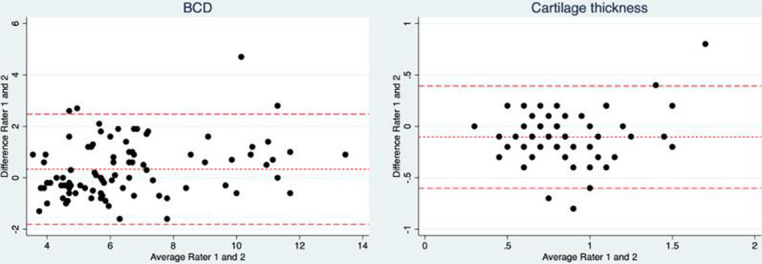
Inter-rater and intrarater reliability and agreement between ultrasound imaging and X-ray were assessed using Cohen's ordinal kappa statistics for binary categorical variables and weighted kappa for ordered categorical variables.
Kappa values (κ) for inter-rater reliability were 0.9 and 0.8 for hip effusion/synovitis and osteoarthritis grading, respectively. For acetabular and femoral osteophytes, femoral cartilage changes and labrum changes κ ranged from 0.4 to 0.7. Intrarater reliability had κ equal or higher compared with inter-rater reliability. Agreement between ultrasound and X-ray findings ranged from κ=0.2 to κ=0.5.
This study demonstrated substantial to almost perfect reliability on the most common ultrasound findings related to hip osteoarthritis and osteoarthritis grading. Agreement on the grade of osteoarthritis between ultrasound and X-ray was moderate. Overall, these results support ultrasound imaging as a reliable tool in the assessment of hip osteoarthritis.
本研究旨在评估:(1)髋关节骨关节炎患者的超声影像的组内和组间可靠性;(2)使用经过验证的风湿病超声定义的关节病学中用于病理学的影像学标准,评估髋关节骨关节炎的超声与 X 射线表现的一致性。
组内和组间可靠性研究。
在一家地区医院进行的单中心研究。
50 名年龄大于 39 岁的患者,因髋关节疼痛和疑似髋关节骨关节炎而接受 X 射线检查。排除标准为髋关节疼痛侧有髋关节手术史、疑似骨折或髋关节恶性改变。
由两位有经验的操作人员对双侧髋关节进行连续超声检查(n=92),这两位操作人员对临床信息和其他影像学结果均不知情。4-6 周后,其中一位操作人员对图像进行重新评估。X 射线由第三位影像学专家进行评估。
使用二分变量的 Cohen 等级kappa 统计量和有序变量的加权 kappa 来评估组内和组间可靠性以及超声成像与 X 射线之间的一致性。
髋关节积液/滑膜炎和骨关节炎分级的组间可靠性的 Kappa 值(κ)分别为 0.9 和 0.8。对于髋臼和股骨骨赘、股骨软骨变化和盂唇变化,κ 值范围为 0.4 至 0.7。组内可靠性与组间可靠性相当或更高。超声与 X 射线结果之间的一致性范围为 κ=0.2 至 κ=0.5。
本研究显示,与髋关节骨关节炎和骨关节炎分级最常见的超声表现具有高度可靠性,甚至几乎是完美的可靠性。超声与 X 射线在骨关节炎分级方面的一致性为中度。总的来说,这些结果支持超声成像作为髋关节骨关节炎评估的可靠工具。