Selvanesan Benson Chellakkan, Meena Kiran, Beck Amanda, Meheus Lydie, Lara Olaya, Rooman Ilse, Gravekamp Claudia
Department of Microbiology and Immunology, Albert Einstein College of Medicine, Bronx, New York, USA.
Michael F. Price Center, Albert Einstein College of Medicine, Bronx, New York, USA.
J Immunother Cancer. 2020 Nov;8(2). doi: 10.1136/jitc-2020-001250.
Treatments for pancreatic ductal adenocarcinoma are poorly effective, at least partly due to the tumor's immune-suppressive stromal compartment. New evidence of positive effects on immune responses in the tumor microenvironment (TME), compelled us to test the combination of gemcitabine (GEM), a standard chemotherapeutic for pancreatic cancer, with nicotinamide (NAM), the amide form of niacin (vitamin B), in mice with pancreatic cancer.
Various mouse tumor models of pancreatic cancer, that is, orthotopic Panc-02 and KPC (Kras, p53, Pdx1-Cre) grafts, were treated alternately with NAM and GEM for 2 weeks, and the effects on efficacy, survival, stromal architecture and tumor-infiltrating immune cells was examined by immunohistochemistry (IHC), flow cytometry, Enzyme-linked immunospot (ELISPOT), T cell depletions in vivo, Nanostring analysis and RNAscope.
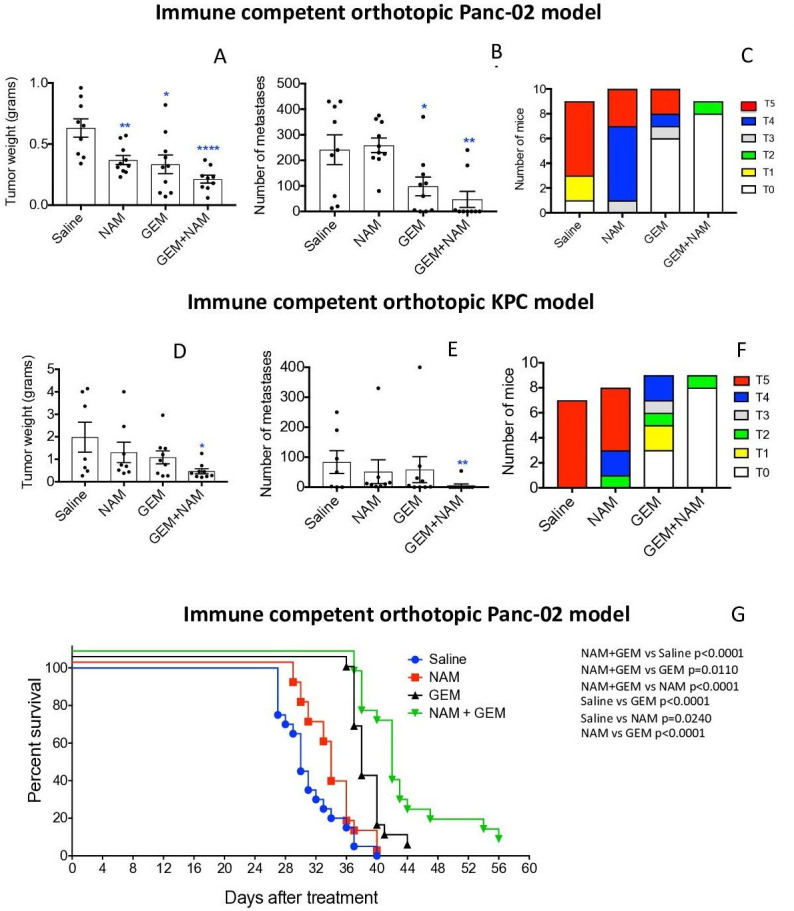
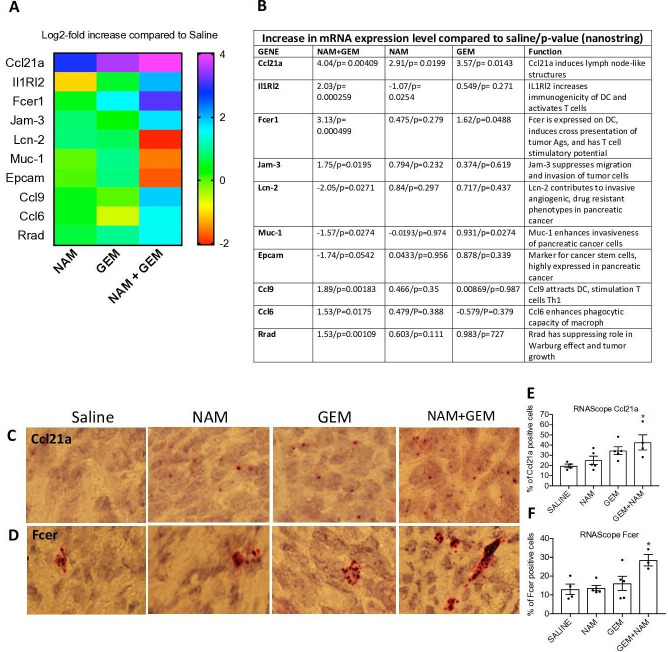
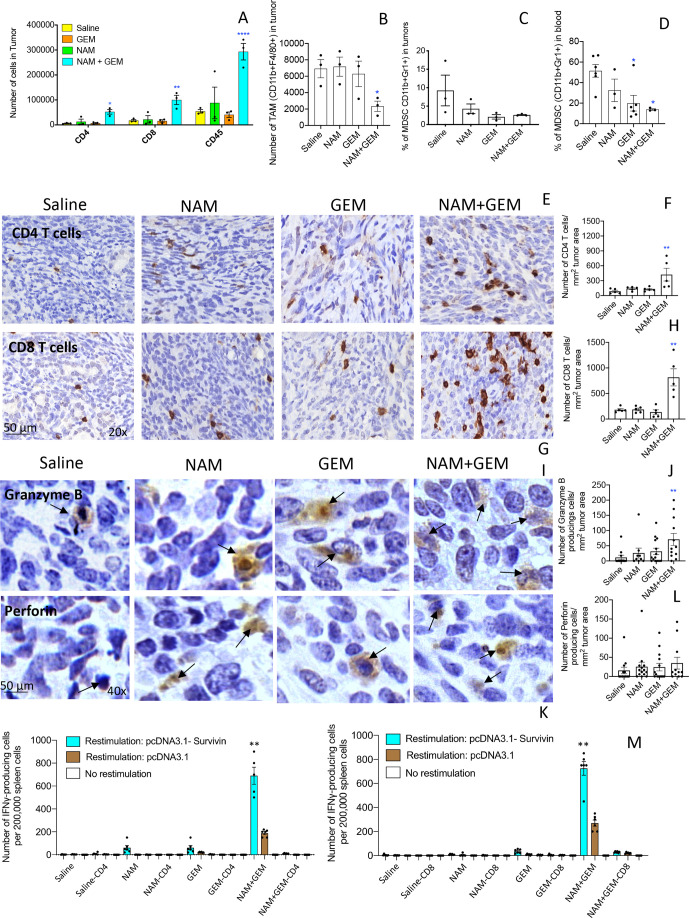
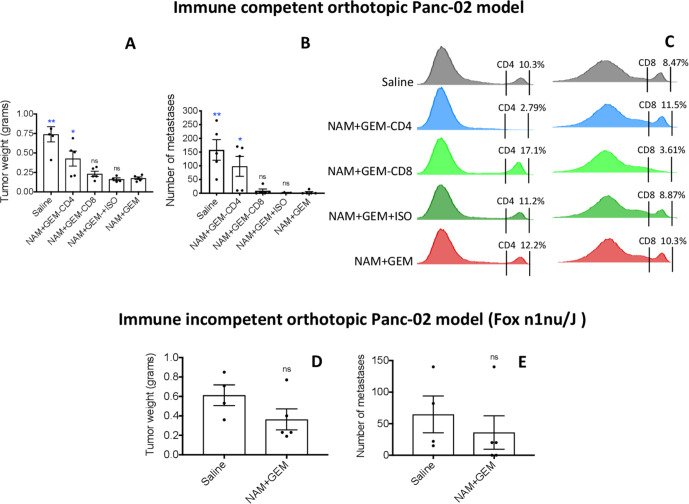
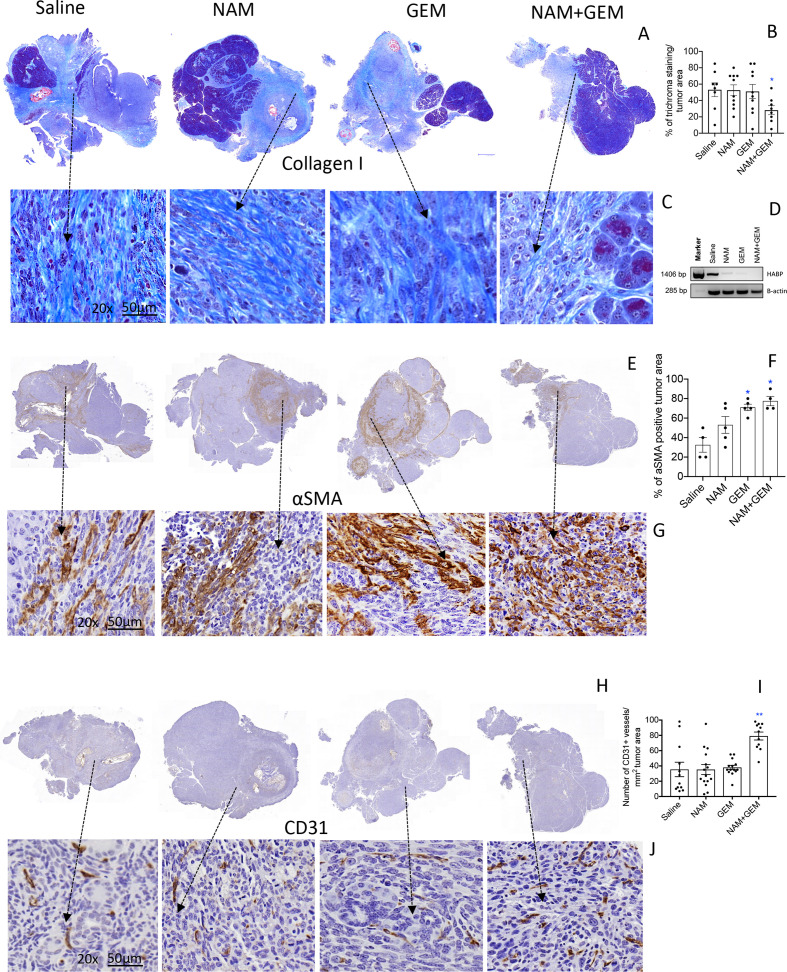
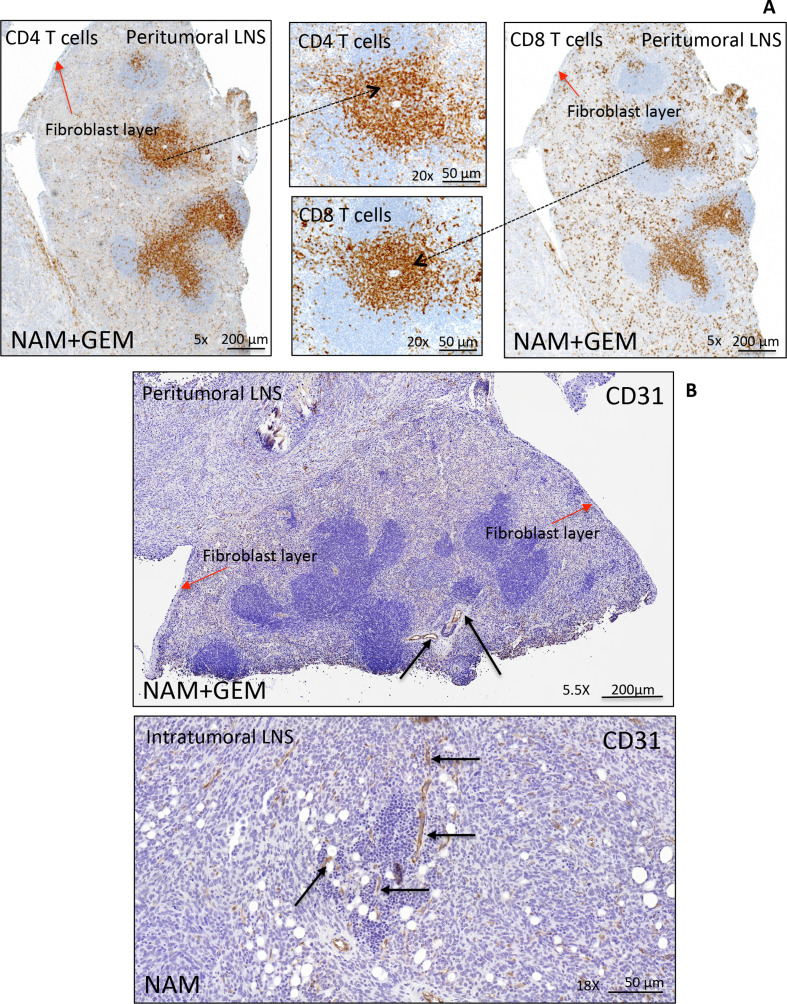
A significant reduction in tumor weight and number of metastases was found, as well as a significant improved survival of the NAM+GEM group compared with all control groups. IHC and flow cytometry showed a significant decrease in tumor-associated macrophages and myeloid-derived suppressor cells in the tumors of NAM+GEM-treated mice. This correlated with a significant increase in the number of CD4 and CD8 T cells of NAM+GEM-treated tumors, and CD4 and CD8 T cell responses to tumor-associated antigen survivin, most likely through epitope spreading. In vivo depletions of T cells demonstrated the involvement of CD4 T cells in the eradication of the tumor by NAM+GEM treatment. In addition, remodeling of the tumor stroma was observed with decreased collagen I and lower expression of hyaluronic acid binding protein, reorganization of the immune cells into lymph node like structures and CD31 positive vessels. Expression profiling for a panel of immuno-oncology genes revealed significant changes in genes involved in migration and activation of T cells, attraction of dendritic cells and epitope spreading.
This study highlights the potential of NAM+GEM as immunotherapy for advanced pancreatic cancer.
胰腺导管腺癌的治疗效果不佳,至少部分原因是肿瘤的免疫抑制性基质成分。肿瘤微环境(TME)中免疫反应产生积极影响的新证据,促使我们在胰腺癌小鼠模型中测试吉西他滨(GEM,一种胰腺癌的标准化疗药物)与烟酰胺(NAM,烟酸(维生素B)的酰胺形式)的联合使用效果。
使用多种胰腺癌小鼠肿瘤模型,即原位Panc-02和KPC(Kras、p53、Pdx1-Cre)移植瘤,交替给予NAM和GEM治疗2周,通过免疫组织化学(IHC)、流式细胞术、酶联免疫斑点法(ELISPOT)、体内T细胞耗竭、纳米串分析和RNAscope检测对疗效、生存率、基质结构和肿瘤浸润免疫细胞的影响。
发现肿瘤重量和转移灶数量显著减少,与所有对照组相比,NAM+GEM组的生存率也显著提高。IHC和流式细胞术显示,NAM+GEM治疗小鼠的肿瘤中肿瘤相关巨噬细胞和髓源性抑制细胞显著减少。这与NAM+GEM治疗肿瘤中CD4和CD8 T细胞数量的显著增加相关,并且CD4和CD8 T细胞对肿瘤相关抗原生存素产生反应,最有可能是通过表位扩展。体内T细胞耗竭表明CD¬4 T细胞参与了NAM+GEM治疗对肿瘤的根除。此外,观察到肿瘤基质重塑,I型胶原减少,透明质酸结合蛋白表达降低,免疫细胞重新组织成淋巴结样结构以及CD31阳性血管。一组免疫肿瘤学基因的表达谱分析显示,参与T细胞迁移和激活、树突状细胞吸引和表位扩展的基因发生了显著变化。
本研究突出了NAM+GEM作为晚期胰腺癌免疫疗法的潜力。