Department of Medical Genetics, Faculty of Medicine, Near East University, Nicosia, Cyprus.
Department of Molecular Biology of Genetics, Arts and Sciences Faculty, Near East University, Nicosia, Cyprus.
Int J Chron Obstruct Pulmon Dis. 2020 Oct 30;15:2751-2757. doi: 10.2147/COPD.S267799. eCollection 2020.
Telomere biology, especially tissue-specific ultra-short telomeres, might provide a strong contribution to our current knowledge in COPD development as well as a predictive marker for prognosis. To test this hypothesis, we investigated telomere lengths in lung tissue and leukocytes in patients diagnosed with COPD.
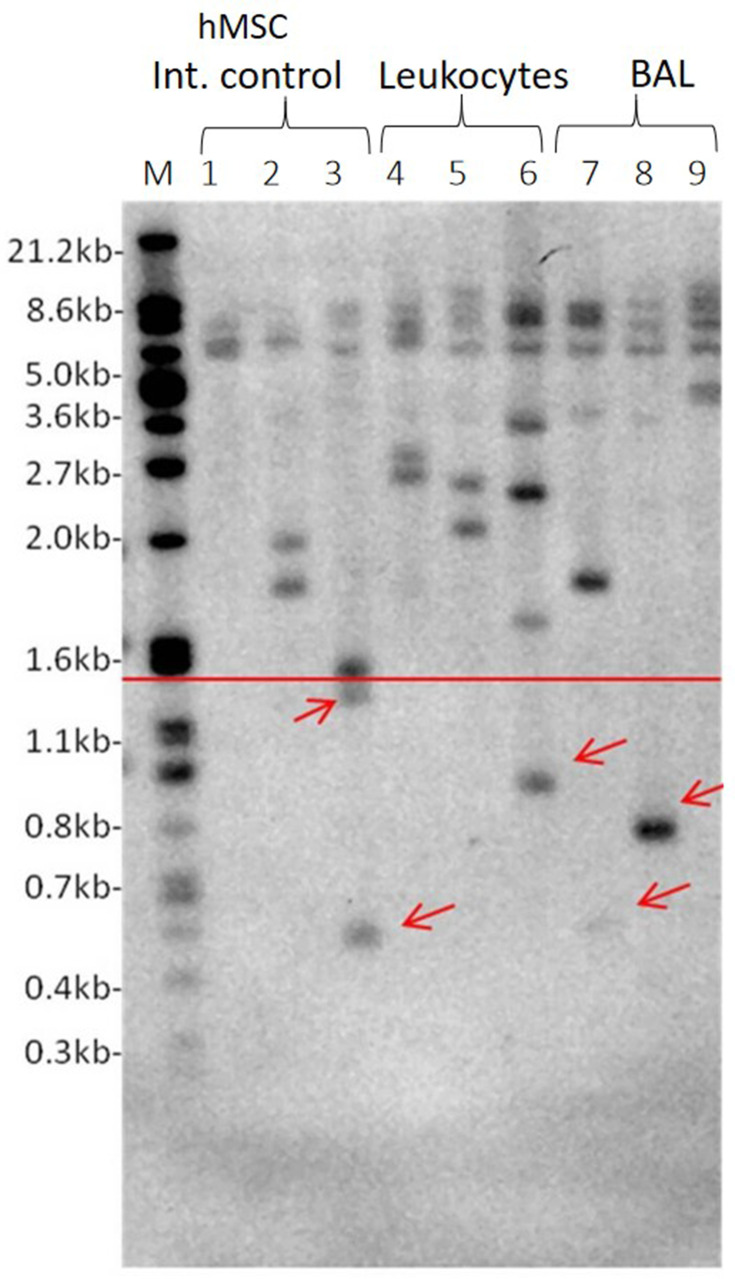
Thirty-two patients were included in the current study. All patients showed a post-bronchodilator ratio of less than 70% post-bronchodilator predicted value of forced expiratory volume in second (FEV1%), mean 56%; range [19% to 86%]. To be able to investigate ultra-short telomeres, universal single telomere length analysis (U-STELA) was used.
Our results showed a higher level of the ultra-short telomere presence in bronchoalveolar lavage (BAL) cells when compared to leukocytes with statistical significance t(62)=5.771, p<0.00001. The FEV1% was lower in subjects with ultra-short telomeres in BAL (50.6% vs 81.6%: p<0.001) and in ultra-short telomeres in blood leukocytes (37.3% vs 58.5%: p=0.051) when compared to subjects without ultra-short telomeres in leukocytes. Furthermore, the patients who had ultra-short telomeres in BAL samples were significantly older (p=0.014) than patients who did not have ultra-short telomeres. Ultra-short telomeres in BAL (p=0.05) but not in leukocytes (p=0.33) were associated with FEV1% in a regressions model adjusting for age (p<0.0001), ever smoking (p<0.0001) and sex (p=0.71). The patients with ultra-short telomeres were graded higher in the Global Initiative for Chronic Obstructive Lung Disease (GOLD) classification (p=0.006).
This study emphasizes the need to investigate the correct tissue to get a representative evaluation of the stage or advancedness of COPD. To our knowledge, this is the first study to show that there is a correlation between the presence of ultra-short telomeres in lung tissue and COPD severity. Our results suggest that ultra-short telomeres are involved in the molecular pathogenesis of COPD and might be used as a tissue-specific predictive biomarker.
端粒生物学,尤其是组织特异性极短端粒,可能为我们目前对 COPD 发展的认识以及预后的预测标志物提供重要贡献。为了验证这一假设,我们检测了诊断为 COPD 的患者的肺组织和白细胞中的端粒长度。
本研究共纳入 32 名患者。所有患者均表现出支气管扩张剂后用力呼气量(FEV1%)占预计值的百分比小于 70%,平均为 56%;范围为[19%至 86%]。为了能够检测极短端粒,我们使用了通用单端粒长度分析(U-STELA)。
我们的结果显示,与白细胞相比,支气管肺泡灌洗液(BAL)细胞中极短端粒的存在水平更高,差异具有统计学意义 t(62)=5.771,p<0.00001。与白细胞中没有极短端粒的患者相比,BAL 中存在极短端粒的患者的 FEV1%更低(50.6%比 81.6%:p<0.001),血液白细胞中存在极短端粒的患者的 FEV1%也更低(37.3%比 58.5%:p=0.051)。此外,BAL 样本中存在极短端粒的患者明显比没有极短端粒的患者年龄更大(p=0.014)。在调整年龄(p<0.0001)、吸烟史(p<0.0001)和性别(p=0.71)的回归模型中,BAL 中的极短端粒(p=0.05)而非白细胞中的极短端粒(p=0.33)与 FEV1%相关(p<0.0001)。极短端粒患者的 GOLD 分级更高(p=0.006)。
本研究强调需要研究正确的组织,以对 COPD 的阶段或严重程度进行代表性评估。据我们所知,这是第一项表明肺组织中极短端粒的存在与 COPD 严重程度相关的研究。我们的结果表明,极短端粒参与 COPD 的分子发病机制,并且可以作为组织特异性预测生物标志物。