Department of Surgery, University of Groningen, University Medical Center Groningen, the Netherlands.
Department of Surgery, Medical Center Leeuwarden, the Netherlands.
Surgery. 2021 Feb;169(2):264-274. doi: 10.1016/j.surg.2020.09.022. Epub 2020 Sep 24.
A direct comparison of severe acute respiratory syndrome coronavirus 2 positive patients with a severe acute respiratory syndrome coronavirus 2 negative control group undergoing an operative intervention during the current pandemic is lacking, and a reliable estimate of the assumed difference in morbidity and mortality between both patient categories remains unknown.
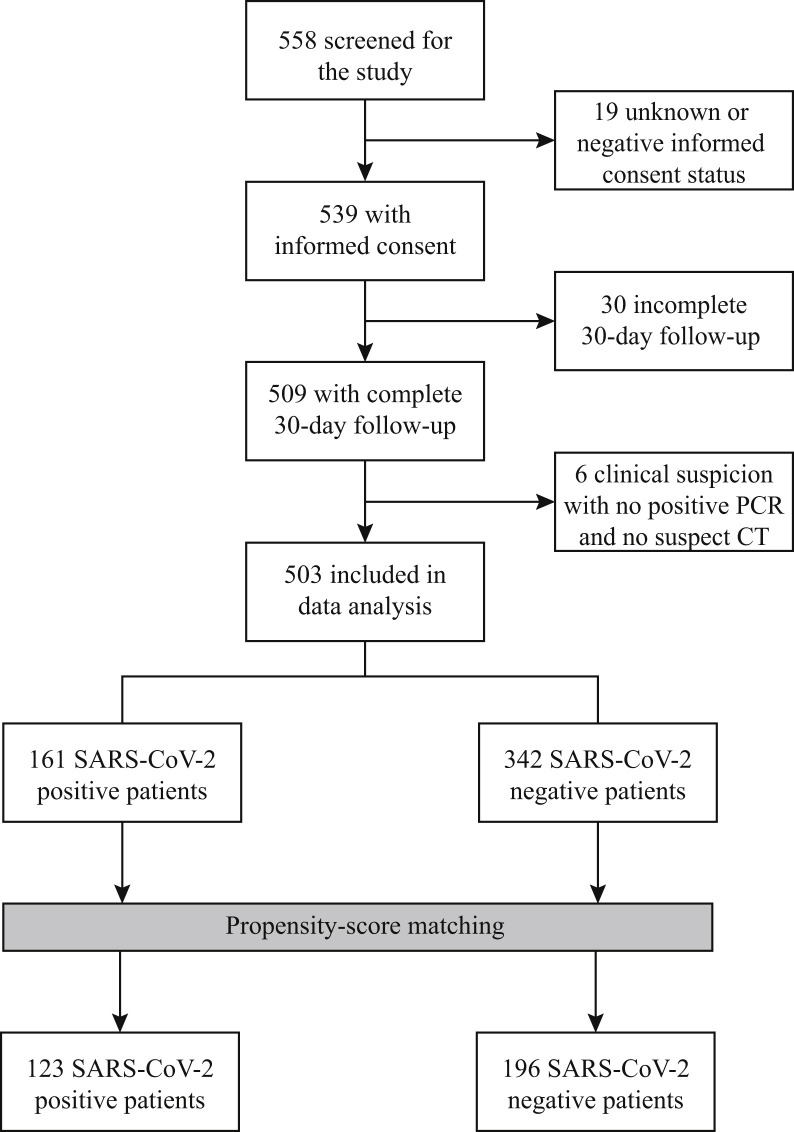
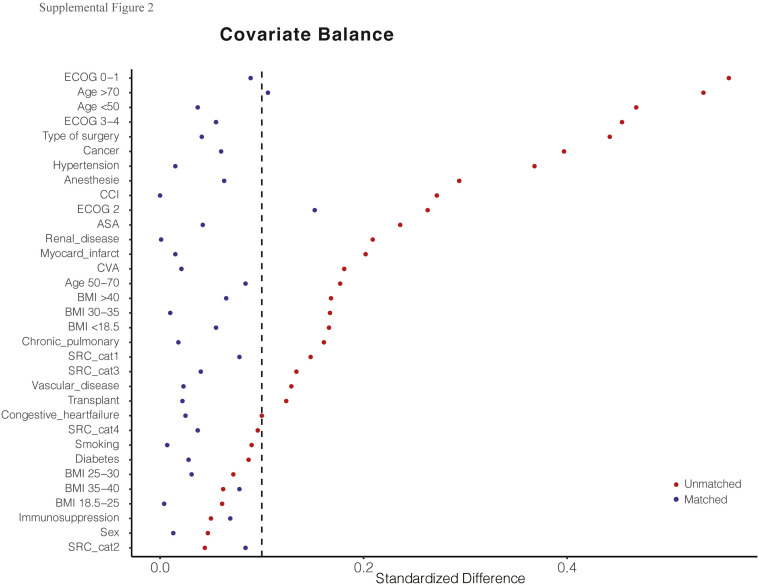
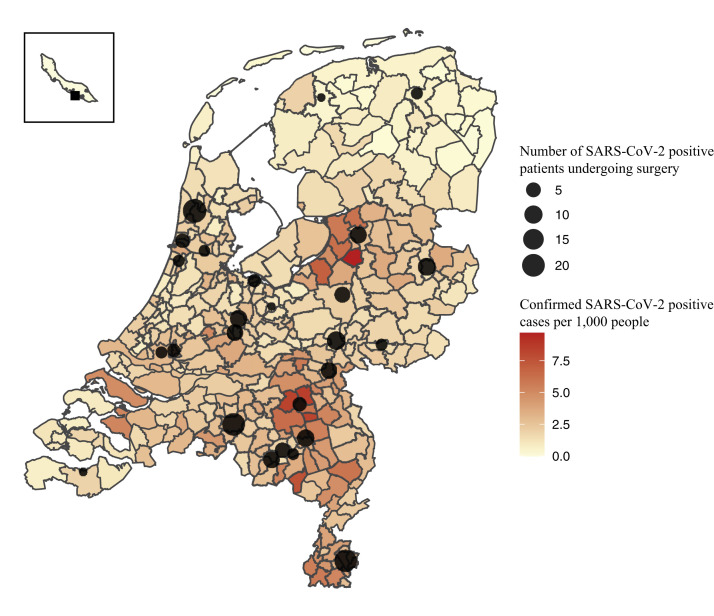
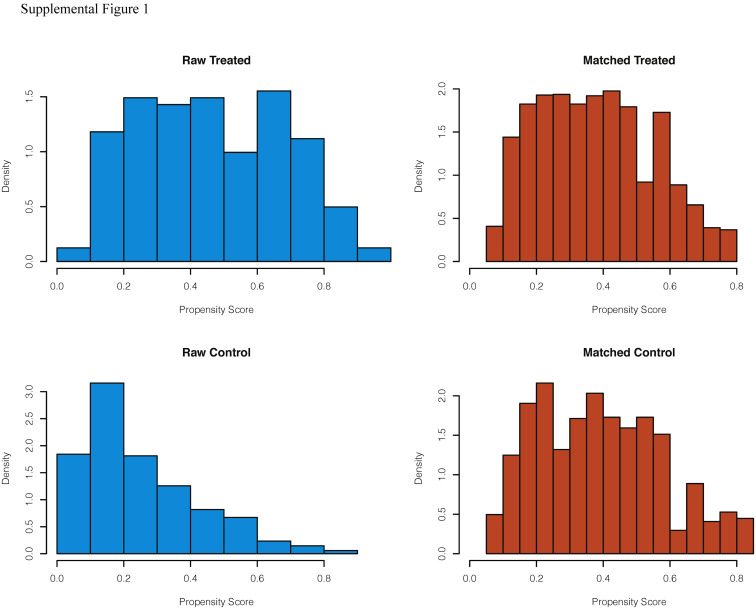
We included all consecutive patients with a confirmed pre- or postoperative severe acute respiratory syndrome coronavirus 2 positive status (operated in 27 hospitals) and negative control patients (operated in 4 hospitals) undergoing emergency or elective operations. A propensity score-matched comparison of clinical outcomes was performed between severe acute respiratory syndrome coronavirus 2 positive and negative tested patients (control group). Primary outcome was overall 30-day mortality rate between both groups. Main secondary outcomes were overall, pulmonary, and thromboembolic complications.
In total, 161 severe acute respiratory syndrome coronavirus 2 positive and 342 control severe acute respiratory syndrome coronavirus 2 negative patients were included in this study. The 30-day overall postoperative mortality rate was greater in the severe acute respiratory syndrome coronavirus 2 positive cohort compared with the negative control group (16% vs 4% respectively; P = .007). After propensity score matching, the severe acute respiratory syndrome coronavirus 2 positive group consisted of 123 patients (median 70 years of age [interquartile range 59-77] and 55% male) were compared with 196 patients in the matched control group (median 69 years (interquartile range 58-75] and 53% male). The 30-day mortality rate and risk were greater in the severe acute respiratory syndrome coronavirus 2 positive group compared with the matched control group (12% vs 4%; P = .009 and odds ratio 3.4 [95% confidence interval 1.5-8.5]; P = .005, respectively). Overall, pulmonary and thromboembolic complications occurred more often in severe acute respiratory syndrome coronavirus 2 positive patients (P < .01).
Patients diagnosed with perioperative severe acute respiratory syndrome coronavirus 2 have an increased risk of 30-day mortality, pulmonary complications, and thromboembolic events. These findings serve as an evidence-based argument to postpone elective surgery and selected emergency cases.
目前大流行期间,缺乏对接受手术干预的严重急性呼吸综合征冠状病毒 2 阳性患者与严重急性呼吸综合征冠状病毒 2 阴性对照组的直接比较,并且对于这两个患者群体的发病率和死亡率之间假定的差异,仍缺乏可靠的估计。
我们纳入了所有在 27 家医院接受手术的确诊为术前或术后严重急性呼吸综合征冠状病毒 2 阳性的连续患者和在 4 家医院接受手术的阴性对照患者,并对严重急性呼吸综合征冠状病毒 2 阳性和阴性检测患者(对照组)进行了倾向评分匹配的临床结局比较。主要结局是两组的 30 天总死亡率。主要次要结局是总并发症、肺部并发症和血栓栓塞并发症。
本研究共纳入 161 例严重急性呼吸综合征冠状病毒 2 阳性患者和 342 例对照严重急性呼吸综合征冠状病毒 2 阴性患者。与阴性对照组相比,严重急性呼吸综合征冠状病毒 2 阳性组的 30 天总术后死亡率更高(分别为 16%和 4%;P =.007)。在倾向评分匹配后,严重急性呼吸综合征冠状病毒 2 阳性组包括 123 例患者(中位数 70 岁[四分位距 59-77],55%为男性)与匹配的对照组 196 例患者(中位数 69 岁[四分位距 58-75],53%为男性)进行比较。与匹配的对照组相比,严重急性呼吸综合征冠状病毒 2 阳性组的 30 天死亡率和风险更高(12%比 4%;P =.009,优势比 3.4[95%置信区间 1.5-8.5];P =.005)。总体而言,严重急性呼吸综合征冠状病毒 2 阳性患者发生肺部和血栓栓塞并发症的频率更高(P <.01)。
诊断为围手术期严重急性呼吸综合征冠状病毒 2 感染的患者 30 天死亡率、肺部并发症和血栓栓塞事件的风险增加。这些发现为推迟择期手术和选择急诊手术提供了循证依据。