Department of Surgical Science, University Tor Vergata, Viale Oxford 81, 00133, Rome, Italy.
Torvergata Oncoscience Research Centre of Excellence, TOR, Department of Experimental Medicine, University Tor Vergata, Rome, Italy.
Biol Direct. 2020 Nov 7;15(1):23. doi: 10.1186/s13062-020-00280-5.
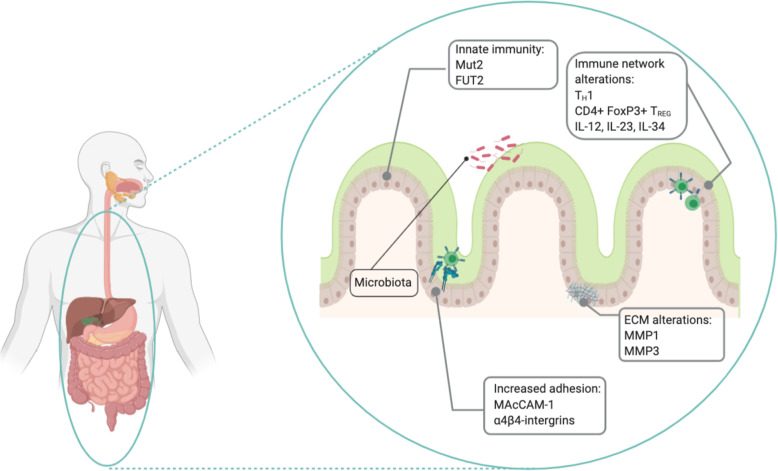
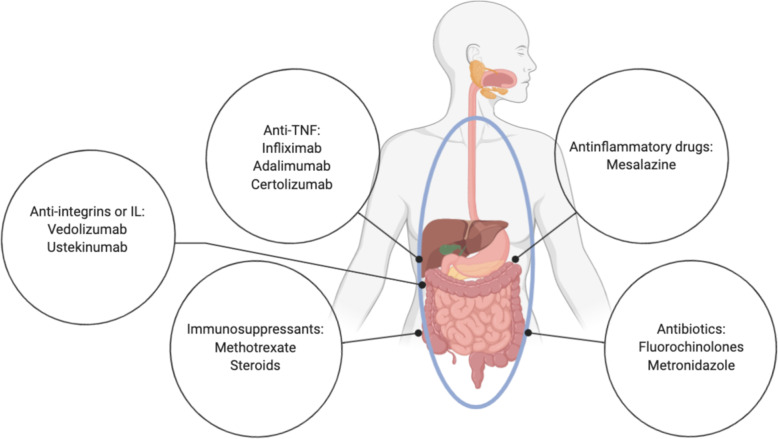
Chron's Disease is a chronic inflammatory intestinal disease, first described at the beginning of the last century. The disease is characterized by the alternation of periods of flares and remissions influenced by a complex pathogenesis in which inflammation plays a key role. Crohn's disease evolution is mediated by a complex alteration of the inflammatory response which is characterized by alterations of the innate immunity of the intestinal mucosa barrier together with a remodeling of the extracellular matrix through the expression of metalloproteins and increased adhesion molecules expression, such as MAcCAM-1. This reshaped microenvironment enhances leucocytes migration in the sites of inflammation, promoting a T1 response, through the production of cytokines such as IL-12 and TNF-α. IL-12 itself and IL-23 have been targeted for the medical treatment of CD. Giving the limited success of medical therapies, the treatment of the disease is invariably surgical. This review will highlight the role of inflammation in CD and describe the surgical approaches for the prevention of the almost inevitable recurrence.
克隆氏病是一种慢性炎症性肠道疾病,最早于上世纪初被描述。该疾病的特征为爆发期和缓解期的交替,其受到一个复杂发病机制的影响,而炎症在其中起着关键作用。克隆氏病的发展是由炎症反应的复杂变化介导的,其特征是肠道黏膜屏障的先天免疫发生改变,同时通过表达金属蛋白酶和增加黏附分子的表达(如 MAcCAM-1)来重塑细胞外基质。这种重塑的微环境通过产生细胞因子(如 IL-12 和 TNF-α)增强白细胞向炎症部位的迁移,从而促进 T1 反应。IL-12 本身和 IL-23 已被作为 CD 的治疗靶点。鉴于医学治疗的有限成功,该疾病的治疗始终需要手术。这篇综述将重点介绍炎症在 CD 中的作用,并描述预防几乎不可避免复发的手术方法。