Laboratory of Molecular Neurobiology, Department of Neuroscience, Istituto di Ricerche Farmacologiche Mario Negri IRCCS, Via Mario Negri 2, Milan 20156, Italy.
Laboratory of Biology of Neurodegenerative Disorders, Department of Neuroscience, Istituto di Ricerche Farmacologiche Mario Negri IRCCS, Via Mario Negri 2, Milan 20156, Italy.
EBioMedicine. 2020 Dec;62:103097. doi: 10.1016/j.ebiom.2020.103097. Epub 2020 Nov 9.
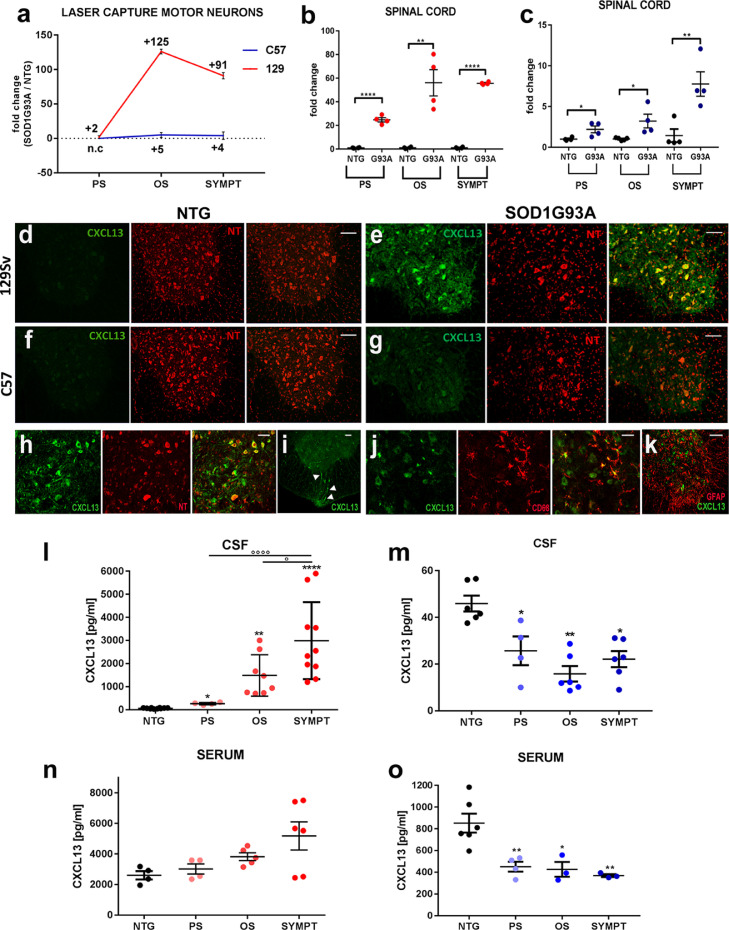
CXCL13 is a B and T lymphocyte chemokine that mediates neuroinflammation through its receptor CXCR5. This chemokine is highly expressed by motoneurons (MNs) in Amyotrophic Lateral Sclerosis (ALS) SOD1G93A (mSOD1) mice during the disease, particularly in fast-progressing mice. Accordingly, in this study, we investigated the role of this chemokine in ALS.
We used in vitro and in vivo experimental paradigms derived from ALS mice and patients to investigate the expression level and distribution of CXCL13/CXCR5 axis and its role in MN death and disease progression. Moreover, we compared the levels of CXCL13 in the CSF and serum of ALS patients and controls.
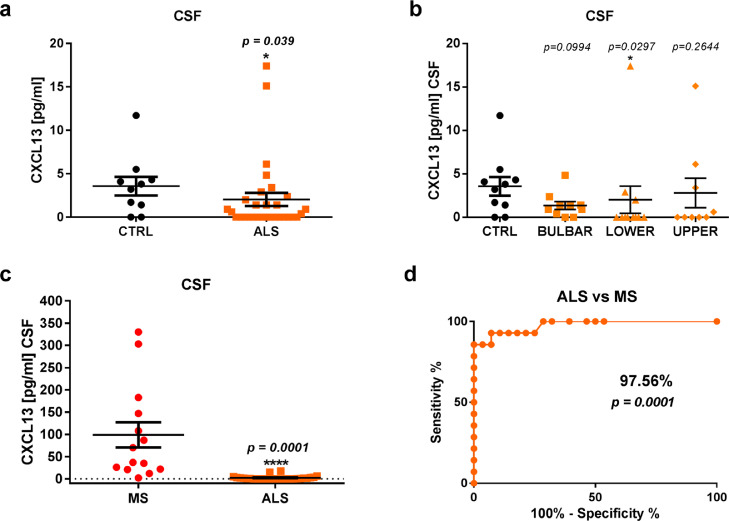
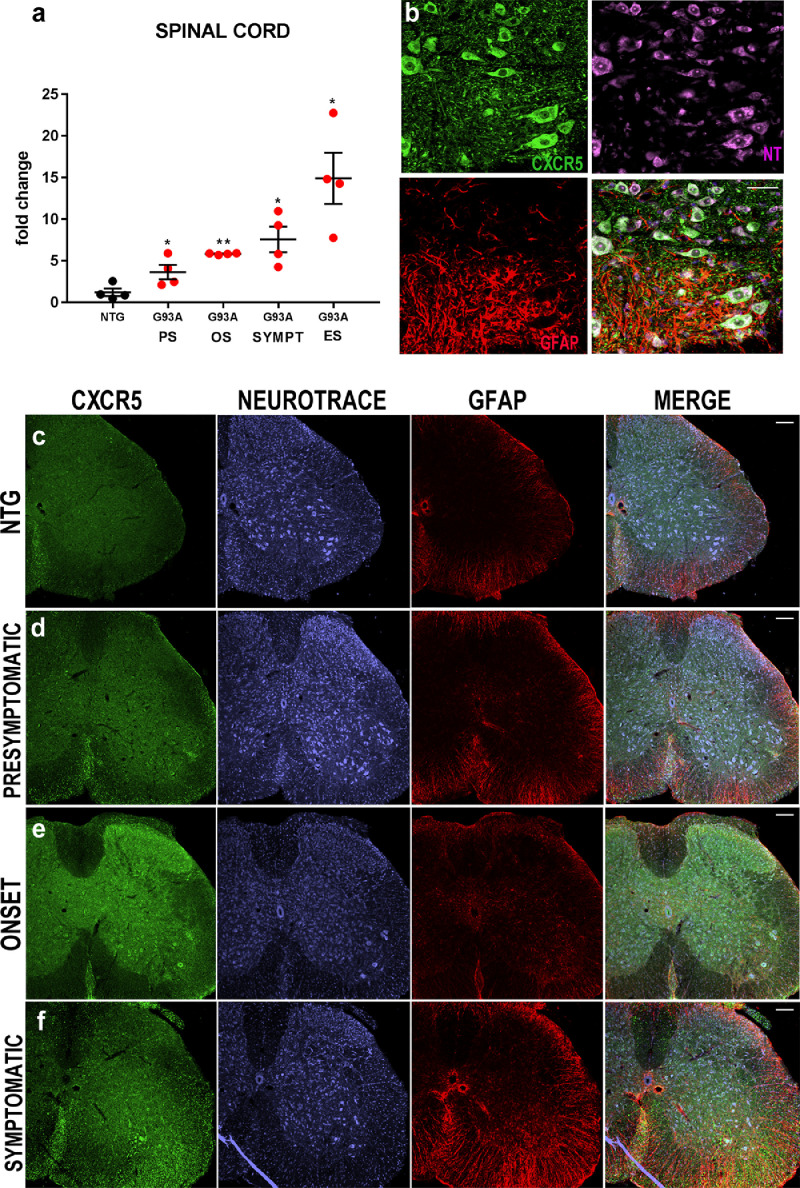
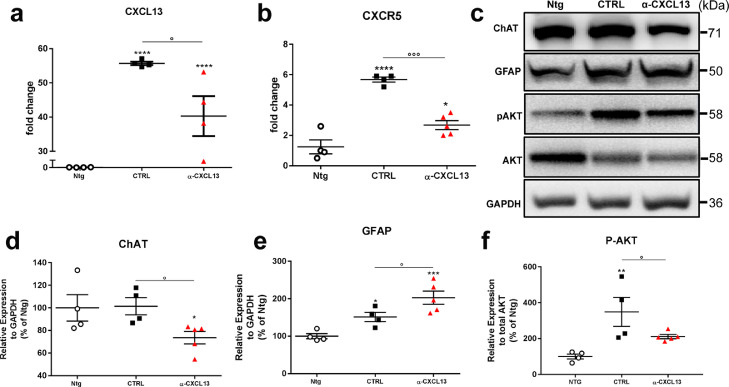
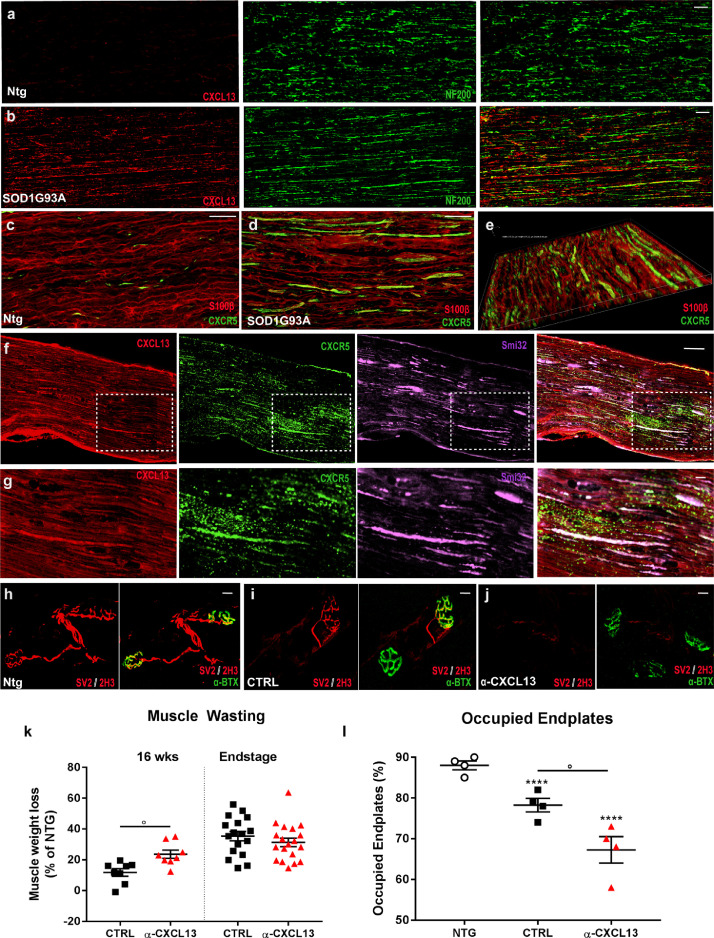
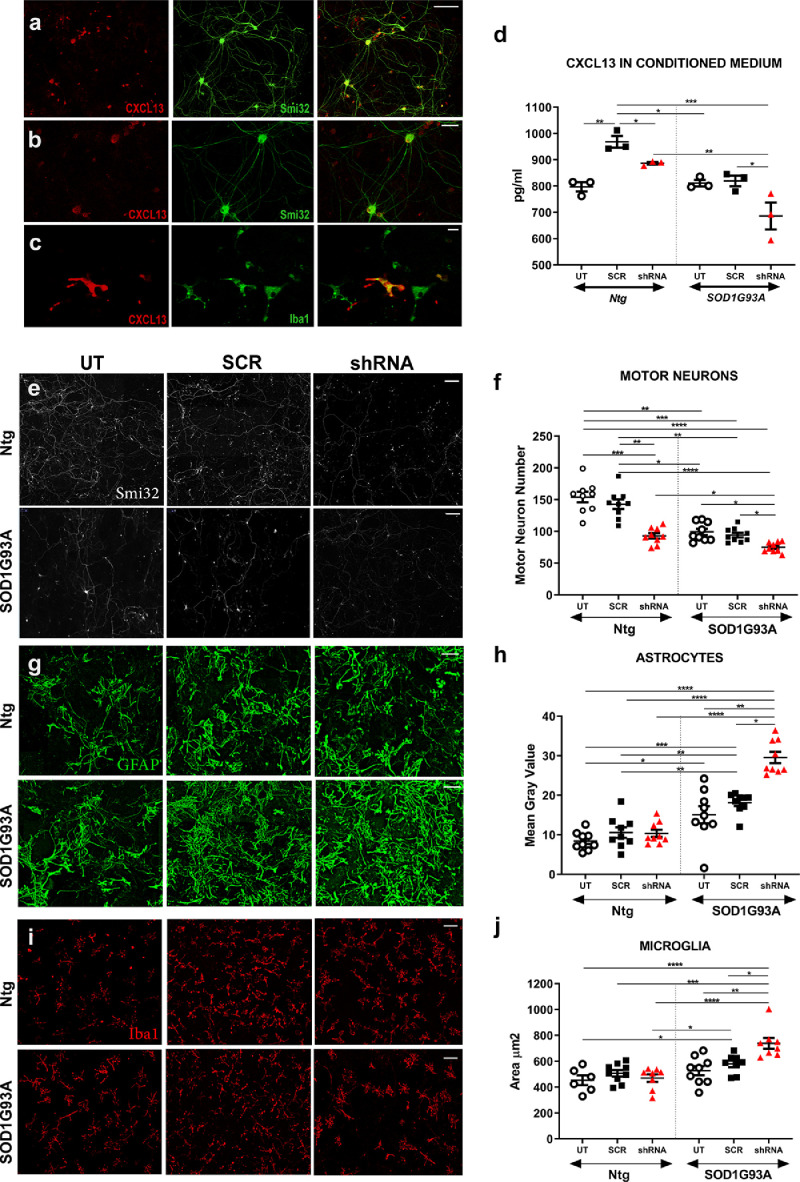
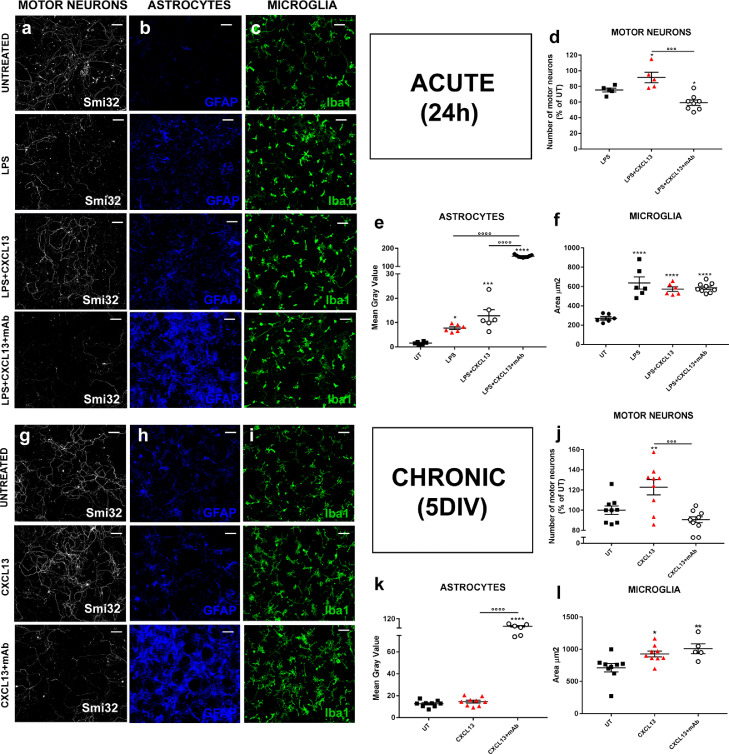
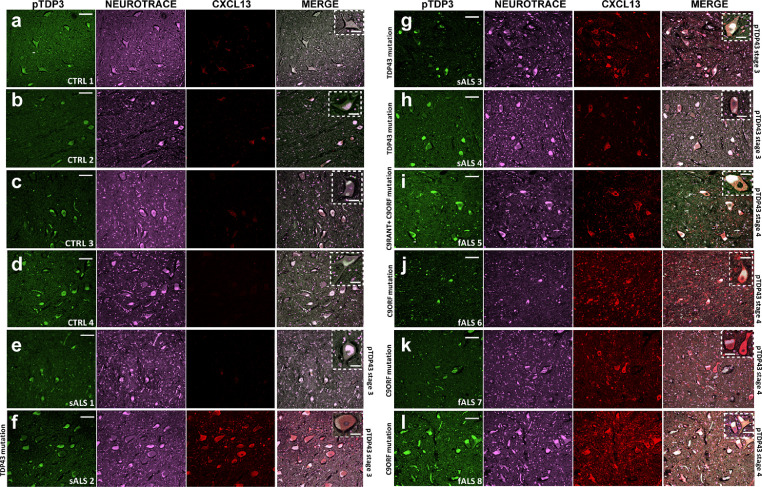
CXCL13 and CXCR5 are overexpressed in the spinal MNs and peripheral axons in mSOD1 mice. CXCL13 inhibition in the CNS of ALS mice resulted in the exacerbation of motor impairment (n = 4/group;Mean_Diff.=27.81) and decrease survival (n = 14_Treated:19.2 ± 1.05wks, n = 17_Controls:20.2 ± 0.6wks; 95% CI: 0.4687-1.929). This was corroborated by evidence from primary spinal cultures where the inhibition or activation of CXCL13 exacerbated or prevented the MN loss. Besides, we found that CXCL13/CXCR5 axis is overexpressed in the spinal cord MNs of ALS patients, and CXCL13 levels in the CSF discriminate ALS (n = 30) from Multiple Sclerosis (n = 16) patients with a sensitivity of 97.56%.
We hypothesise that MNs activate CXCL13 signalling to attenuate CNS inflammation and prevent the neuromuscular denervation. The low levels of CXCL13 in the CSF of ALS patients might reflect the MN dysfunction, suggesting this chemokine as a potential clinical adjunct to discriminate ALS from other neurological diseases.
Vaccinex, Inc.; Regione Lombardia (TRANS-ALS).
趋化因子 CXCL13 是 B 细胞和 T 淋巴细胞趋化因子,通过其受体 CXCR5 介导神经炎症。在肌萎缩侧索硬化症 (ALS) SOD1G93A (mSOD1) 小鼠疾病期间,特别是在快速进展的小鼠中,这种趋化因子高度表达于运动神经元 (MNs)。因此,在这项研究中,我们研究了这种趋化因子在 ALS 中的作用。
我们使用源自 ALS 小鼠和患者的体外和体内实验范例来研究 CXCL13/CXCR5 轴的表达水平和分布及其在 MN 死亡和疾病进展中的作用。此外,我们比较了 ALS 患者和对照组 CSF 和血清中 CXCL13 的水平。
在 mSOD1 小鼠中,CXCL13 和 CXCR5 在脊髓 MNs 和周围轴突中过度表达。在 ALS 小鼠的中枢神经系统中抑制 CXCL13 导致运动功能障碍恶化(n=4/组;Mean_Diff.=27.81)和生存时间缩短(n=14_治疗组:19.2±1.05 周,n=17_对照组:20.2±0.6 周;95%CI:0.4687-1.929)。这一结果得到了原代脊髓培养物的证据的证实,其中 CXCL13 的抑制或激活加剧或预防了 MN 的丧失。此外,我们发现 CXCL13/CXCR5 轴在 ALS 患者的脊髓 MNs 中过度表达,并且 CSF 中的 CXCL13 水平可将 ALS(n=30)与多发性硬化症(n=16)患者区分开来,灵敏度为 97.56%。
我们假设 MNs 激活 CXCL13 信号以减轻中枢神经系统炎症并防止神经肌肉去神经支配。ALS 患者 CSF 中的 CXCL13 水平较低可能反映了 MN 功能障碍,表明这种趋化因子可能作为一种潜在的临床辅助手段,将 ALS 与其他神经疾病区分开来。
Vaxinex,Inc.;伦巴第大区(TRANS-ALS)。