Xavier Amaury Teixeira, Campos Júlia Faria, Robinson Lucinda, Lima Elmar José Moreira, da Rocha Luiz Claudio Miranda, Arantes Vitor Nunes
Endoscopy Unit, Alfa Institute of Gastroenterology, Clinics Hospital, Federal University of Minas Gerais, Belo Horizonte, Brazil (Amaury Teixeira Xavier, Júlia Faria Campos, Vitor Nunes Arantes).
Endoscopy Unit, Military Hospital of Minas Gerais, Belo Horizonte, Brazil (Amaury Teixeira Xavier, Júlia Faria Campos, Elmar José Moreira Lima).
Ann Gastroenterol. 2020 Nov-Dec;33(6):563-570. doi: 10.20524/aog.2020.0526. Epub 2020 Jul 30.
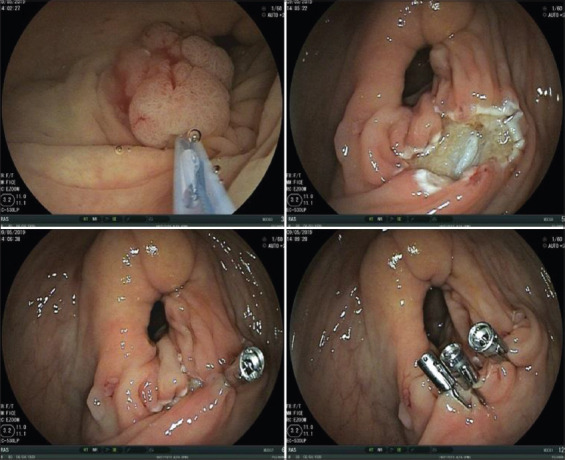
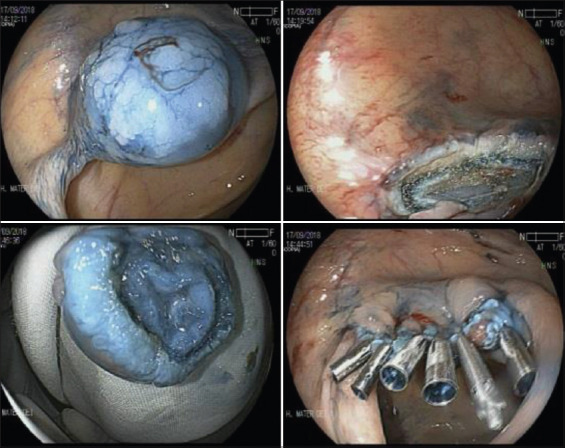
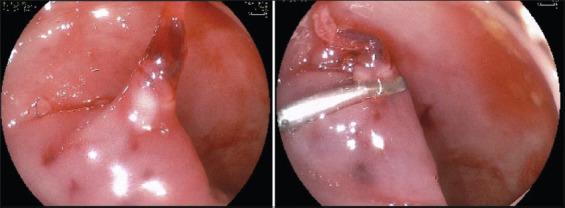
Endoscopic clipping has become a common practice among endoscopists. Several models are available, most frequently being introduced via the working channel of the endoscope (through-the-scope); however, larger clips can also be mounted onto the distal tip of the endoscope (over-the-scope). The main indications for endoclip placement include providing effective mechanical hemostasis for bleeding lesions and allowing endoscopic closure of gastrointestinal perforations. Endoclips can also be used prophylactically after endoscopic resection; however, this practice is still controversial. This review discusses the main indications for endoscopic clipping in the esophagus, stomach, duodenum and colon to manage acute bleeding lesions, and the criteria to be used in the prevention of delayed post-polypectomy bleeding.
内镜下夹闭术已成为内镜医师的常用操作。有多种型号可供选择,最常见的是通过内镜工作通道(经内镜)置入;不过,较大的夹子也可安装在内镜远端(经内镜外)。内镜下夹子置入的主要适应证包括为出血性病变提供有效的机械止血以及实现胃肠道穿孔的内镜闭合。内镜下夹子也可在内镜切除术后预防性使用;然而,这种做法仍存在争议。本综述讨论了食管、胃、十二指肠和结肠内镜下夹闭术处理急性出血性病变的主要适应证,以及预防息肉切除术后延迟出血所采用的标准。