Ahmed Imran, Ahmad Misbah, Rodrigues Joel J P C, Jeon Gwanggil, Din Sadia
Center of Excellence in Information Technology, Institute of Management Sciences, 1-A, Sector E-5, Phase VII, Hayatabad, Peshawar, Pakistan.
Post-Graduation Program in Electrical Engineering (PPGEE), Federal University of Piauí, Teresina 64049-550, Brazil.
Sustain Cities Soc. 2021 Feb;65:102571. doi: 10.1016/j.scs.2020.102571. Epub 2020 Nov 1.
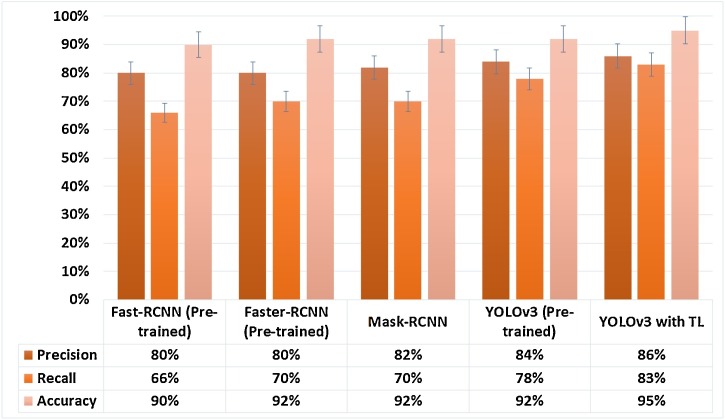
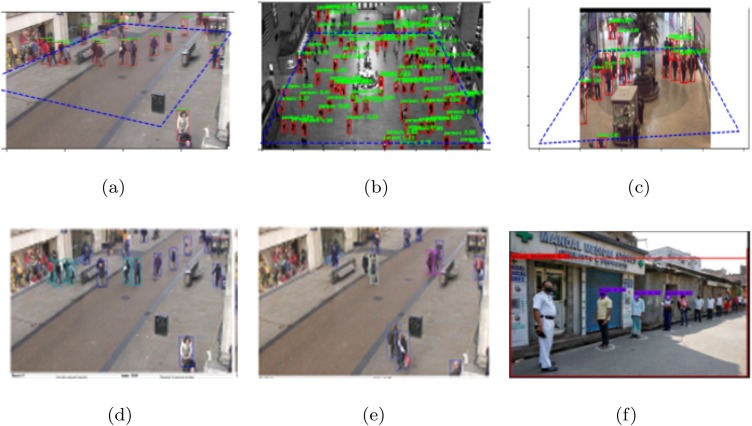
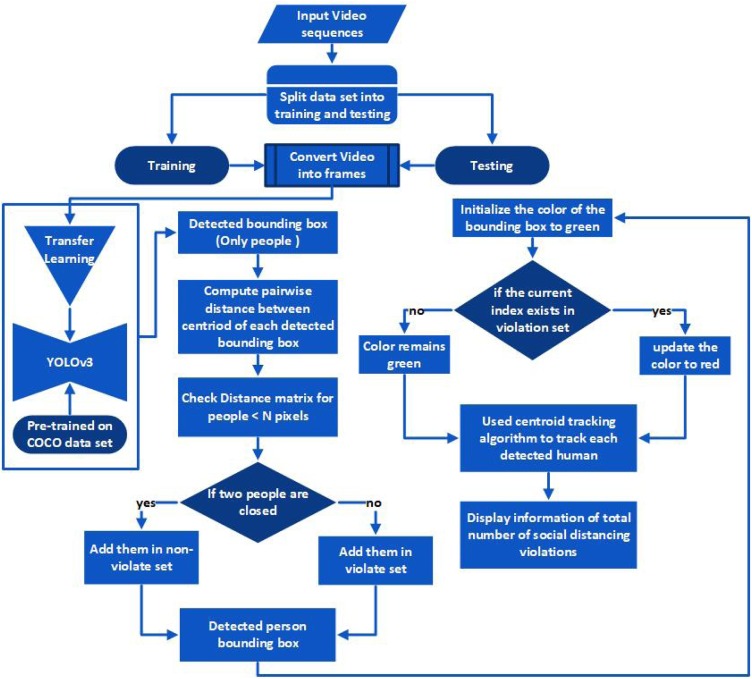
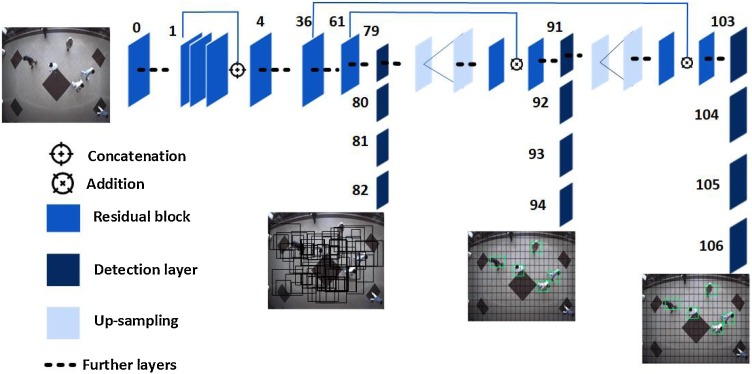
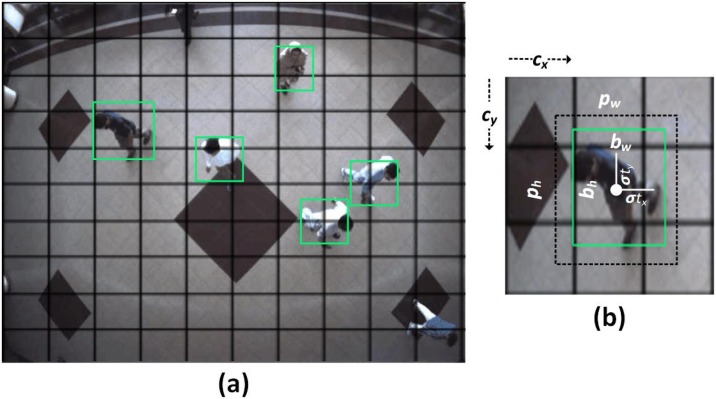
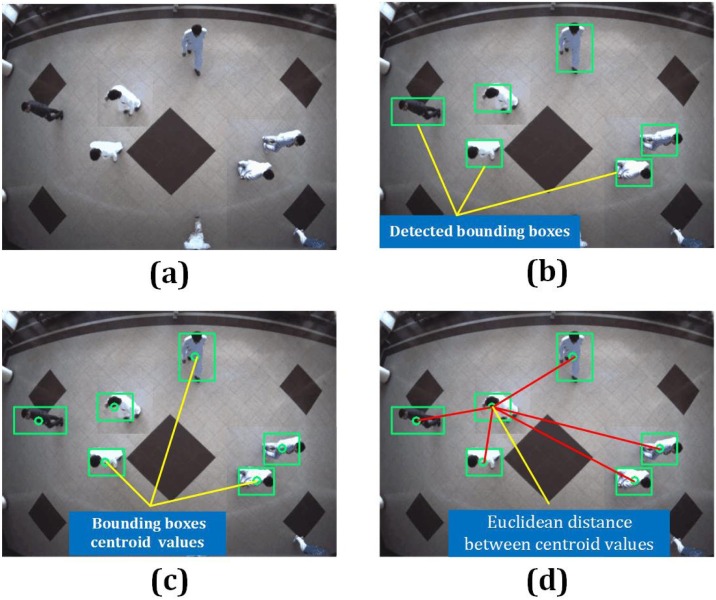
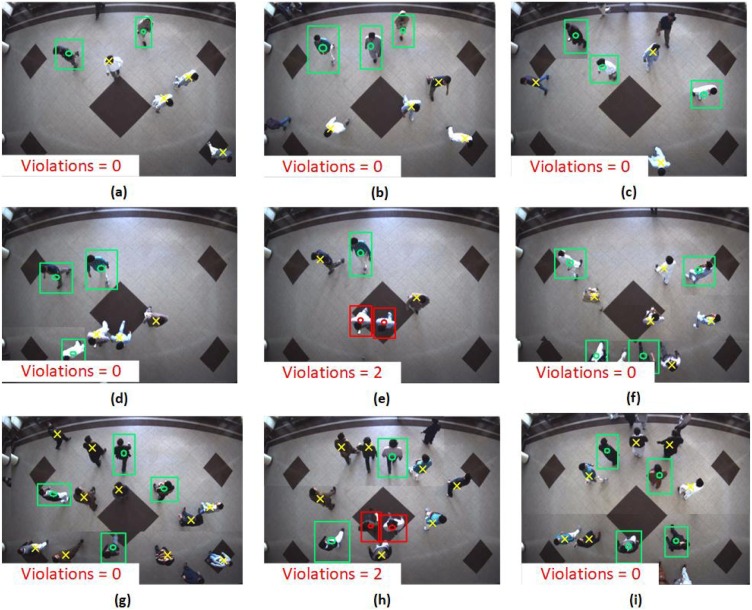
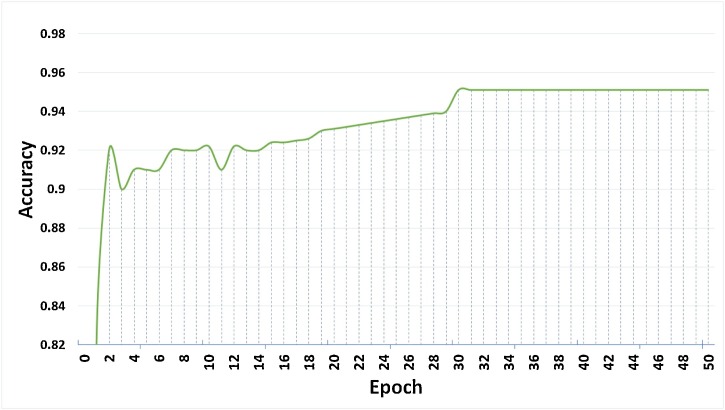
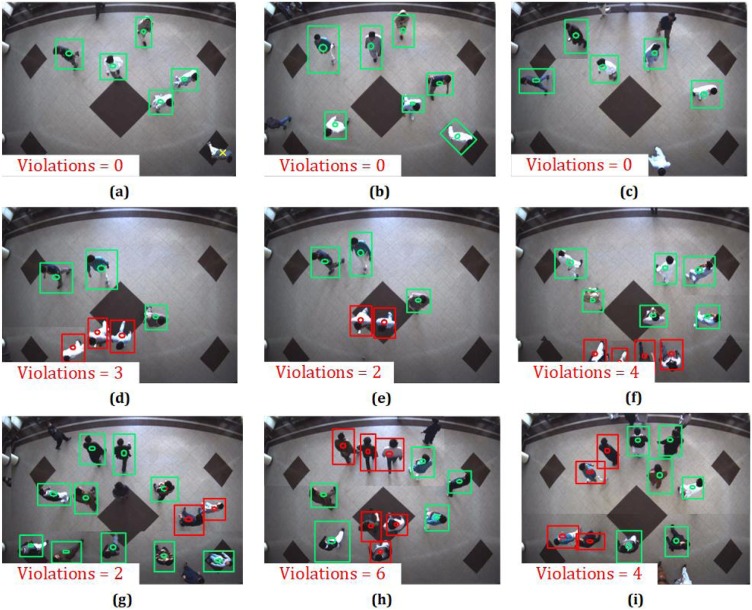
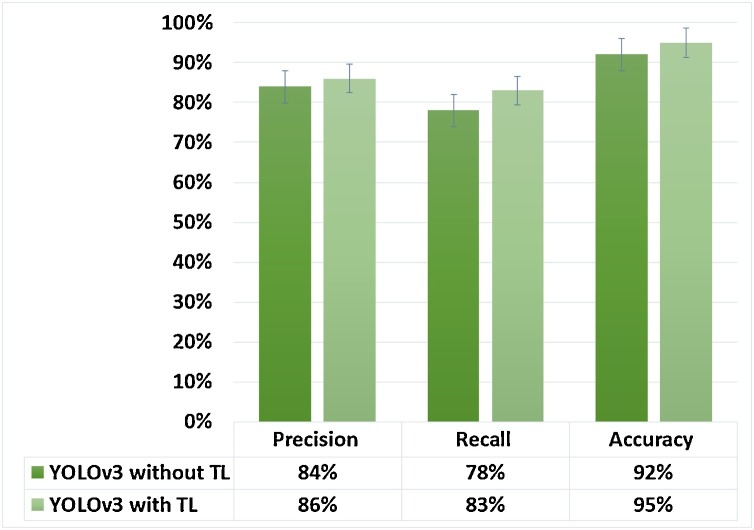
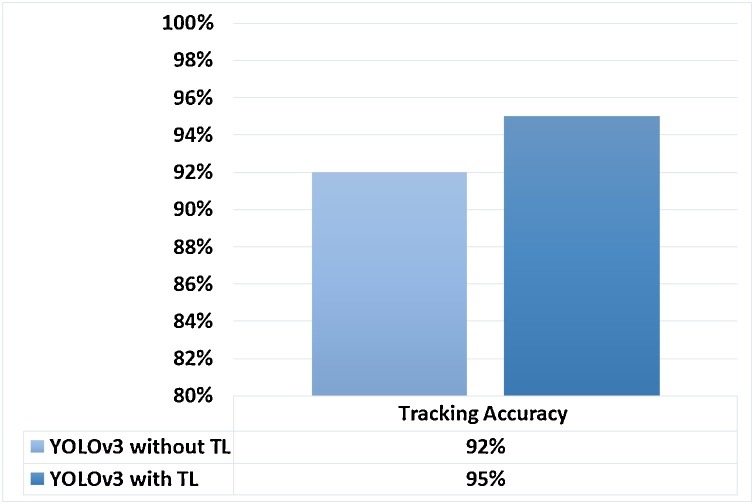
The ongoing COVID-19 corona virus outbreak has caused a global disaster with its deadly spreading. Due to the absence of effective remedial agents and the shortage of immunizations against the virus, population vulnerability increases. In the current situation, as there are no vaccines available; therefore, social distancing is thought to be an adequate precaution (norm) against the spread of the pandemic virus. The risks of virus spread can be minimized by avoiding physical contact among people. The purpose of this work is, therefore, to provide a deep learning platform for social distance tracking using an overhead perspective. The framework uses the YOLOv3 object recognition paradigm to identify humans in video sequences. The transfer learning methodology is also implemented to increase the accuracy of the model. In this way, the detection algorithm uses a pre-trained algorithm that is connected to an extra trained layer using an overhead human data set. The detection model identifies peoples using detected bounding box information. Using the Euclidean distance, the detected bounding box centroid's pairwise distances of people are determined. To estimate social distance violations between people, we used an approximation of physical distance to pixel and set a threshold. A violation threshold is established to evaluate whether or not the distance value breaches the minimum social distance threshold. In addition, a tracking algorithm is used to detect individuals in video sequences such that the person who violates/crosses the social distance threshold is also being tracked. Experiments are carried out on different video sequences to test the efficiency of the model. Findings indicate that the developed framework successfully distinguishes individuals who walk too near and breaches/violates social distances; also, the transfer learning approach boosts the overall efficiency of the model. The accuracy of 92% and 98% achieved by the detection model without and with transfer learning, respectively. The tracking accuracy of the model is 95%.
持续的新冠病毒疫情爆发因其致命的传播造成了一场全球灾难。由于缺乏有效的治疗药物以及针对该病毒的疫苗短缺,人群的易感性增加。在当前情况下,由于没有可用的疫苗;因此,社交距离被认为是预防大流行病毒传播的适当预防措施(规范)。通过避免人与人之间的身体接触,可以将病毒传播的风险降至最低。因此,这项工作的目的是提供一个使用俯瞰视角进行社交距离跟踪的深度学习平台。该框架使用YOLOv3目标识别范式来识别视频序列中的人。还实施了迁移学习方法以提高模型的准确性。通过这种方式,检测算法使用一个预训练算法,该算法使用俯瞰人体数据集连接到一个额外训练的层。检测模型使用检测到的边界框信息来识别人员。使用欧几里得距离,确定检测到的边界框中人的质心之间的成对距离。为了估计人与人之间的社交距离违规情况,我们使用物理距离到像素的近似值并设置一个阈值。建立一个违规阈值来评估距离值是否突破最小社交距离阈值。此外,使用跟踪算法来检测视频序列中的个体,以便对违反/越过社交距离阈值的人也进行跟踪。在不同的视频序列上进行实验以测试模型的效率。结果表明,所开发的框架成功地区分了走得太近并违反/突破社交距离的个体;此外,迁移学习方法提高了模型的整体效率。检测模型在不使用迁移学习和使用迁移学习时分别达到了92%和98%的准确率。该模型的跟踪准确率为95%。