Hu Mingxing, Zhou Weilin, Wang Yijie, Yao Dongping, Ye Tinghong, Yao Yuqin, Chen Bin, Liu Gongping, Yang Xifei, Wang Wei, Xie Yongmei
State Key Laboratory of Biotherapy and Cancer Center, Department of Laboratory Medicine, West China Hospital, Sichuan University and Collaborative Innovation Center of Biotherapy, Chengdu 610041, China.
Department of Pathophysiology, School of Basic Medicine and the Collaborative Innovation Center for Brain Science, Key Laboratory of Ministry of Education of China and Hubei Province for Neurological Disorders, Tongji Medical College, Huazhong University of Science and Technology, Wuhan 430030, China.
Acta Pharm Sin B. 2020 Oct;10(10):1943-1953. doi: 10.1016/j.apsb.2020.02.010. Epub 2020 Feb 27.
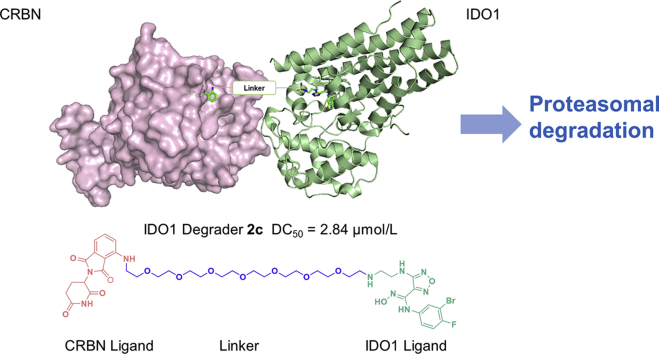
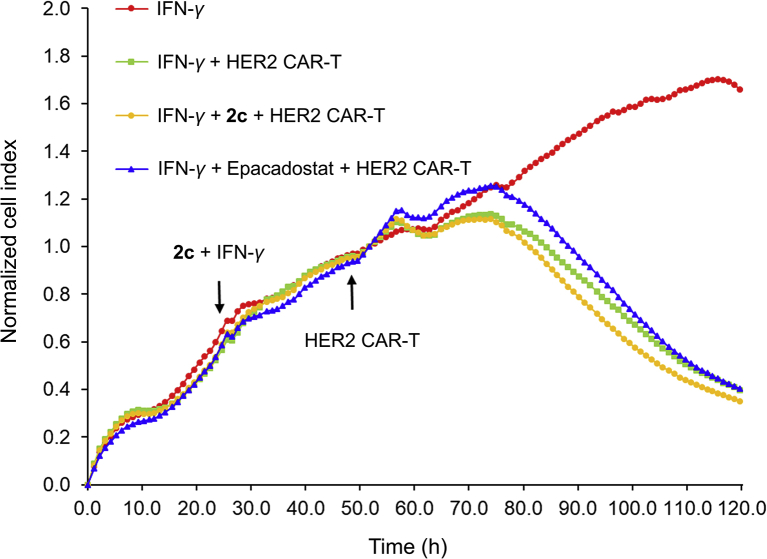
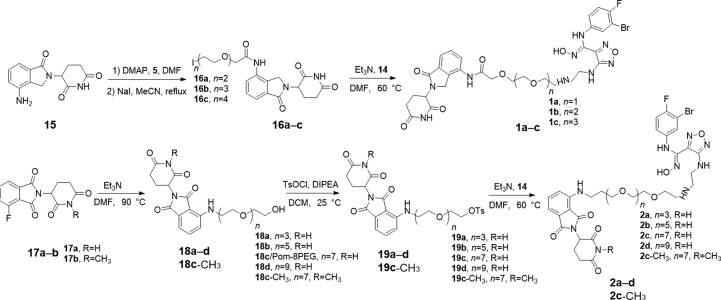
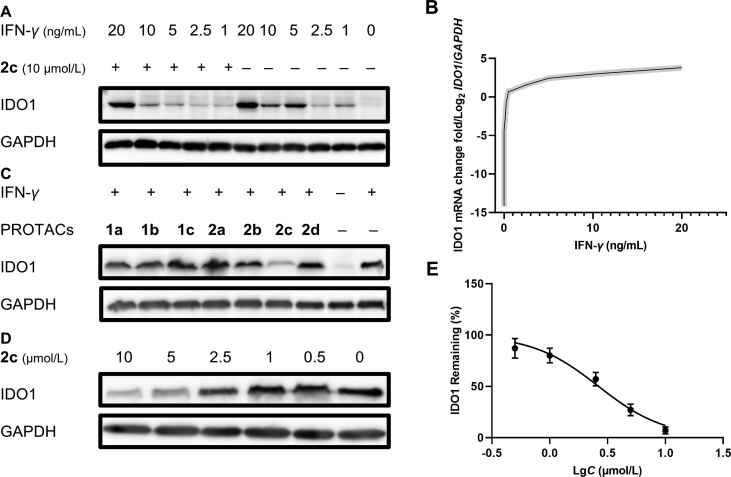
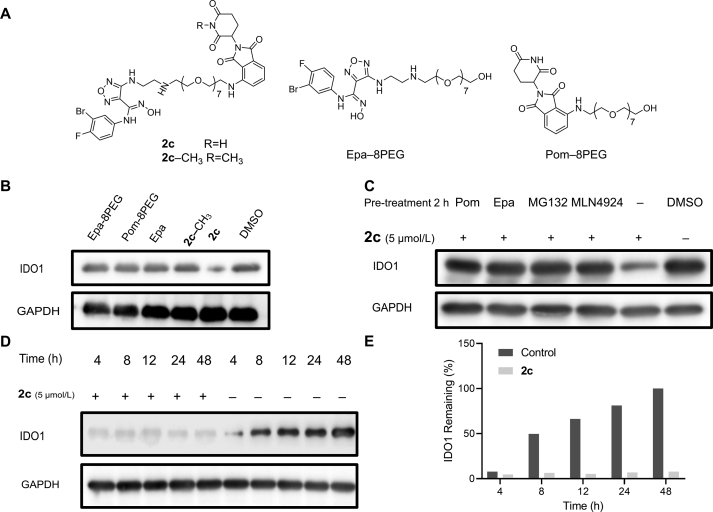
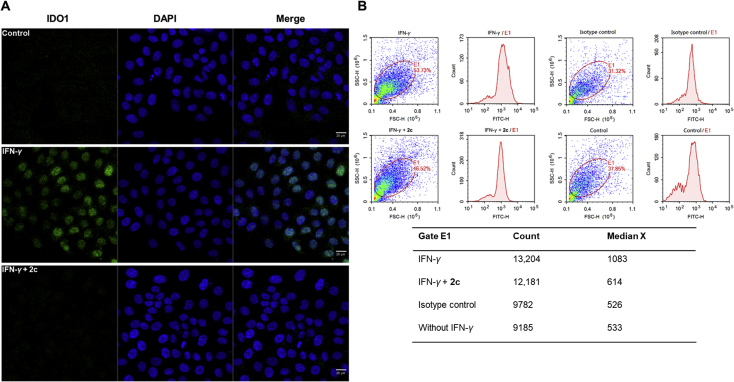
Cancer immunotherapy is revolutionizing oncology and has emerged as a promising strategy for the treatment of multiple cancers. Indoleamine 2,3-dioxygenase 1 (IDO1), an immune checkpoint, plays an important role in tumor immune escape through the regulation of multiple immune cells and has been regarded as an attractive target for cancer immunotherapy. Proteolysis Targeting Chimeras (PROTAC) technology has emerged as a new model for drug research and development for its advantageous mechanism. Herein, we reported the application of PROTAC technology in targeted degradation of IDO1, leading to the discovery of the first IDO1 PROTAC degrader , which induced significant and persistent degradation of IDO1 with maximum degradation ( ) of 93% in HeLa cells. Western-blot based mechanistic studies indicated that IDO1 was degraded by through the ubiquitin proteasome system (UPS). Label-free real-time cell analysis (RTCA) indicated that moderately improved tumor-killing activity of chimeric antigen receptor-modified T (CAR-T) cells. Collectively, these data provide a new insight for the application of PROTAC technology in tumor immune-related proteins and a promising tool to study the function of IDO1.
癌症免疫疗法正在彻底改变肿瘤学,并已成为治疗多种癌症的一种有前景的策略。吲哚胺2,3-双加氧酶1(IDO1)作为一种免疫检查点,通过调节多种免疫细胞在肿瘤免疫逃逸中发挥重要作用,并且一直被视为癌症免疫疗法的一个有吸引力的靶点。靶向蛋白降解嵌合体(PROTAC)技术因其有利的作用机制已成为一种新的药物研发模式。在此,我们报道了PROTAC技术在IDO1靶向降解中的应用,从而发现了首个IDO1 PROTAC降解剂,其在HeLa细胞中诱导IDO1显著且持续的降解,最大降解率( )达93%。基于蛋白质免疫印迹的机制研究表明,IDO1通过泛素蛋白酶体系统(UPS)被 降解。无标记实时细胞分析(RTCA)表明, 适度提高了嵌合抗原受体修饰的T(CAR-T)细胞的肿瘤杀伤活性。总体而言,这些数据为PROTAC技术在肿瘤免疫相关蛋白中的应用提供了新的见解,并为研究IDO1的功能提供了一个有前景的工具。