Makawey Adjet, Iben Christine, Palme Rupert
Department of Farm Animals and Veterinary Public Health, Institute of Animal Nutrition and Functional Plant Compounds, University of Veterinary Medicine, Veterinärplatz 1, 2210 Vienna, Austria.
Department of Biomedical Sciences, Unit of Physiology, Pathophysiology and Experimental Endocrinology, University of Veterinary Medicine, Veterinärplatz 1, 2210 Vienna, Austria.
Animals (Basel). 2020 Nov 5;10(11):2047. doi: 10.3390/ani10112047.
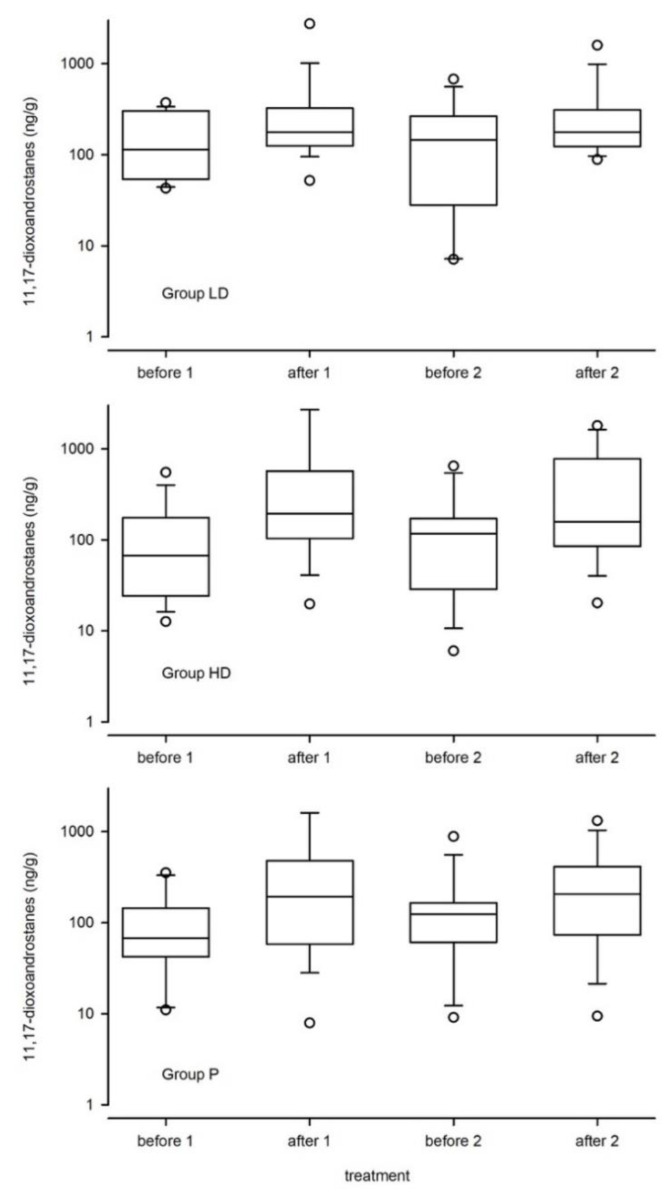
The aim of this study was to evaluate the impact of α-s1 casozepin on cat stress responses at a veterinary practice. Cats feel confident in their familiar surroundings and daily routine. A visit, and transport, to the veterinarian is a stressful experience for cats and their owners. Stress can mask clinical signs and has physiological impacts. Alpha-s1 casozepin (Zylkène; Vétoquinol) could potentially minimize stress in cats with its calming and anxiolytic characteristics. A randomized, partial double-blind and placebo-controlled study was carried out with 60 adult cats. The trial was designed for three groups: low dose (15 mg/kg q24 h α-s1 casozepin for six days), high dose (75 mg/kg q24 h α-s1 casozepin for three days), and a placebo (one fructose capsule per day for three days). For the study, cats had a checkup at their trusted veterinarian without the dietary supplement, followed by a second one four weeks later. Alpha-s1 casozepin or a placebo was administered three to six days before the checkup. Fecal cortisol metabolites (FCMs) were measured to non-invasively evaluate the impact of α-s1 casozepin on adrenocortical activity. The cat owners and veterinarians also assessed the physiological reactions (respiratory rate, sweaty paws, pupils, panting, and vocalization) of the cats at home, in the waiting area, and in the examination room. The only significant effect (kappa coefficient κ = 0.007 and κ = 0.003) found in this study was the absence of sweaty paws in cats who were treated with the high dose of α-s1 casozepin over three days, observed in the waiting area and examination room of the veterinarian's practice, respectively. Alpha-s1 casozepin also showed a small but insignificant reduction in FCM levels. Alpha-s1 casozepin influences the autonomic nervous system, and can inhibit sweaty paws during stressful situations for cats.
本研究的目的是评估α-s1酪蛋白在兽医诊所对猫应激反应的影响。猫在熟悉的环境和日常生活中会感到自信。去看兽医以及途中的运输对猫及其主人来说都是有压力的经历。压力会掩盖临床症状并产生生理影响。α-s1酪蛋白(Zylkène;威隆)因其镇静和抗焦虑特性可能会使猫的压力降至最低。对60只成年猫进行了一项随机、部分双盲和安慰剂对照研究。试验分为三组:低剂量组(每天15毫克/千克α-s1酪蛋白,持续六天)、高剂量组(每天75毫克/千克α-s1酪蛋白,持续三天)和安慰剂组(每天一粒果糖胶囊,持续三天)。在研究中,猫在未服用膳食补充剂的情况下在其信任的兽医处进行了一次检查,四周后进行了第二次检查。在检查前三到六天给予α-s1酪蛋白或安慰剂。测量粪便皮质醇代谢物(FCM)以无创评估α-s1酪蛋白对肾上腺皮质活动的影响。猫主人和兽医还在家中、候诊区和检查室评估了猫的生理反应(呼吸频率、爪子出汗、瞳孔、喘气和发声)。本研究中发现的唯一显著影响(卡方系数κ = 0.007和κ = 0.003)分别是在兽医诊所的候诊区和检查室观察到,接受三天高剂量α-s1酪蛋白治疗的猫没有爪子出汗的情况。α-s1酪蛋白还使FCM水平有小幅但不显著的降低。α-s1酪蛋白会影响自主神经系统,并且可以在猫处于应激状态时抑制爪子出汗。