Al Bataineh Mohammad Tahseen, Dash Nihar Ranjan, Elkhazendar Mohammed, Alnusairat Dua'a Mohammad Hasan, Darwish Islam Mohammad Ismail, Al-Hajjaj Mohamed Saleh, Hamid Qutayba
Clinical Sciences Department, College of Medicine, University of Sharjah, 27272, Sharjah, United Arab Emirates.
Sharjah Institute for Medical Research, University of Sharjah, Sharjah, United Arab Emirates.
J Transl Med. 2020 Nov 10;18(1):421. doi: 10.1186/s12967-020-02579-3.
Heavy tobacco smoking, a hallmark feature of lung cancer, is drastically predominant in Middle Eastern populations. The precise links between nicotine dependence and the functional contribution of the oral microbiota remain unknown in these populations.
We evaluated the composition and functional capabilities of oral microbiota with relation to cigarette smoking in 105 adults through shotgun metagenomics using buccal swabs.
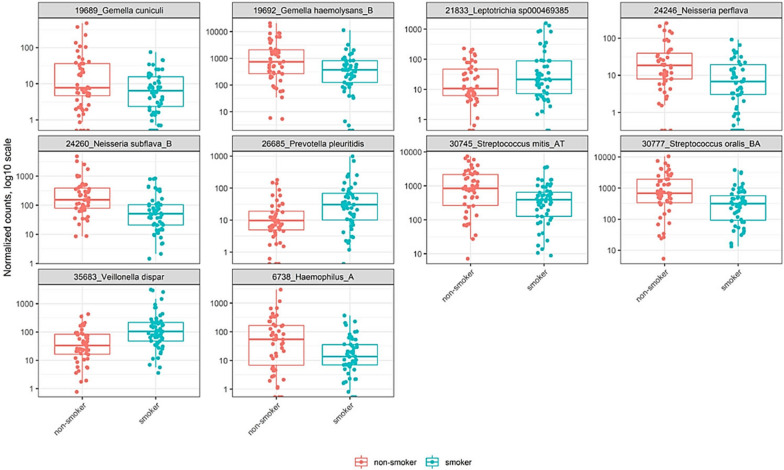
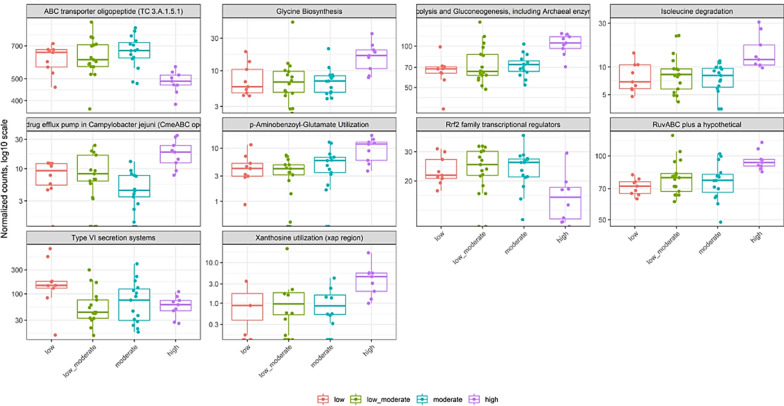
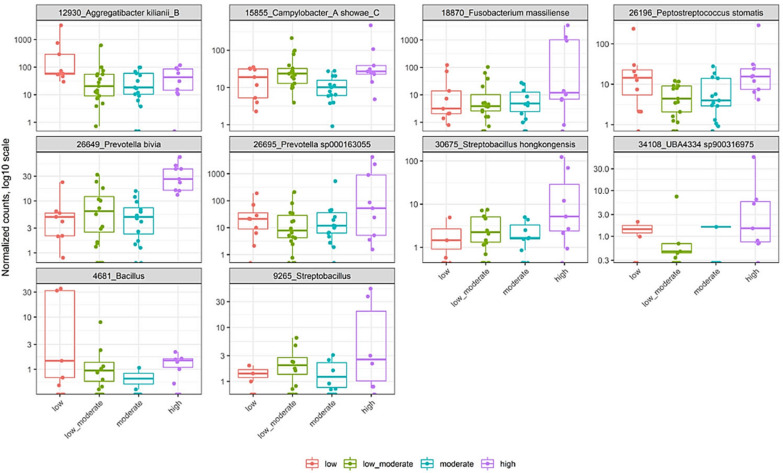
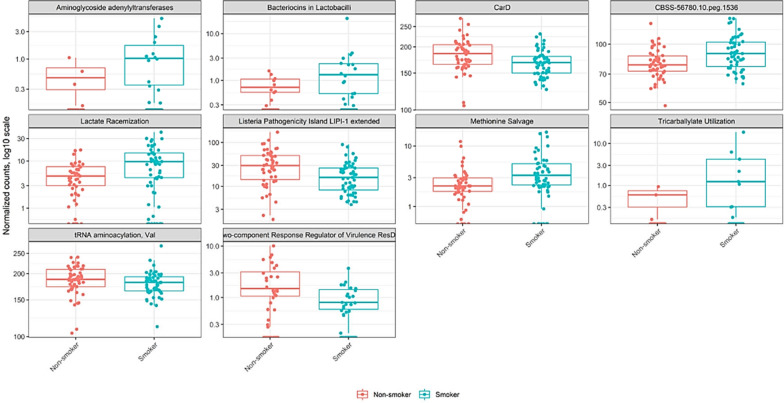
The oral microbiota composition in our study subjects was dominated by the phyla Firmicutes, Proteobacteria, Actinobacteria, and Bacteroidetes, in addition to the genera Prevotella and Veillonella, similar to previously described westernized cohorts. Furthermore, the smoker's oral microbiota represented a significant abundance of Veillonella dispar, Leptotrichia spp. and Prevotella pleuritidis when compared to non-smokers. Within the smoking groups, differential relative abundance testing unveiled relative abundance of Streptobacillus hongkongensis, Fusobacterium massiliense, Prevotella bivia in high nicotine dependent compared to low nicotine dependent profiles based on Fagerström Test for Nicotine Dependence. Functional profiling showed marked differences between smokers and non-smokers. Smokers exhibited an enrichment of Tricarballylate utilization and Lactate racemization when compared to the non-smokers. According to their nicotine dependence, enrichment of Xanthosine utilization, p-Aminobenzoyl-Glutamate utilization, and multidrug efflux pump in Campylobacter jejuni biosynthesis modules were detected in the high nicotine dependent group.
These compositional and functional differences may provide critical insight on how variations in the oral microbiota could predispose to respiratory illnesses and smoke cessation relapse in cigarette smokers. In particular, the observed enrichment of Fusobacterium and Prevotella in the oral microbiota possibly suggests an intriguing linkage to gut and lung cancers.
重度吸烟是肺癌的一个标志性特征,在中东人群中极为普遍。在这些人群中,尼古丁依赖与口腔微生物群功能贡献之间的确切联系尚不清楚。
我们通过使用颊拭子进行鸟枪法宏基因组学,评估了105名成年人的口腔微生物群组成及其与吸烟的关系。
与先前描述的西方化队列相似,我们研究对象的口腔微生物群组成以厚壁菌门、变形菌门、放线菌门和拟杆菌门为主,此外还有普雷沃氏菌属和韦荣氏菌属。此外,与不吸烟者相比,吸烟者的口腔微生物群中差异韦荣氏球菌、纤毛菌属和胸膜炎普雷沃氏菌的丰度显著更高。在吸烟组中,基于尼古丁依赖的法格斯特伦测试,差异相对丰度测试揭示了高尼古丁依赖者与低尼古丁依赖者相比,香港链杆菌、马赛梭杆菌、二路普雷沃氏菌的相对丰度。功能分析显示吸烟者和不吸烟者之间存在显著差异。与不吸烟者相比,吸烟者表现出三羧酸利用和乳酸消旋作用的富集。根据他们的尼古丁依赖程度,在高尼古丁依赖组中检测到空肠弯曲菌生物合成模块中黄苷利用、对氨基苯甲酰谷氨酸利用和多药外排泵的富集。
这些组成和功能差异可能为口腔微生物群的变化如何导致吸烟者患呼吸道疾病和戒烟复发提供关键见解。特别是,在口腔微生物群中观察到的梭杆菌和普雷沃氏菌的富集可能暗示了与肠道和肺癌的有趣联系。