Department of Oral Surgery, Shanghai Key Laboratory of Stomatology & Shanghai Research Institute of Stomatology, National Clinical Research Centre for Oral Diseases, Ninth People's Hospital, Shanghai Jiao Tong University School of Medicine, Shanghai, China.
Department of Prosthodontics, Shanghai Engineering Research Centre of Advanced Dental Technology and Materials, Shanghai Key Laboratory of Stomatology & Shanghai Research Institute of Stomatology, National Clinical Research Centre for Oral Diseases, Ninth People's Hospital, Shanghai Jiao Tong University School of Medicine, Shanghai, China.
Stem Cell Res Ther. 2020 Nov 10;11(1):476. doi: 10.1186/s13287-020-01999-8.
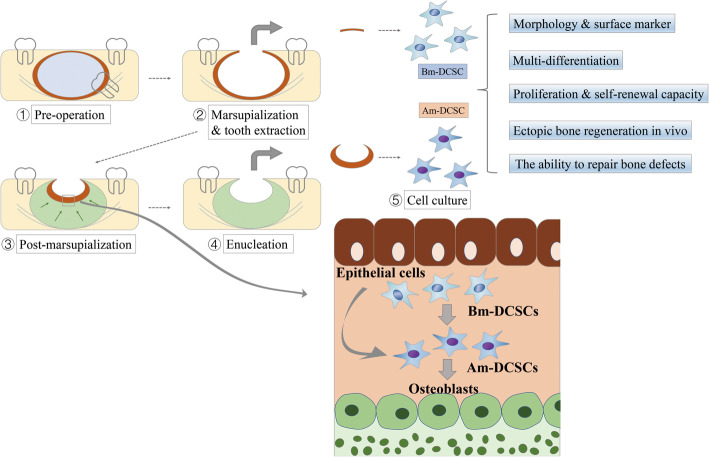
Dentigerous cyst (DC) is a bone destructive disease and remains a challenge for clinicians. Marsupialization enables the bone to regenerate with capsule maintaining, making it a preferred therapeutic means for DC adjacent to vital anatomical structures. Given that capsules of DC are derived from odontogenic epithelium remnants at the embryonic stage, we investigated whether there were mesenchymal stem cells (MSCs) located in DC capsules and the role that they played in the bone regeneration after marsupialization.
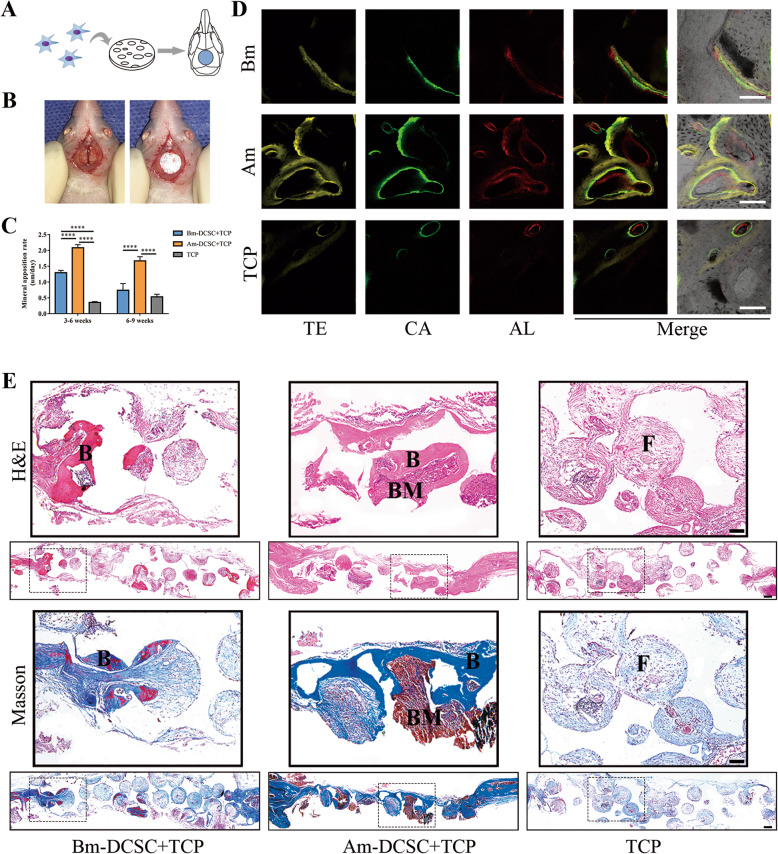
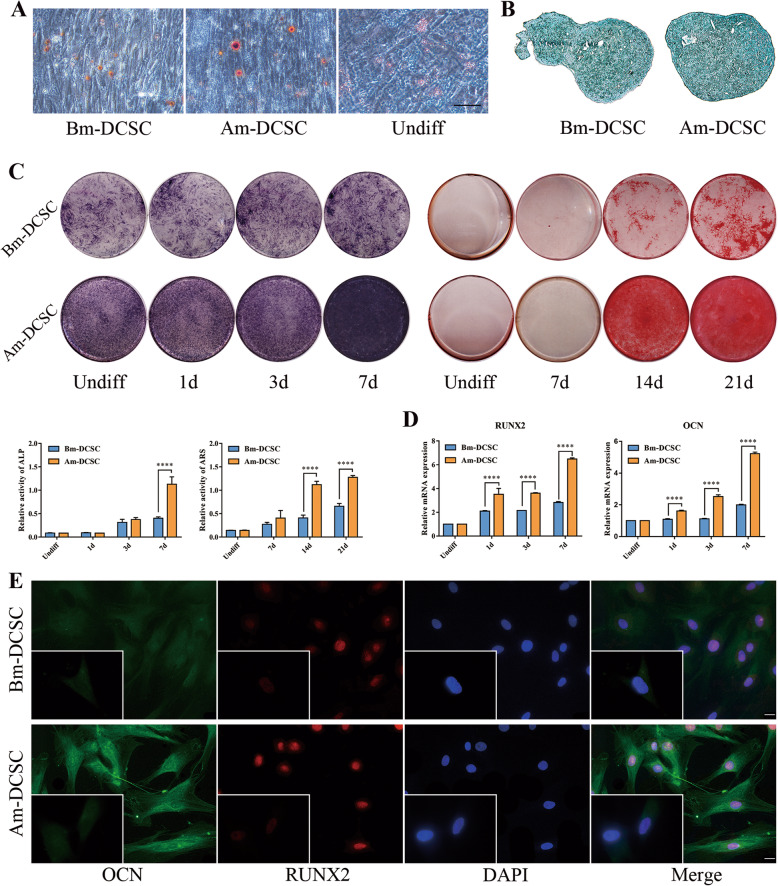
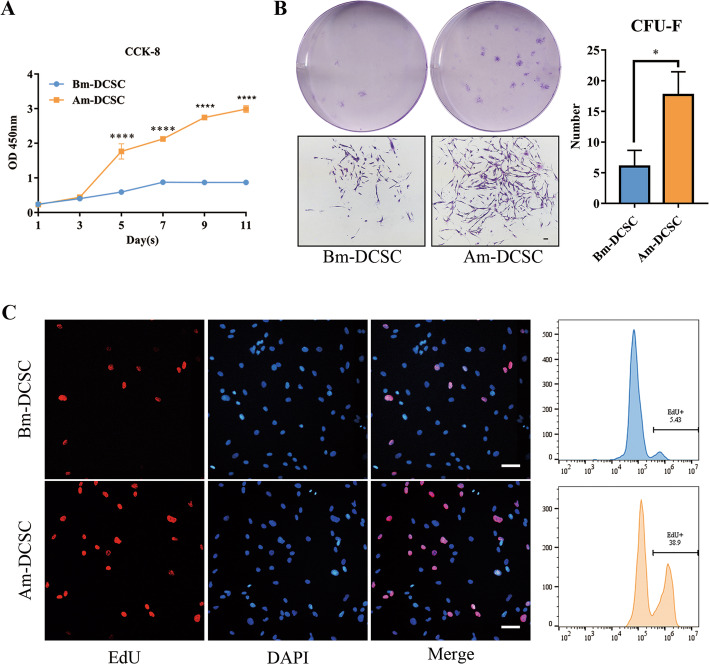
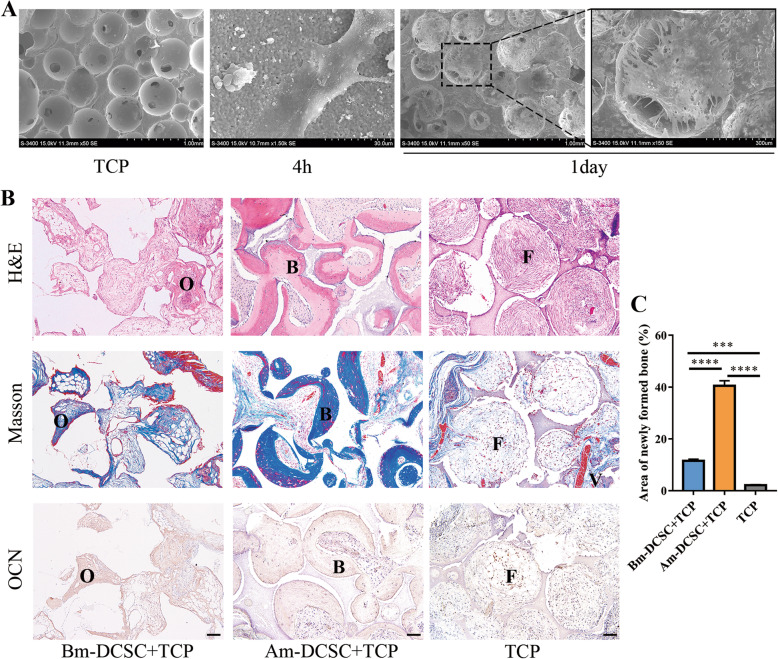
Samples obtained before and after marsupialization were used for histological detection and cell culture. The stemness of cells isolated from fresh tissues was analyzed by morphology, surface marker, and multi-differentiation assays. Comparison of proliferation ability between MSCs isolated from DC capsules before (Bm-DCSCs) and after (Am-DCSCs) marsupialization was evaluated by Cell Counting Kit-8 (CCK-8), fibroblast colony-forming units (CFU-F), and 5'-ethynyl-2'-deoxyuridine (EdU) assay. Their osteogenic capacity in vitro was detected by alkaline phosphatase (ALP) and Alizarin Red staining (ARS), combined with real-time polymerase chain reaction (RT-PCR) and immunofluorescence (IF) staining. Subcutaneous ectopic osteogenesis as well as cranial bone defect model in nude mice was performed to detect their bone regeneration and bone defect repairability.
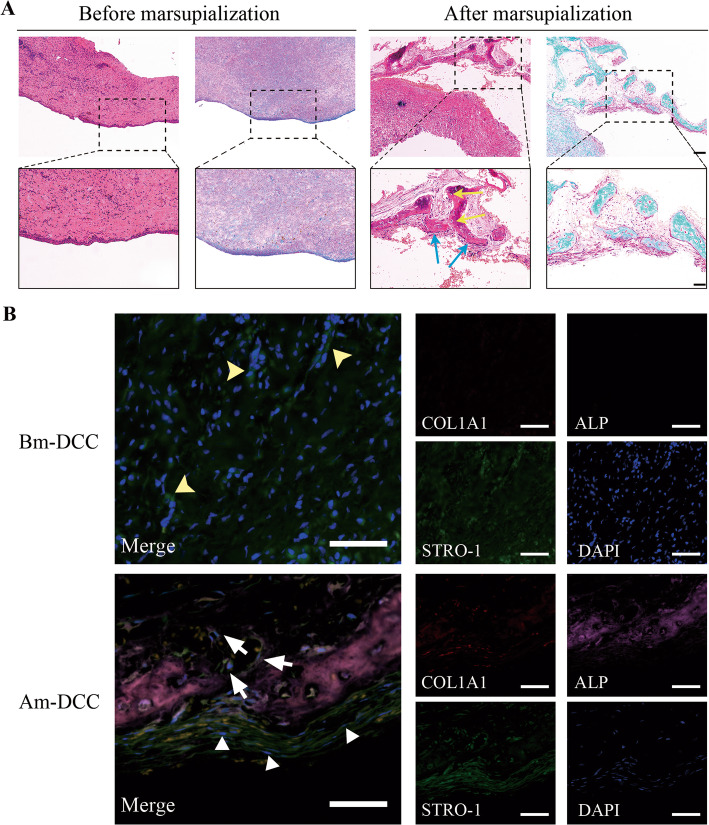
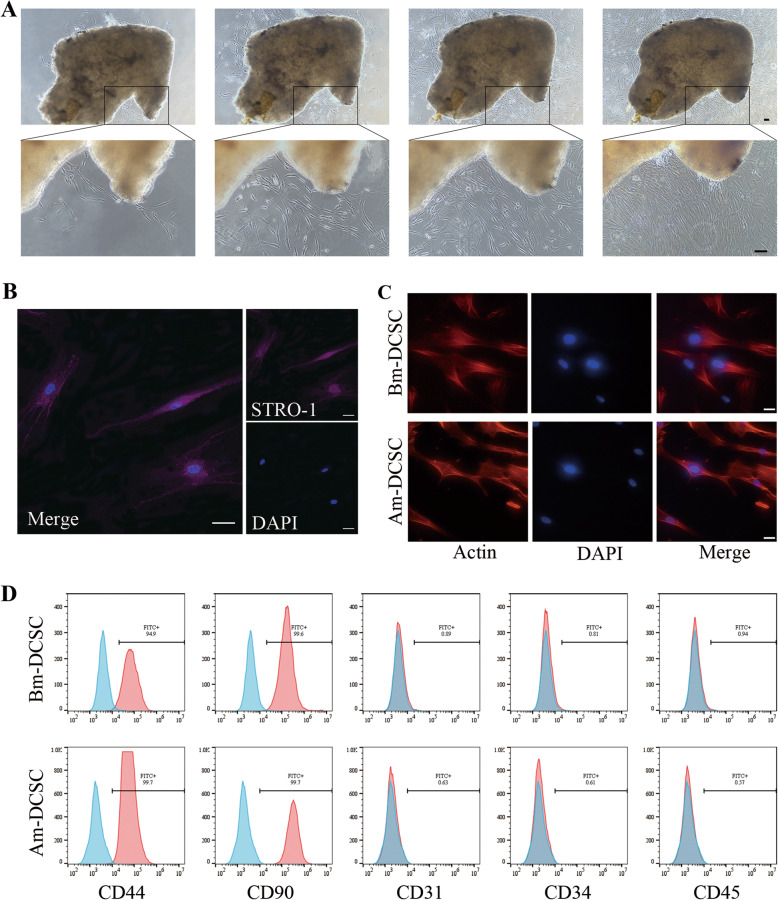
Bone tissue and strong ALP activity were detected in the capsule of DC after marsupialization. Two types of MSCs were isolated from fibrous capsules of DC both before (Bm-DCSCs) and after (Am-DCSCs) marsupialization. These fibroblast-like, colony-forming cells expressed MSC markers (CD44+, CD90+, CD31-, CD34-, CD45-), and they could differentiate into osteoblast-, adipocyte-, and chondrocyte-like cells under induction. Notably, Am-DCSCs performed better in cell proliferation and self-renewal. Moreover, Am-DCSCs showed a greater osteogenic capacity both in vitro and in vivo compared with Bm-DCSCs.
There are MSCs residing in capsules of DC, and the cell viability as well as the osteogenic capacity of them is largely enhanced after marsupialization. Our findings suggested that MSCs might play a crucial role in the healing process of DC after marsupialization, thus providing new insight into the treatment for DC by promoting the osteogenic differentiation of MSCs inside capsules.
含牙囊肿(DC)是一种破坏骨骼的疾病,对临床医生来说仍是一个挑战。袋形术使骨骼在保持囊的情况下再生,使其成为毗邻重要解剖结构的 DC 的首选治疗手段。鉴于 DC 的囊源自胚胎期牙源性上皮的残余物,我们研究了在袋形术后 DC 囊内是否存在间充质干细胞(MSCs),以及它们在袋形术后骨再生中的作用。
使用袋形术前和后的样本进行组织学检测和细胞培养。通过形态学、表面标志物和多分化试验分析从新鲜组织中分离的细胞的干性。通过细胞计数试剂盒-8(CCK-8)、成纤维细胞集落形成单位(CFU-F)和 5'-乙炔基-2'-脱氧尿苷(EdU)试验评估袋形术前(Bm-DCSCs)和术后(Am-DCSCs)分离的 MSCs 的增殖能力。通过碱性磷酸酶(ALP)和茜素红染色(ARS)检测其体外成骨能力,并结合实时聚合酶链反应(RT-PCR)和免疫荧光(IF)染色。在裸鼠中进行皮下异位成骨和颅骨缺损模型,以检测其骨再生和骨缺损修复能力。
袋形术后 DC 囊内检测到骨组织和强 ALP 活性。从袋形术前(Bm-DCSCs)和术后(Am-DCSCs)的 DC 纤维囊中分离出两种类型的 MSC。这些成纤维细胞样、集落形成细胞表达 MSC 标志物(CD44+、CD90+、CD31-、CD34-、CD45-),并在诱导下可分化为成骨细胞、脂肪细胞和成软骨细胞样细胞。值得注意的是,Am-DCSCs 在细胞增殖和自我更新方面表现更好。此外,Am-DCSCs 在体外和体内均表现出比 Bm-DCSCs 更强的成骨能力。
DC 囊内存在 MSCs,袋形术后其细胞活力和成骨能力大大增强。我们的研究结果表明,MSCs 可能在袋形术后 DC 的愈合过程中发挥关键作用,从而通过促进囊内 MSCs 的成骨分化,为 DC 的治疗提供新的思路。