Institute for Regenerative Medicine, Department of Pathology and Laboratory Medicine, University of Pennsylvania Perelman School of Medicine, Philadelphia, PA, 19104, USA.
Department of Biology, University of Texas at San Antonio, San Antonio, TX, 78249, USA.
Nat Commun. 2020 Nov 9;11(1):5656. doi: 10.1038/s41467-020-19350-3.
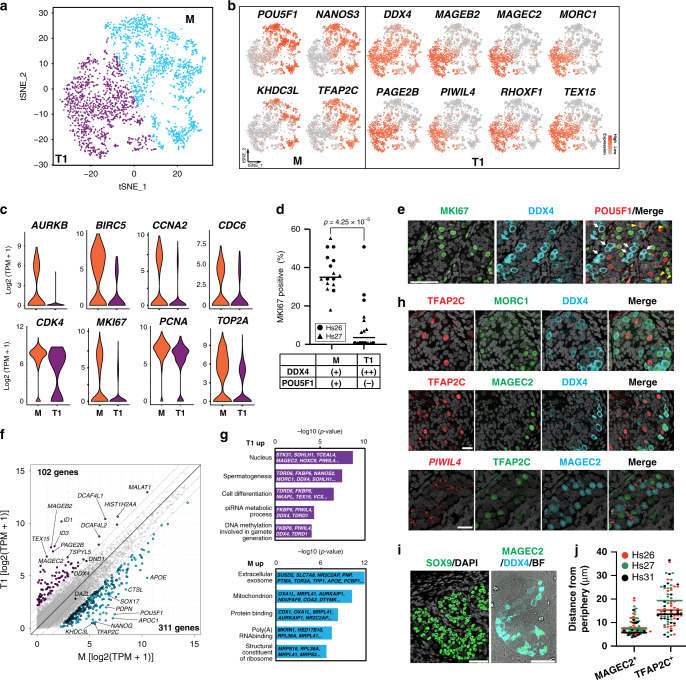
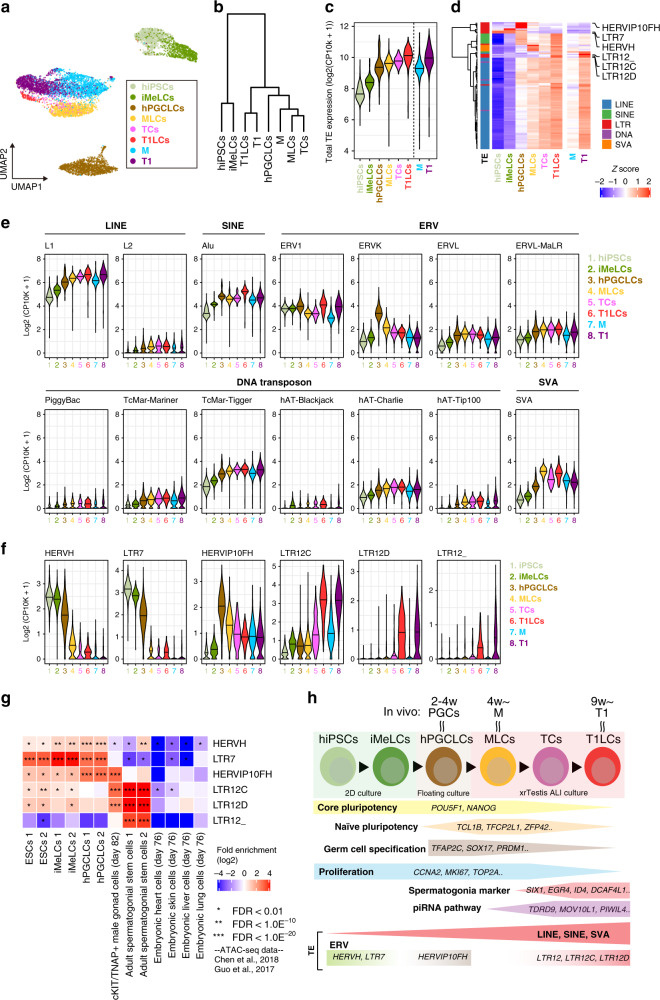
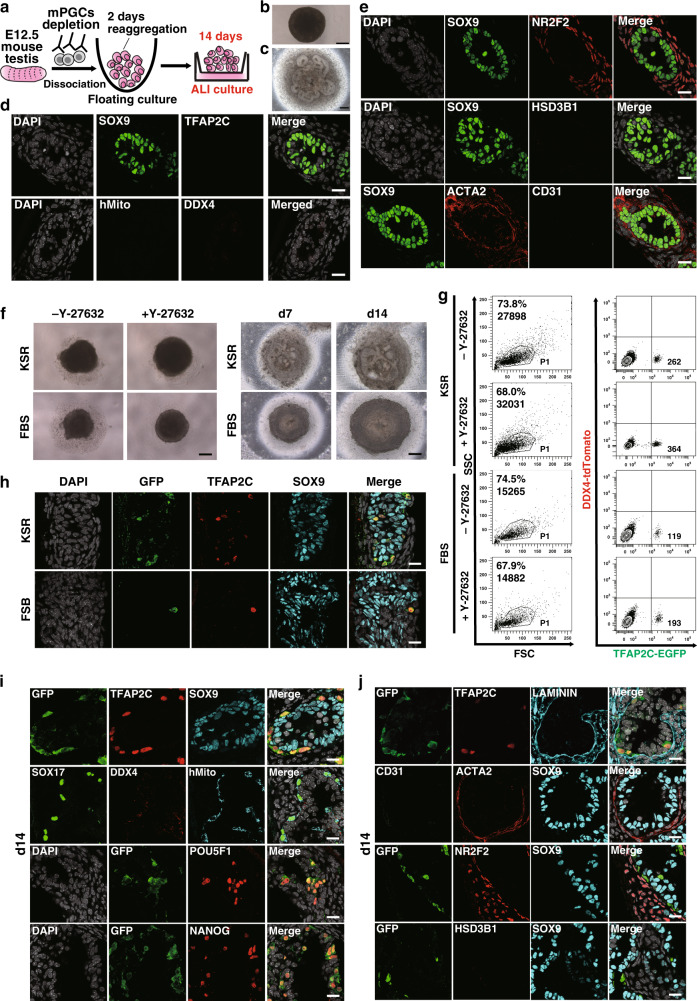
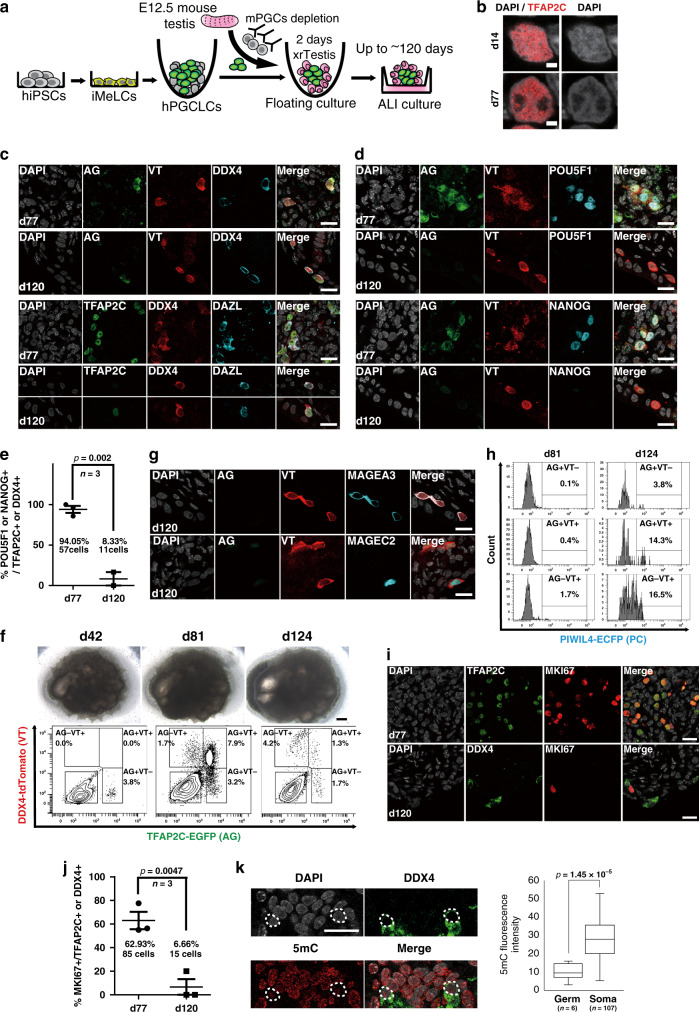
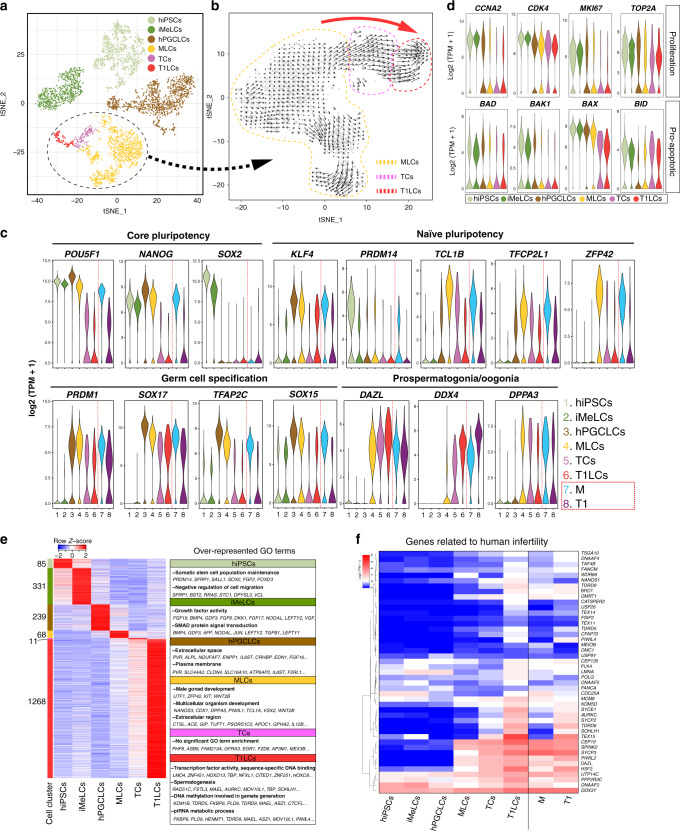
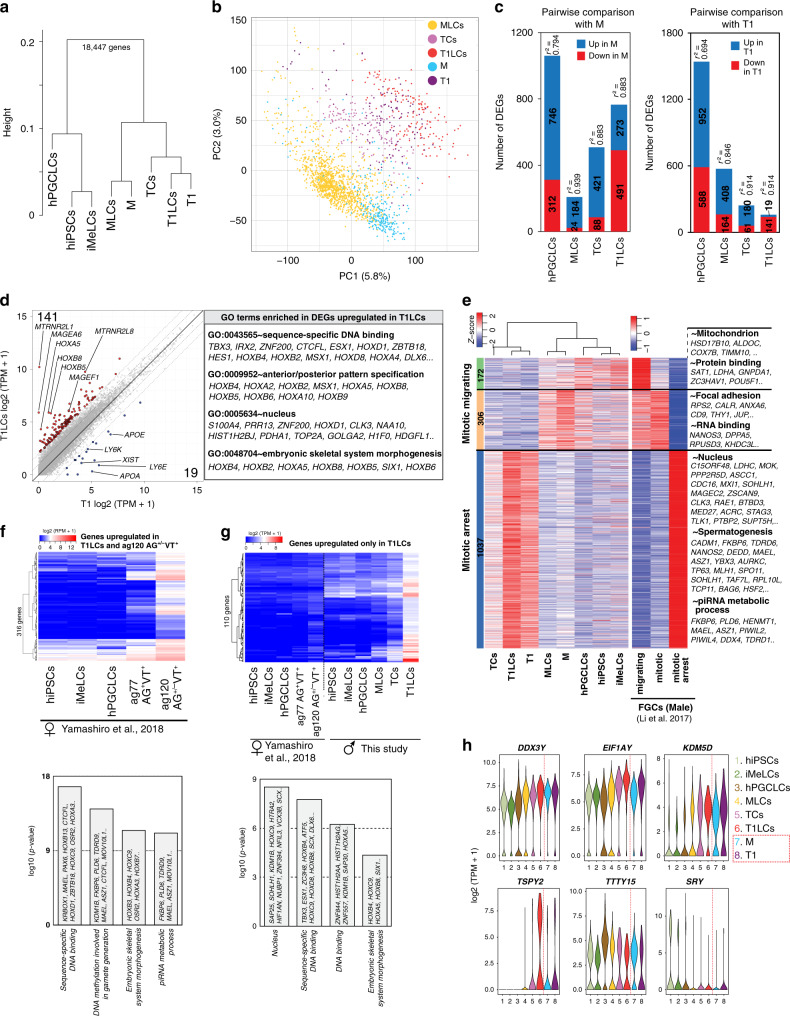
Establishment of spermatogonia throughout the fetal and postnatal period is essential for production of spermatozoa and male fertility. Here, we establish a protocol for in vitro reconstitution of human prospermatogonial specification whereby human primordial germ cell (PGC)-like cells differentiated from human induced pluripotent stem cells are further induced into M-prospermatogonia-like cells and T1 prospermatogonia-like cells (T1LCs) using long-term cultured xenogeneic reconstituted testes. Single cell RNA-sequencing is used to delineate the lineage trajectory leading to T1LCs, which closely resemble human T1-prospermatogonia in vivo and exhibit gene expression related to spermatogenesis and diminished proliferation, a hallmark of quiescent T1 prospermatogonia. Notably, this system enables us to visualize the dynamic and stage-specific regulation of transposable elements during human prospermatogonial specification. Together, our findings pave the way for understanding and reconstructing human male germline development in vitro.
在胎儿期和出生后建立精原细胞对于精子发生和男性生育能力至关重要。在这里,我们建立了一个体外重建人类原始精原细胞特化的方案,通过该方案,从人类诱导多能干细胞分化而来的人类原始生殖细胞(PGC)样细胞进一步被诱导成为 M-原始精原细胞样细胞和 T1 原始精原细胞样细胞(T1LC),使用长期培养的异种重构睾丸。单细胞 RNA 测序用于描绘导致 T1LC 的谱系轨迹,T1LC 与体内的人类 T1 原始精原细胞非常相似,并表现出与精子发生和增殖减少相关的基因表达,这是静止 T1 原始精原细胞的标志。值得注意的是,该系统使我们能够可视化转座元件在人类原始精原细胞特化过程中的动态和阶段特异性调控。总之,我们的发现为理解和重建人类雄性生殖系在体外的发育铺平了道路。