Department of Molecular Pharmacology and Experimental Therapeutics, Mayo Clinic, Rochester, MN, 55905, USA.
Institute for Biomedical Sciences, Georgia State University, Atlanta, GA, 30303, USA.
Sci Rep. 2020 Nov 9;10(1):19374. doi: 10.1038/s41598-020-76600-6.
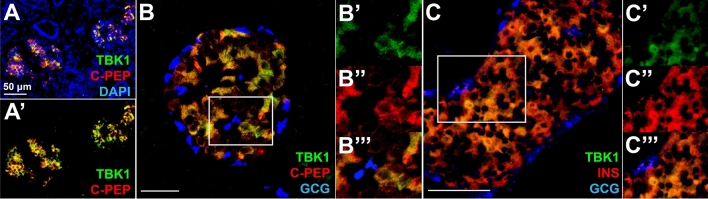
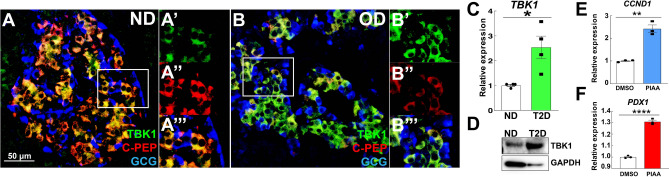
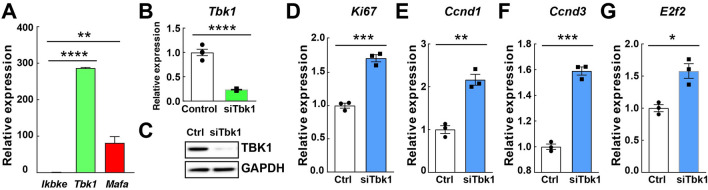
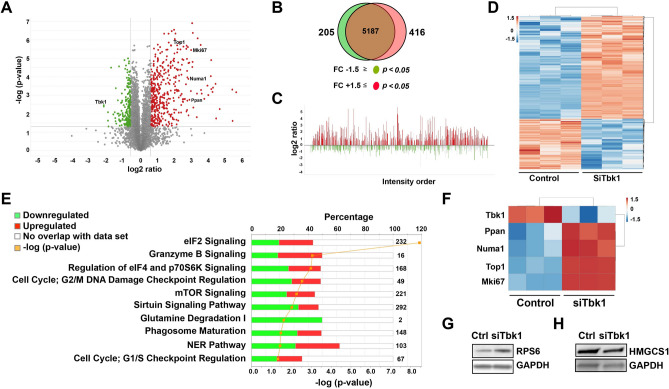
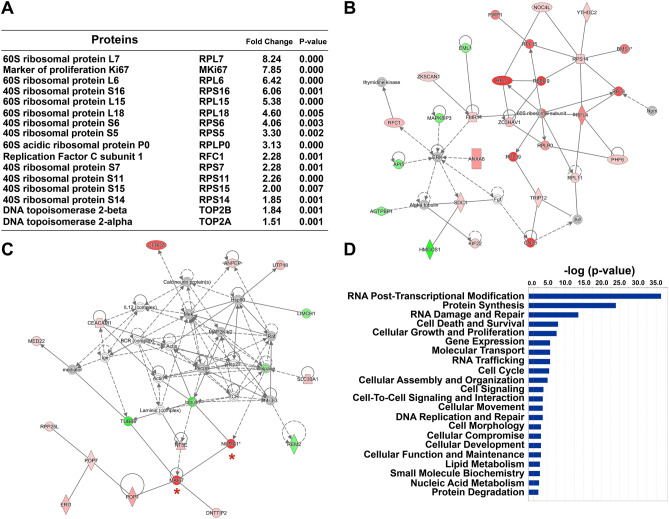
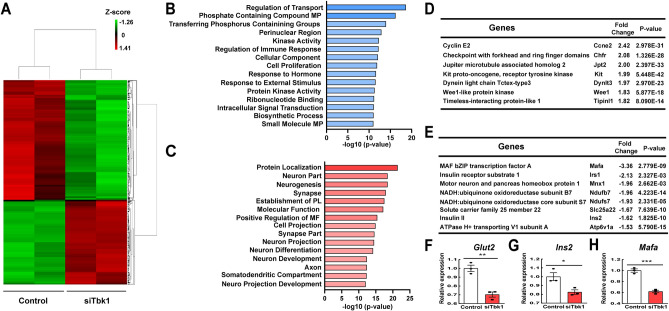
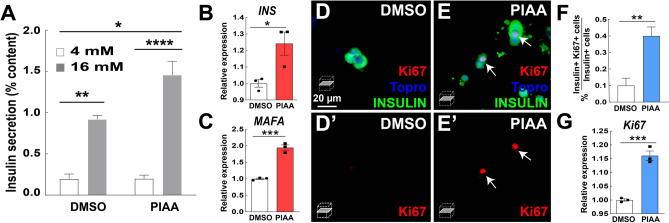
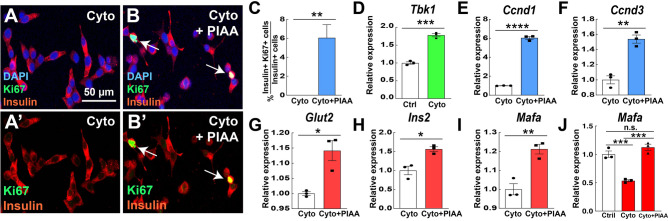
Small-molecule inhibitors of non-canonical IκB kinases TANK-binding kinase 1 (TBK1) and IκB kinase ε (IKKε) have shown to stimulate β-cell regeneration in multiple species. Here we demonstrate that TBK1 is predominantly expressed in β-cells in mammalian islets. Proteomic and transcriptome analyses revealed that genetic silencing of TBK1 increased expression of proteins and genes essential for cell proliferation in INS-1 832/13 rat β-cells. Conversely, TBK1 overexpression decreased sensitivity of β-cells to the elevation of cyclic AMP (cAMP) levels and reduced proliferation of β-cells in a manner dependent on the activity of cAMP-hydrolyzing phosphodiesterase 3 (PDE3). While the mitogenic effect of (E)3-(3-phenylbenzo[c]isoxazol-5-yl)acrylic acid (PIAA) is derived from inhibition of TBK1, PIAA augmented glucose-stimulated insulin secretion (GSIS) and expression of β-cell differentiation and proliferation markers in human embryonic stem cell (hESC)-derived β-cells and human islets. TBK1 expression was increased in β-cells upon diabetogenic insults, including in human type 2 diabetic islets. PIAA enhanced expression of cell cycle control molecules and β-cell differentiation markers upon diabetogenic challenges, and accelerated restoration of functional β-cells in streptozotocin (STZ)-induced diabetic mice. Altogether, these data suggest the critical function of TBK1 as a β-cell autonomous replication barrier and present PIAA as a valid therapeutic strategy augmenting functional β-cells.
小分子抑制剂非经典 IκB 激酶 TANK 结合激酶 1(TBK1)和 IκB 激酶 ε(IKKε)已被证明可刺激多种物种的β细胞再生。在这里,我们证明 TBK1 在哺乳动物胰岛中主要表达于β细胞。蛋白质组学和转录组学分析表明,TBK1 的基因沉默增加了 INS-1 832/13 大鼠β细胞中增殖所必需的蛋白质和基因的表达。相反,TBK1 的过表达降低了β细胞对环腺苷酸(cAMP)水平升高的敏感性,并以依赖于 cAMP 水解磷酸二酯酶 3(PDE3)活性的方式减少β细胞的增殖。(E)3-(3-苯并[c]异噁唑-5-基)丙烯酸(PIAA)的促有丝分裂作用源于 TBK1 的抑制,而 PIAA 增强了人胚胎干细胞(hESC)衍生的β细胞和人胰岛中葡萄糖刺激的胰岛素分泌(GSIS)和β细胞分化和增殖标志物的表达。在包括人类 2 型糖尿病胰岛在内的致糖尿病损伤后,β细胞中 TBK1 的表达增加。PIAA 增强了致糖尿病挑战后细胞周期控制分子和β细胞分化标志物的表达,并加速了链脲佐菌素(STZ)诱导的糖尿病小鼠功能性β细胞的恢复。总之,这些数据表明 TBK1 作为β细胞自主复制障碍的关键功能,并提出 PIAA 是增强功能性β细胞的有效治疗策略。