Department of Immunology and Microbiology, University of Colorado School of Medicine, Aurora, Colorado, USA.
Cell Biology and Molecular Genetics, University of Maryland, College Park, Maryland, USA.
mBio. 2020 Nov 10;11(6):e02302-20. doi: 10.1128/mBio.02302-20.
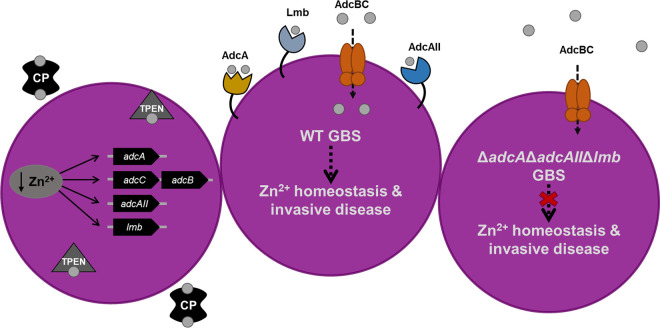
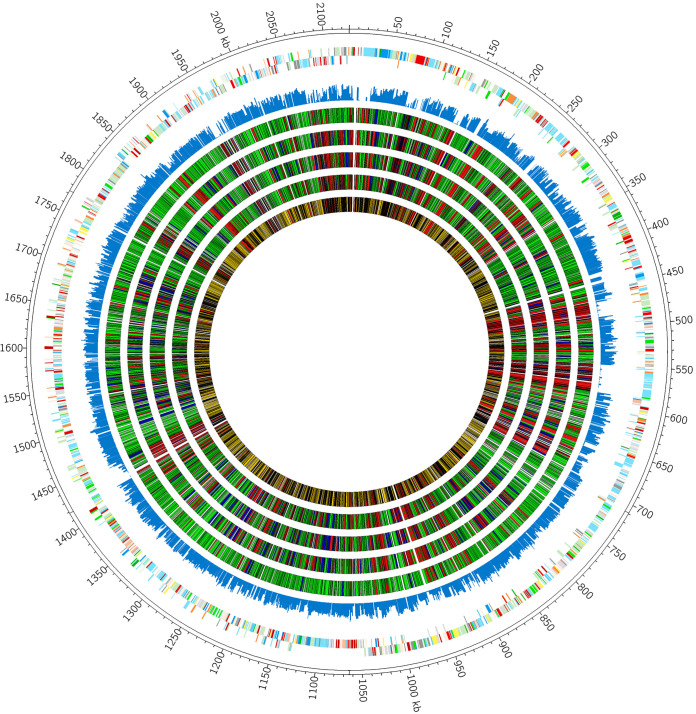
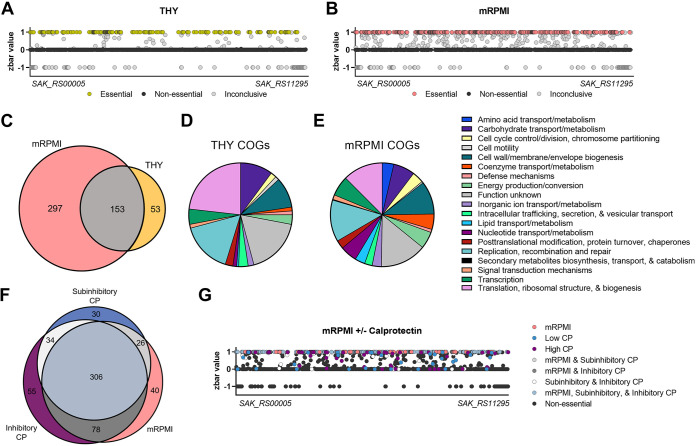
Nutritional immunity is an elegant host mechanism used to starve invading pathogens of necessary nutrient metals. Calprotectin, a metal-binding protein, is produced abundantly by neutrophils and is found in high concentrations within inflammatory sites during infection. Group B (GBS) colonizes the gastrointestinal and female reproductive tracts and is commonly associated with severe invasive infections in newborns such as pneumonia, sepsis, and meningitis. Although GBS infections induce robust neutrophil recruitment and inflammation, the dynamics of GBS and calprotectin interactions remain unknown. Here, we demonstrate that disease and colonizing isolate strains exhibit susceptibility to metal starvation by calprotectin. We constructed a transposon () mutant library in GBS and identified 258 genes that contribute to surviving calprotectin stress. Nearly 20% of all underrepresented mutants following treatment with calprotectin are predicted metal transporters, including known zinc systems. As calprotectin binds zinc with picomolar affinity, we investigated the contribution of GBS zinc uptake to overcoming calprotectin-imposed starvation. Quantitative reverse transcriptase PCR (qRT-PCR) revealed a significant upregulation of genes encoding zinc-binding proteins, , , and , following calprotectin exposure, while growth in calprotectin revealed a significant defect for a global zinc acquisition mutant (ΔΔΔ) compared to growth of the GBS wild-type (WT) strain. Furthermore, mice challenged with the ΔΔΔ mutant exhibited decreased mortality and significantly reduced bacterial burden in the brain compared to mice infected with WT GBS; this difference was abrogated in calprotectin knockout mice. Collectively, these data suggest that GBS zinc transport machinery is important for combatting zinc chelation by calprotectin and establishing invasive disease. Group B (GBS) asymptomatically colonizes the female reproductive tract but is a common causative agent of meningitis. GBS meningitis is characterized by extensive infiltration of neutrophils carrying high concentrations of calprotectin, a metal chelator. To persist within inflammatory sites and cause invasive disease, GBS must circumvent host starvation attempts. Here, we identified global requirements for GBS survival during calprotectin challenge, including known and putative systems involved in metal ion transport. We characterized the role of zinc import in tolerating calprotectin stress and in a mouse model of infection. We observed that a global zinc uptake mutant was less virulent than the parental GBS strain and found calprotectin knockout mice to be equally susceptible to infection by wild-type (WT) and mutant strains. These findings suggest that calprotectin production at the site of infection results in a zinc-limited environment and reveals the importance of GBS metal homeostasis to invasive disease.
营养免疫是一种宿主机制,用于使入侵病原体饥饿,无法获得必要的营养金属。钙卫蛋白是一种金属结合蛋白,由中性粒细胞大量产生,并在感染时在炎症部位发现高浓度存在。B 组链球菌 (GBS) 定植于胃肠道和女性生殖道,通常与新生儿严重侵袭性感染有关,如肺炎、败血症和脑膜炎。尽管 GBS 感染诱导强烈的中性粒细胞募集和炎症,但 GBS 和钙卫蛋白相互作用的动态仍然未知。在这里,我们证明疾病和定植分离株对钙卫蛋白诱导的金属饥饿敏感。我们在 GBS 中构建了转座子 (Tn) 突变文库,并鉴定了 258 个有助于在钙卫蛋白应激下存活的基因。用钙卫蛋白处理后,几乎所有代表性不足的突变体中有近 20%被预测为金属转运体,包括已知的锌系统。由于钙卫蛋白与锌结合的亲和力为皮摩尔级,我们研究了 GBS 锌摄取对克服钙卫蛋白施加的饥饿的贡献。定量逆转录聚合酶链反应 (qRT-PCR) 显示,钙卫蛋白暴露后,编码锌结合蛋白的基因 、 、 、 和 显著上调,而在钙卫蛋白中生长显示出与 GBS 野生型 (WT) 菌株相比,全局锌获取突变体 (ΔΔΔ) 的生长显著缺陷;与感染 GBS WT 菌株的小鼠相比,用 ΔΔΔ 突变体攻击的小鼠的死亡率降低,并且脑中的细菌负荷显著降低;钙卫蛋白敲除小鼠的这种差异被消除。总的来说,这些数据表明,GBS 锌转运机制对于对抗钙卫蛋白的锌螯合和建立侵袭性疾病很重要。B 组链球菌 (GBS) 无症状定植于女性生殖道,但却是脑膜炎的常见病原体。GBS 脑膜炎的特征是大量携带钙卫蛋白的中性粒细胞浸润,钙卫蛋白是一种金属螯合剂。为了在炎症部位存活并引起侵袭性疾病,GBS 必须规避宿主的饥饿尝试。在这里,我们确定了 GBS 在钙卫蛋白挑战期间生存的全局要求,包括涉及金属离子转运的已知和假定系统。我们描述了锌输入在耐受钙卫蛋白应激中的作用 并在感染的小鼠模型中。我们观察到,全局锌摄取突变体比亲本 GBS 菌株的毒力更低,并且发现钙卫蛋白敲除小鼠对野生型 (WT) 和突变菌株的感染同样敏感。这些发现表明,感染部位钙卫蛋白的产生导致了一个锌受限的环境,并揭示了 GBS 金属稳态对侵袭性疾病的重要性。