
男性乳房肥大症的手术治疗:文献综述
Surgical Management of Gynecomastia: A Comprehensive Review of the Literature.
作者信息
Holzmer Stephanie W, Lewis Priya G, Landau Mark J, Hill Michael E
机构信息
Department of Plastic and Reconstructive Surgery, Loma Linda University, Loma Linda, Calif.
出版信息
Plast Reconstr Surg Glob Open. 2020 Oct 29;8(10):e3161. doi: 10.1097/GOX.0000000000003161. eCollection 2020 Oct.
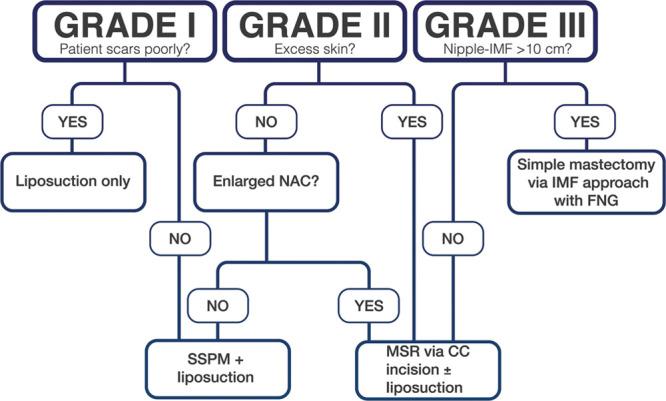
Gynecomastia is a graded condition characterized by enlargement of the male breast that affects a significant proportion of the male population. A plethora of varying surgical approaches currently exists in the literature; thus this comprehensive review sought to analyze surgical practice patterns and trends as they pertain to gynecomastia grade and severity. The current literature was queried utilizing the PubMed and MEDLINE databases-based on predefined parameters and individual review, 17 studies were ultimately included. Key data points included gynecomastia grade, surgical intervention, rate of complication, including hematoma, seroma, infection, and necrosis, and drain use. Two-sample test was utilized for further analysis. A total of 1112 patients underwent surgical treatment for gynecomastia. Skin-sparing mastectomy with or without liposuction was the most frequently used procedure followed by mastectomy with skin reduction. Major complication rates ranged from 0% to 33%, with hematoma formation being most common (5.8%) followed seroma (2.4%). There was a higher rate of hematoma/seroma formation among authors who routinely utilized drain placement (9.78% versus 8.36%; = 0.0051); however, this is likely attributable to the large discrepancy in percentage of grade III patients found in each group (50.23% versus 4.36%; = 0.0000). As a wide variety of surgical techniques exist for the treatment of gynecomastia, an individualized approach based upon gynecomastia grade and patient preference may assist the surgeon in providing optimal outcomes. This senior author's preferred method for treatment of gynecomastia is illustrated in the included algorithm.
男性乳房肥大是一种分级病症,其特征为男性乳房增大,影响着相当一部分男性人群。目前文献中存在大量不同的手术方法;因此,本综述旨在分析与男性乳房肥大分级和严重程度相关的手术实践模式及趋势。利用PubMed和MEDLINE数据库,根据预定义参数进行文献检索,并经个人评审,最终纳入17项研究。关键数据点包括男性乳房肥大分级、手术干预、并发症发生率(包括血肿、血清肿、感染和坏死)以及引流管使用情况。采用双样本检验进行进一步分析。共有1112例患者接受了男性乳房肥大的手术治疗。保留皮肤的乳房切除术(伴或不伴吸脂术)是最常用的手术方法,其次是皮肤缩减乳房切除术。主要并发症发生率在0%至33%之间,血肿形成最为常见(5.8%),其次是血清肿(2.4%)。在常规使用引流管放置的作者中,血肿/血清肿形成的发生率较高(9.78%对8.36%;P = 0.0051);然而,这可能归因于每组中III级患者百分比的巨大差异(50.23%对4.36%;P = 0.0000)。由于治疗男性乳房肥大存在多种手术技术,基于男性乳房肥大分级和患者偏好的个体化方法可能有助于外科医生提供最佳治疗效果。所附算法展示了这位资深作者治疗男性乳房肥大的首选方法。
 Zotero 插件