• 文献检索
  • 文档翻译
  • 深度研究
  • 学术资讯
  • Suppr Zotero 插件Zotero 插件
  • 邀请有礼
  • 套餐&价格
  • 历史记录
应用&插件
Suppr Zotero 插件Zotero 插件浏览器插件Mac 客户端Windows 客户端微信小程序
定价
高级版会员购买积分包购买API积分包
服务
文献检索文档翻译深度研究API 文档MCP 服务
关于我们
关于 Suppr公司介绍联系我们用户协议隐私条款
关注我们

Suppr 超能文献

核心技术专利:CN118964589B侵权必究
粤ICP备2023148730 号-1Suppr @ 2026

文献检索

告别复杂PubMed语法,用中文像聊天一样搜索,搜遍4000万医学文献。AI智能推荐,让科研检索更轻松。

立即免费搜索

文件翻译

保留排版,准确专业,支持PDF/Word/PPT等文件格式,支持 12+语言互译。

免费翻译文档

深度研究

AI帮你快速写综述,25分钟生成高质量综述,智能提取关键信息,辅助科研写作。

立即免费体验

炎热的夏天不太可能自然阻止新冠病毒的传播。

A Warm Summer is Unlikely to Stop Transmission of COVID-19 Naturally.

作者信息

Su Ming, Peng Shushi, Chen Lili, Wang Bin, Wang Ying, Fan Xiarui, Dong Zhaomin

机构信息

Key Laboratory of Drinking Water Science and Technology, Research Center for Eco-Environmental Sciences Chinese Academy of Sciences Beijing China.

College of Resources and Environment University of Chinese Academy of Science Beijing China.

出版信息

Geohealth. 2020 Dec 1;4(12):e2020GH000292. doi: 10.1029/2020GH000292. eCollection 2020 Dec.

DOI:10.1029/2020GH000292
PMID:33173840
原文链接:https://pmc.ncbi.nlm.nih.gov/articles/PMC7645946/
Abstract

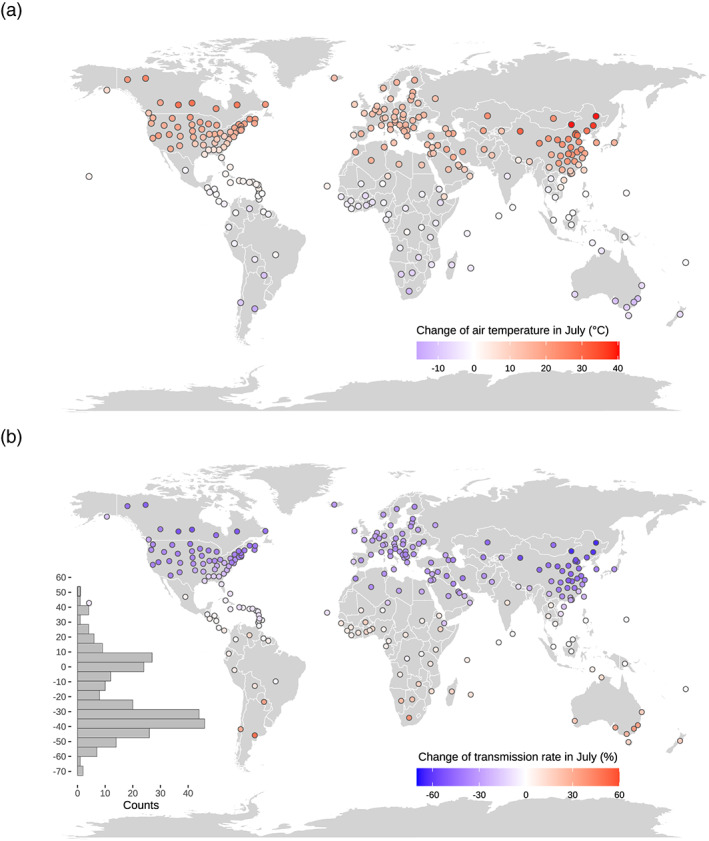
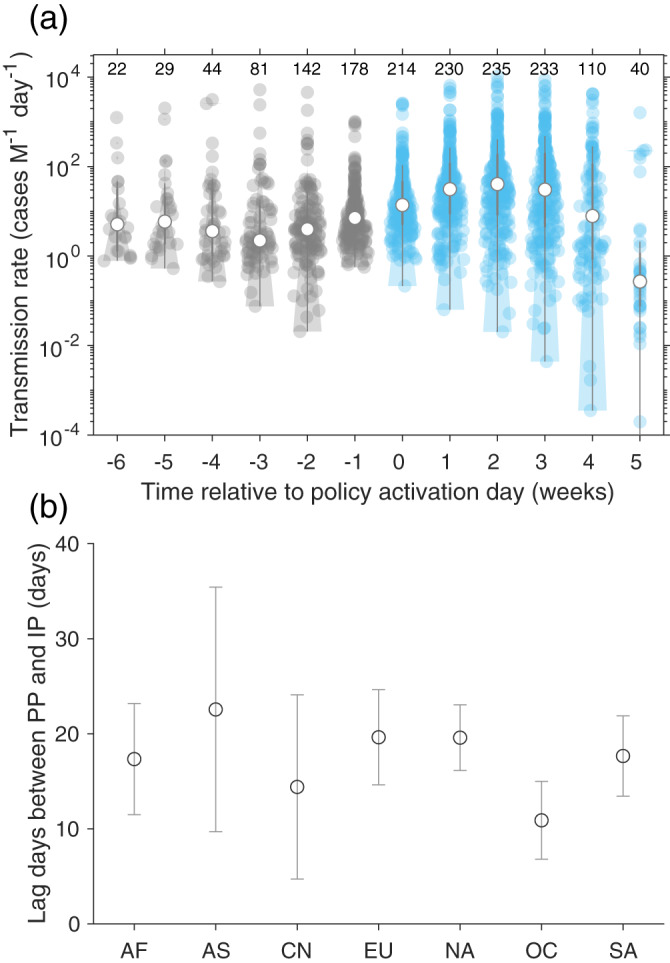
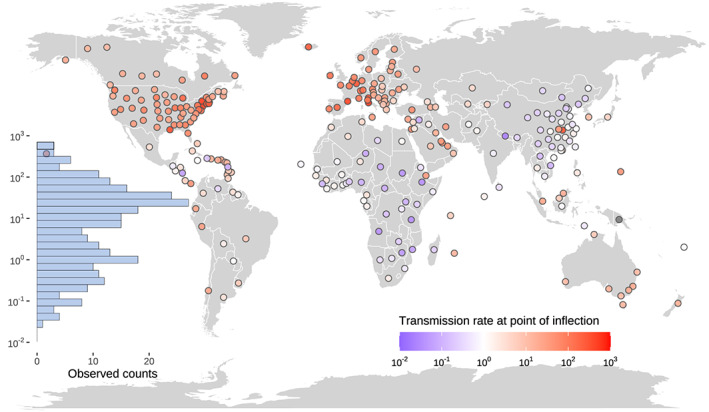
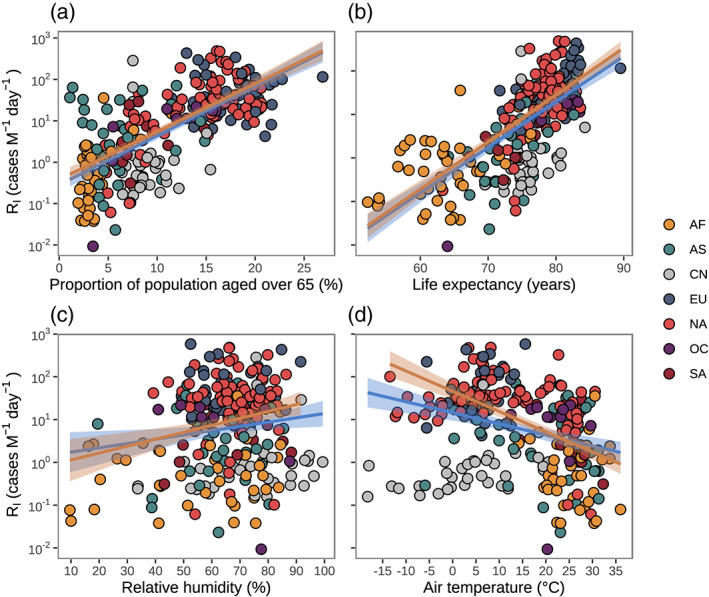
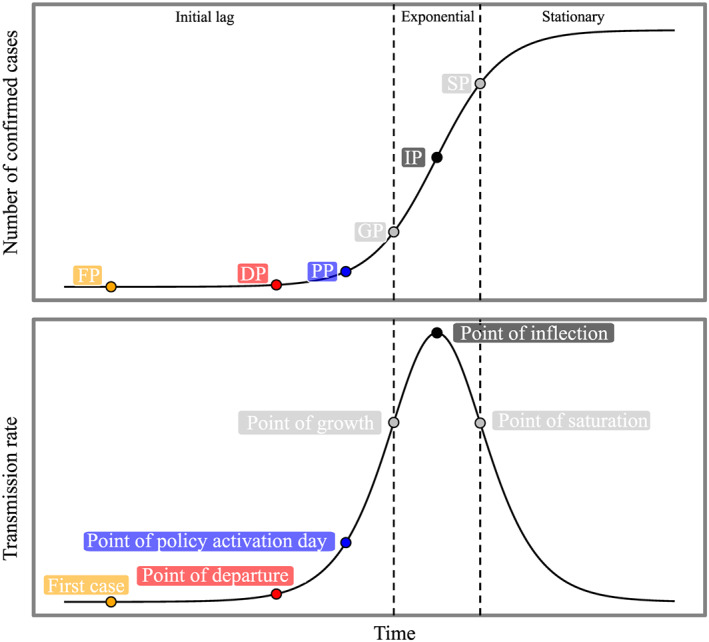
The outbreak of coronavirus disease 2019 (COVID-19) showed various transmission rate ( ) across different regions. The determination of the factors affecting transmission rate is urgent and crucial to combat COVID-19. Here we explored variation of between 277 regions across the globe and the associated potential socioeconomic, demographic, and environmental factors. At global scale, the started to decrease approximately 2 weeks after policy interventions initiated. This lag from the date of policy interventions initiation to the date when started to decrease ranges from 9 to 19 days, largest in Europe and North America. We find that proportion of elderly people or life expectancy can explain ~50% of variation in transmission rate across the 277 regions. The transmission rate at the point of inflection ( ) increases by 29.4% (25.2-34.0%) for 1% uptick in the proportion of people aged above 65, indicating that elderly people face ~2.5 times higher infection risk than younger people. Air temperature is negatively correlated with transmission rate, which is mainly attributed to collinearities between air temperature and demographic factors. Our model predicted that temperature sensitivity of is only -2.7% (-5.2-0%) per degree Celsius after excluding collinearities between air temperature and demographic factors. This low temperature sensitivity of suggests that a warm summer is unlikely to impede the spread of COVID-19 naturally.

摘要

2019年冠状病毒病(COVID-19)疫情在不同地区呈现出不同的传播率( )。确定影响传播率的因素对于抗击COVID-19至关重要且刻不容缓。在此,我们探究了全球277个地区之间传播率( )的差异以及相关的潜在社会经济、人口和环境因素。在全球范围内,传播率( )在政策干预开始后约2周开始下降。从政策干预开始日期到传播率( )开始下降的时间间隔为9至19天,在欧洲和北美最长。我们发现,老年人比例或预期寿命可以解释277个地区传播率差异的约50%。65岁以上人群比例每上升1%,拐点处的传播率( )增加29.4%(25.2 - 34.0%),这表明老年人面临的感染风险比年轻人高约2.5倍。气温与传播率呈负相关,这主要归因于气温与人口因素之间的共线性。在排除气温与人口因素之间的共线性后,我们的模型预测传播率( )对温度的敏感度仅为每摄氏度 -2.7%(-5.2 - 0%)。传播率( )对温度的这种低敏感度表明,温暖的夏季不太可能自然地阻碍COVID-19的传播。
https://cdn.ncbi.nlm.nih.gov/pmc/blobs/f293/7737605/9a1a3be171c3/GH2-4-e2020GH000292-g005.jpg
https://cdn.ncbi.nlm.nih.gov/pmc/blobs/f293/7737605/88a13edf88b7/GH2-4-e2020GH000292-g001.jpg
https://cdn.ncbi.nlm.nih.gov/pmc/blobs/f293/7737605/b7eeadbe8410/GH2-4-e2020GH000292-g002.jpg
https://cdn.ncbi.nlm.nih.gov/pmc/blobs/f293/7737605/3cb8d62f7af7/GH2-4-e2020GH000292-g003.jpg
https://cdn.ncbi.nlm.nih.gov/pmc/blobs/f293/7737605/873a3e9ab146/GH2-4-e2020GH000292-g004.jpg
https://cdn.ncbi.nlm.nih.gov/pmc/blobs/f293/7737605/9a1a3be171c3/GH2-4-e2020GH000292-g005.jpg
https://cdn.ncbi.nlm.nih.gov/pmc/blobs/f293/7737605/88a13edf88b7/GH2-4-e2020GH000292-g001.jpg
https://cdn.ncbi.nlm.nih.gov/pmc/blobs/f293/7737605/b7eeadbe8410/GH2-4-e2020GH000292-g002.jpg
https://cdn.ncbi.nlm.nih.gov/pmc/blobs/f293/7737605/3cb8d62f7af7/GH2-4-e2020GH000292-g003.jpg
https://cdn.ncbi.nlm.nih.gov/pmc/blobs/f293/7737605/873a3e9ab146/GH2-4-e2020GH000292-g004.jpg
https://cdn.ncbi.nlm.nih.gov/pmc/blobs/f293/7737605/9a1a3be171c3/GH2-4-e2020GH000292-g005.jpg

相似文献

1
A Warm Summer is Unlikely to Stop Transmission of COVID-19 Naturally.炎热的夏天不太可能自然阻止新冠病毒的传播。
Geohealth. 2020 Dec 1;4(12):e2020GH000292. doi: 10.1029/2020GH000292. eCollection 2020 Dec.
2
Multicity study of air pollution and mortality in Latin America (the ESCALA study).拉丁美洲空气污染与死亡率的多城市研究(ESCALA研究)。
Res Rep Health Eff Inst. 2012 Oct(171):5-86.
3
Folic acid supplementation and malaria susceptibility and severity among people taking antifolate antimalarial drugs in endemic areas.在流行地区,服用抗叶酸抗疟药物的人群中,叶酸补充剂与疟疾易感性和严重程度的关系。
Cochrane Database Syst Rev. 2022 Feb 1;2(2022):CD014217. doi: 10.1002/14651858.CD014217.
4
The global COVID-19 pandemic at a crossroads: relevant countermeasures and ways ahead.全球新冠疫情处于十字路口:相关应对措施及未来方向。
J Thorac Dis. 2020 Oct;12(10):5739-5755. doi: 10.21037/jtd-20-1315.
5
Investigating connections between COVID-19 pandemic, air pollution and community interventions for Pakistan employing geoinformation technologies.利用地理信息技术调查巴基斯坦的新冠疫情、空气污染与社区干预措施之间的联系。
Chemosphere. 2021 Jun;272:129809. doi: 10.1016/j.chemosphere.2021.129809. Epub 2021 Jan 29.
6
Effects of short-term exposure to air pollution on hospital admissions of young children for acute lower respiratory infections in Ho Chi Minh City, Vietnam.越南胡志明市短期暴露于空气污染对幼儿急性下呼吸道感染住院率的影响。
Res Rep Health Eff Inst. 2012 Jun(169):5-72; discussion 73-83.
7
Mediation by human mobility of the association between temperature and COVID-19 transmission rate.人类流动性对温度与 COVID-19 传播率之间关联的介导作用。
Environ Res. 2021 Mar;194:110608. doi: 10.1016/j.envres.2020.110608. Epub 2020 Dec 16.
8
Temperature, humidity and outdoor air quality indicators influence COVID-19 spread rate and mortality in major cities of Saudi Arabia.温度、湿度和室外空气质量指标影响沙特阿拉伯主要城市的 COVID-19 传播速度和死亡率。
Environ Res. 2022 Mar;204(Pt B):112071. doi: 10.1016/j.envres.2021.112071. Epub 2021 Sep 23.
9
Impact of the 1990 Hong Kong legislation for restriction on sulfur content in fuel.1990年香港燃料含硫量限制立法的影响。
Res Rep Health Eff Inst. 2012 Aug(170):5-91.
10
Global COVID-19 pandemic trends and their relationship with meteorological variables, air pollutants and socioeconomic aspects.全球 COVID-19 大流行趋势及其与气象变量、空气污染物和社会经济方面的关系。
Environ Res. 2022 Mar;204(Pt C):112249. doi: 10.1016/j.envres.2021.112249. Epub 2021 Nov 3.

引用本文的文献

1
Conditioning factors in the spreading of Covid-19 - Does geography matter?新冠病毒传播中的调节因素——地理位置重要吗?
Heliyon. 2024 Feb 3;10(3):e25810. doi: 10.1016/j.heliyon.2024.e25810. eCollection 2024 Feb 15.
2
A narrative review on the role of temperature and humidity in COVID-19: Transmission, persistence, and epidemiological evidence.关于温度和湿度在新冠病毒肺炎中的作用的叙述性综述:传播、持久性及流行病学证据
Eco Environ Health. 2022 Jun;1(2):73-85. doi: 10.1016/j.eehl.2022.04.006. Epub 2022 Jun 9.
3
Efficiency of Malaysian states in managing the COVID-19 outbreak in 2020 and 2021.

本文引用的文献

1
Susceptible supply limits the role of climate in the early SARS-CoV-2 pandemic.易感性供应限制了气候在 SARS-CoV-2 大流行早期的作用。
Science. 2020 Jul 17;369(6501):315-319. doi: 10.1126/science.abc2535. Epub 2020 May 18.
2
Inferring change points in the spread of COVID-19 reveals the effectiveness of interventions.推断 COVID-19 传播中的变化点可揭示干预措施的效果。
Science. 2020 Jul 10;369(6500). doi: 10.1126/science.abb9789. Epub 2020 May 15.
3
Association between ambient temperature and COVID-19 infection in 122 cities from China.
2020 年和 2021 年马来西亚各州管理 COVID-19 疫情的效率。
PLoS One. 2022 Oct 26;17(10):e0275754. doi: 10.1371/journal.pone.0275754. eCollection 2022.
4
The impact of geo-environmental factors on global COVID-19 transmission: A review of evidence and methodology.地理环境因素对全球 COVID-19 传播的影响:证据和方法综述。
Sci Total Environ. 2022 Jun 20;826:154182. doi: 10.1016/j.scitotenv.2022.154182. Epub 2022 Feb 26.
5
A multiplicity of environmental, economic and social factor analyses to understand COVID-19 diffusion.进行多种环境、经济和社会因素分析以了解新冠病毒的传播情况。
One Health. 2021 Dec;13:100335. doi: 10.1016/j.onehlt.2021.100335. Epub 2021 Oct 5.
中国 122 个城市的环境温度与 COVID-19 感染的关联。
Sci Total Environ. 2020 Jul 1;724:138201. doi: 10.1016/j.scitotenv.2020.138201. Epub 2020 Mar 30.
4
Impact of climate and public health interventions on the COVID-19 pandemic: a prospective cohort study.气候和公共卫生干预措施对 COVID-19 大流行的影响:一项前瞻性队列研究。
CMAJ. 2020 May 25;192(21):E566-E573. doi: 10.1503/cmaj.200920. Epub 2020 May 8.
5
Temperature significantly changes COVID-19 transmission in (sub)tropical cities of Brazil.温度显著改变巴西(亚热带)城市的 COVID-19 传播。
Sci Total Environ. 2020 Aug 10;729:138862. doi: 10.1016/j.scitotenv.2020.138862. Epub 2020 Apr 25.
6
COVID-19 transmission in Mainland China is associated with temperature and humidity: A time-series analysis.中国大陆 COVID-19 的传播与温度和湿度有关:一项时间序列分析。
Sci Total Environ. 2020 Aug 1;728:138778. doi: 10.1016/j.scitotenv.2020.138778. Epub 2020 Apr 19.
7
Modelling the COVID-19 epidemic and implementation of population-wide interventions in Italy.对意大利 COVID-19 疫情的建模与全民干预措施的实施。
Nat Med. 2020 Jun;26(6):855-860. doi: 10.1038/s41591-020-0883-7. Epub 2020 Apr 22.
8
Association of Public Health Interventions With the Epidemiology of the COVID-19 Outbreak in Wuhan, China.公共卫生干预措施与中国武汉 COVID-19 疫情流行病学的关联。
JAMA. 2020 May 19;323(19):1915-1923. doi: 10.1001/jama.2020.6130.
9
School closure and management practices during coronavirus outbreaks including COVID-19: a rapid systematic review.新冠疫情期间包括 COVID-19 在内的冠状病毒爆发期间的学校关闭和管理措施:快速系统评价。
Lancet Child Adolesc Health. 2020 May;4(5):397-404. doi: 10.1016/S2352-4642(20)30095-X. Epub 2020 Apr 6.
10
Evolving epidemiology and transmission dynamics of coronavirus disease 2019 outside Hubei province, China: a descriptive and modelling study.中国湖北省以外地区 2019 年冠状病毒病的流行病学和传播动态演变:描述性和建模研究。
Lancet Infect Dis. 2020 Jul;20(7):793-802. doi: 10.1016/S1473-3099(20)30230-9. Epub 2020 Apr 2.