Brain Research Institute, Jeffrey Cheah School of Medicine and Health Sciences, Monash University Malaysia, Jalan Lagoon Selatan, Bandar Sunway, 47500, Subang Jaya, Selangor, Malaysia.
Sci Rep. 2020 Nov 11;10(1):19569. doi: 10.1038/s41598-020-76287-9.
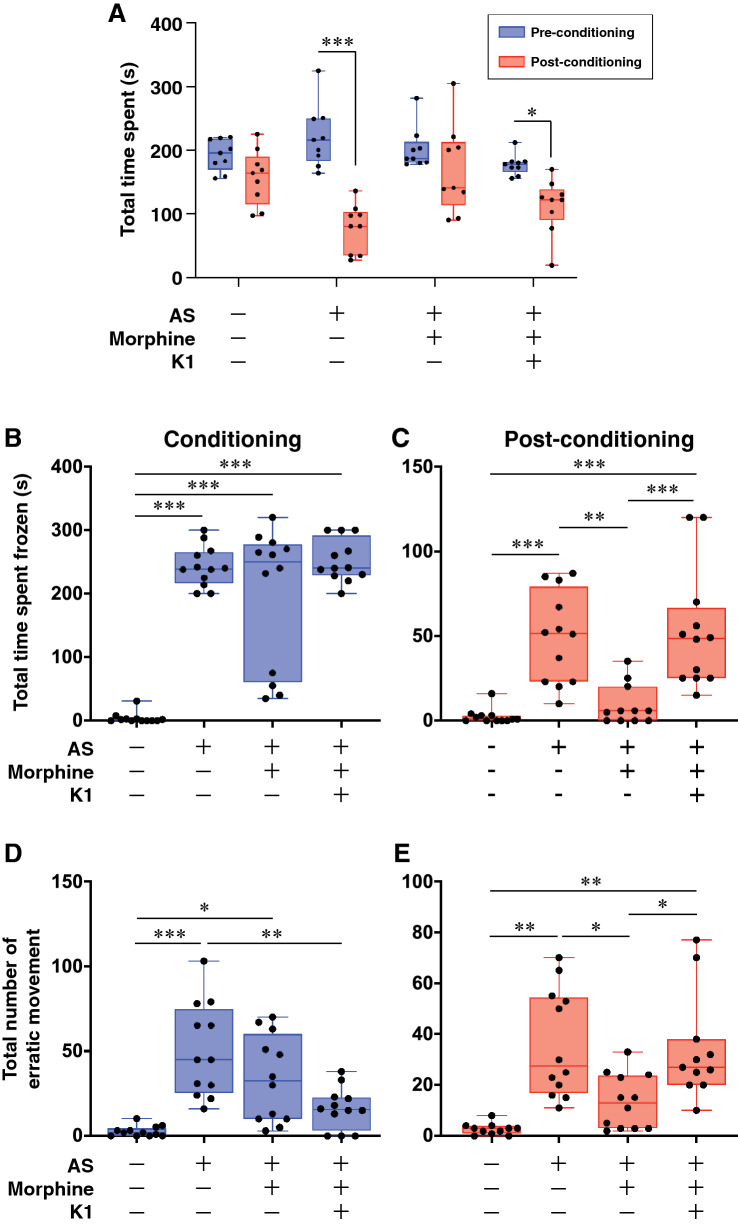
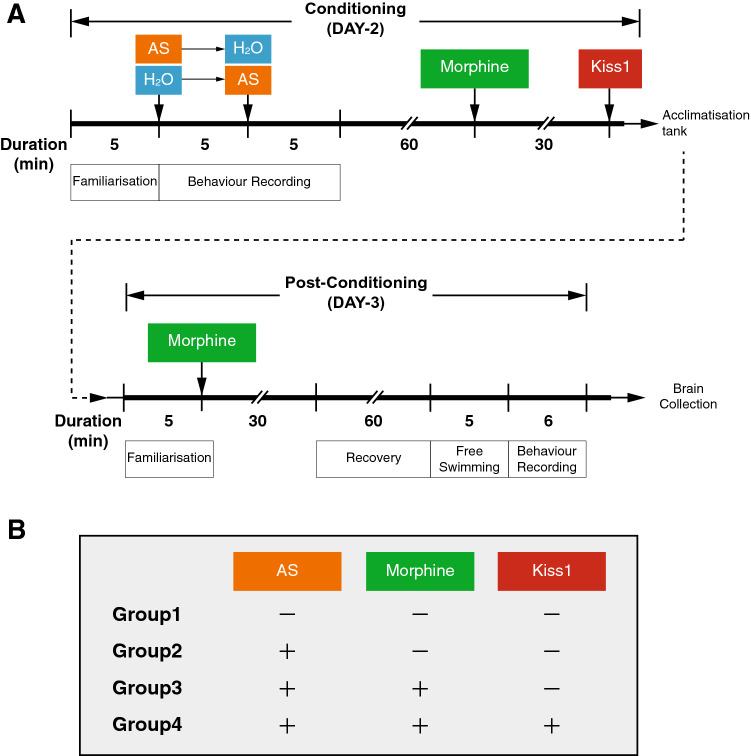
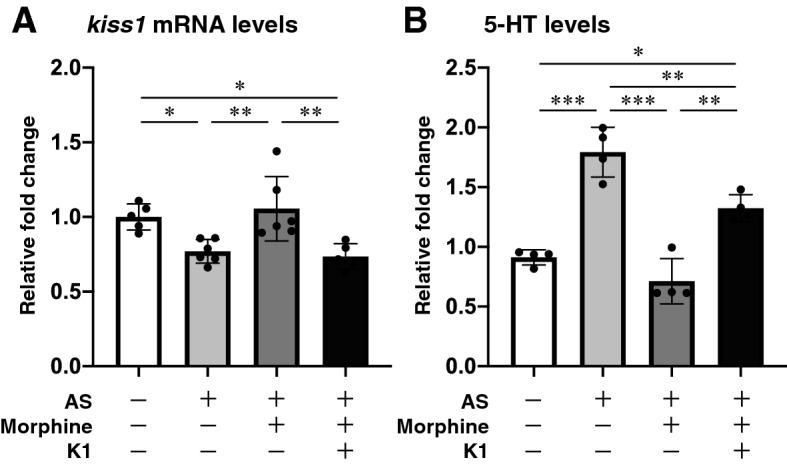
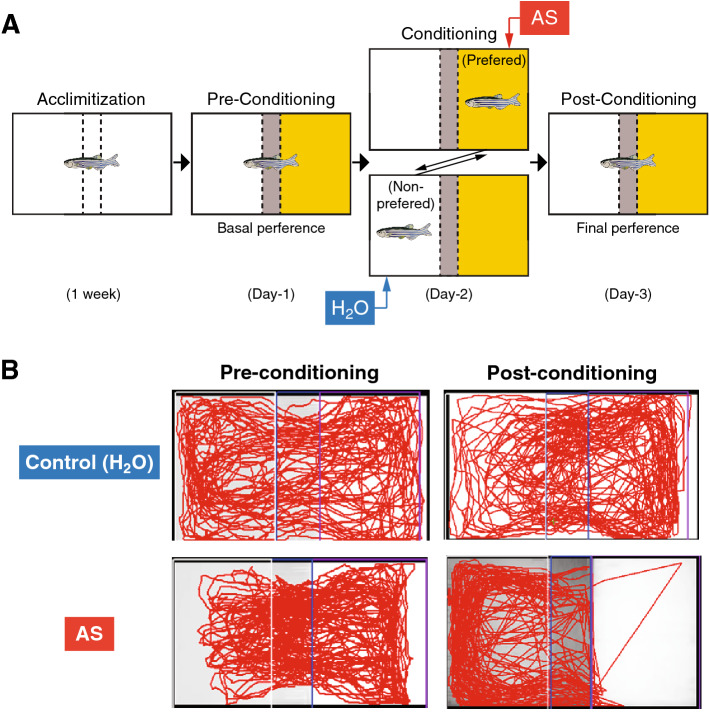
The habenula is an evolutionarily conserved brain structure, which has recently been implicated in fear memory. In the zebrafish, kisspeptin (Kiss1) is predominantly expressed in the habenula, which has been implicated as a modulator of fear response. Hence, in the present study, we questioned whether Kiss1 has a role in fear memory and morphine-induced fear memory impairment using an odorant cue (alarm substances, AS)-induced fear avoidance paradigm in adult zebrafish, whereby the fear-conditioned memory can be assessed by a change of basal place preference (= avoidance) of fish due to AS-induced fear experience. Subsequently, to examine the possible role of Kiss1 neurons-serotonergic pathway, kiss1 mRNA and serotonin levels were measured. AS exposure triggered fear episodes and fear-conditioned place avoidance. Morphine treatment followed by AS exposure, significantly impaired fear memory with increased time-spent in AS-paired compartment. However, fish administered with Kiss1 (10 mol/fish) after morphine treatment had significantly lower kiss1 mRNA levels but retained fear memory. In addition, the total brain serotonin levels were significantly increased in AS- and Kiss1-treated groups as compared to control and morphine treated group. These results suggest that habenular Kiss1 might be involved in consolidation or retrieval of fear memory through the serotonin system.
缰核是一个进化上保守的脑区结构,最近有研究表明其与恐惧记忆有关。在斑马鱼中,促吻肽(Kiss1)主要在缰核中表达,该脑区被认为是恐惧反应的调节剂。因此,在本研究中,我们使用气味线索(警报物质,AS)诱导的恐惧回避范式,在成年斑马鱼中,通过 AS 诱导的恐惧体验引起的鱼类基础位置偏好(=回避)的变化来评估恐惧条件记忆,从而探讨 Kiss1 在恐惧记忆和吗啡诱导的恐惧记忆损伤中的作用,其中恐惧条件记忆可以被评估。随后,为了研究 Kiss1 神经元-5-羟色胺能通路的可能作用,测量了 kiss1 mRNA 和 5-羟色胺水平。AS 暴露引发了恐惧发作和恐惧条件回避。吗啡处理后再进行 AS 暴露,显著损害了恐惧记忆,导致鱼类在 AS 配对区停留的时间增加。然而,吗啡处理后给予 Kiss1(10 摩尔/鱼)的鱼类 kiss1 mRNA 水平显著降低,但仍保留恐惧记忆。此外,与对照组和吗啡处理组相比,AS 和 Kiss1 处理组的大脑总 5-羟色胺水平显著增加。这些结果表明,缰核中的 Kiss1 可能通过 5-羟色胺系统参与恐惧记忆的巩固或提取。