Nakajima Kosei, Ino Yoshinori, Yamazaki-Itoh Rie, Naito Chie, Shimasaki Mari, Takahashi Mami, Esaki Minoru, Nara Satoshi, Kishi Yoji, Shimada Kazuaki, Hiraoka Nobuyoshi
Division of Molecular Pathology, National Cancer Center Research Institute, Tokyo, Japan.
Department of Analytical Pathology, National Cancer Center Research Institute, Tokyo, Japan.
Oncoimmunology. 2020 Oct 27;9(1):1838812. doi: 10.1080/2162402X.2020.1838812.
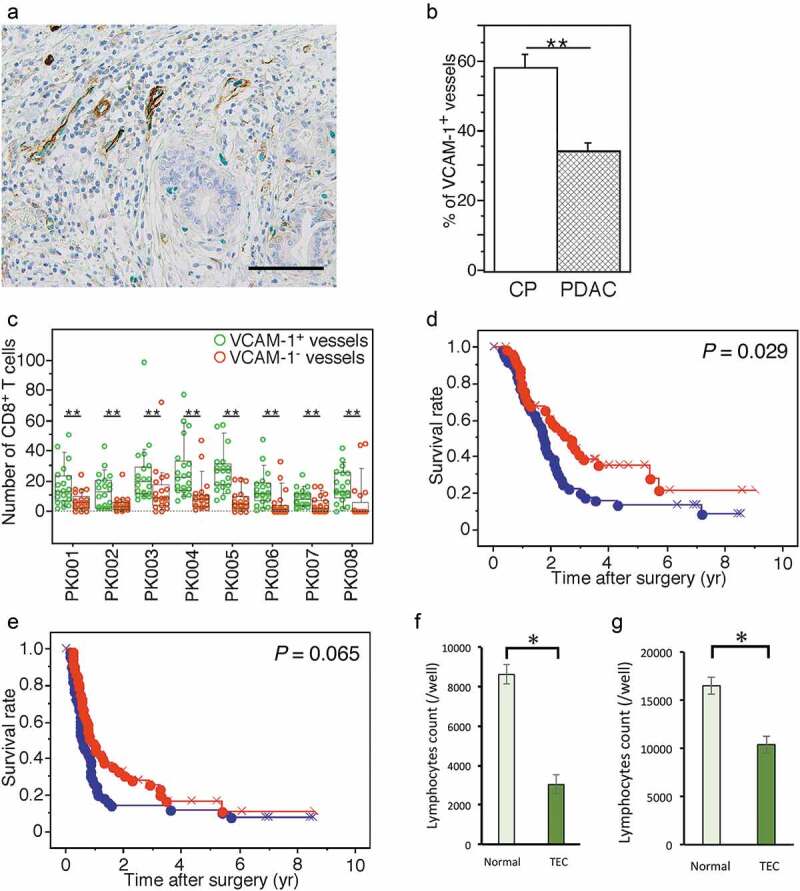
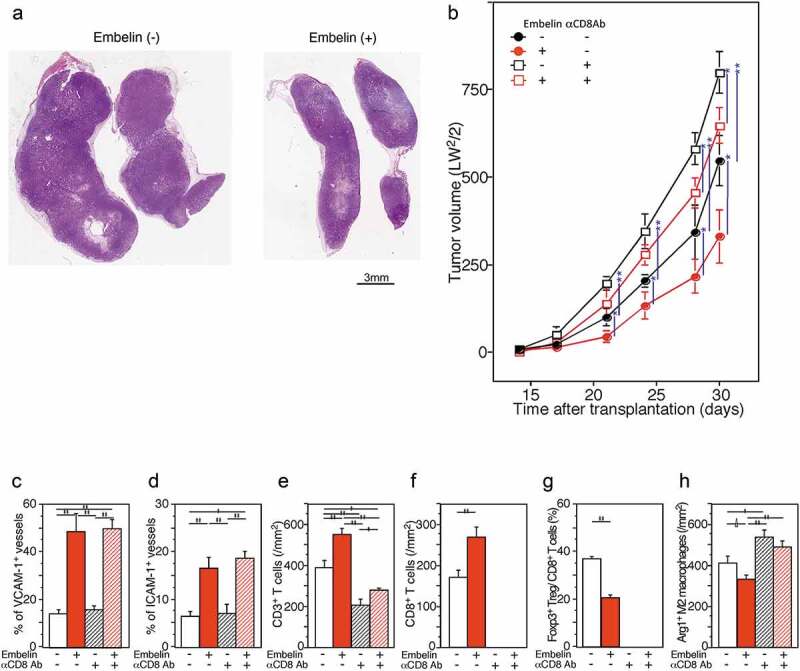
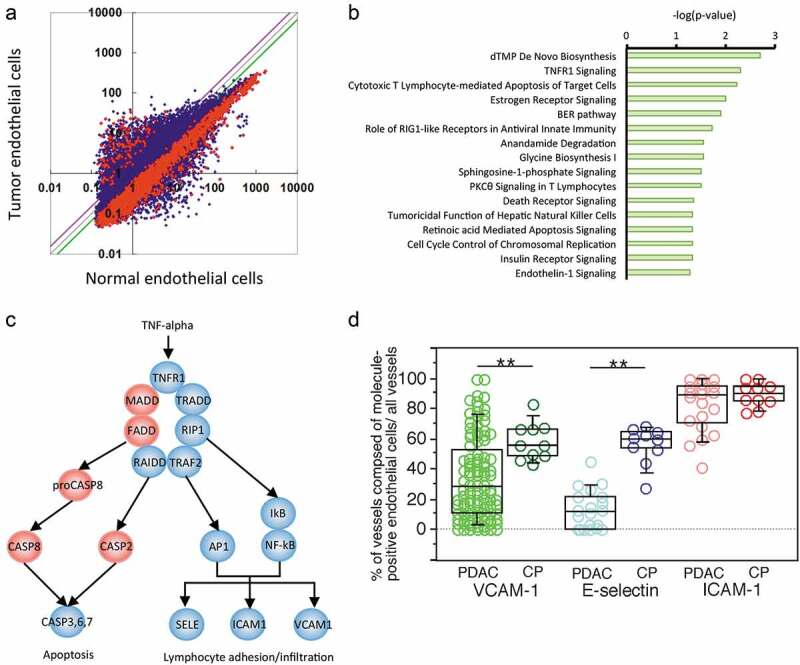
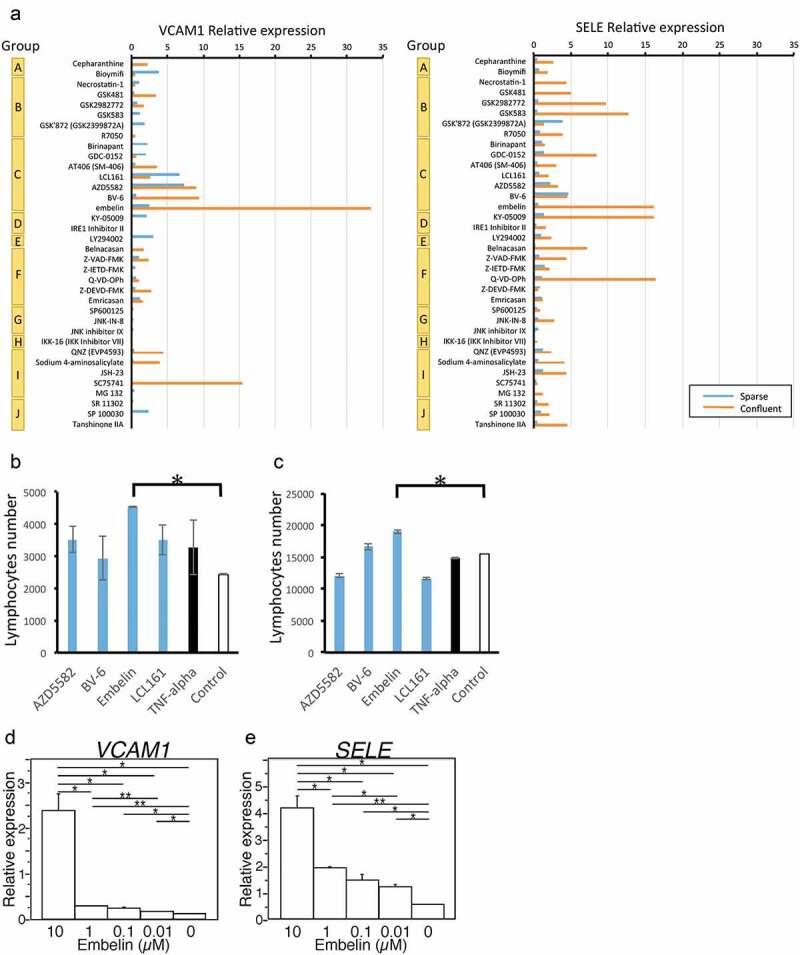
There is an increasing unmet need for successful immunotherapeutic interventions. Lymphocyte extravasation via tumor tissue endothelial cells (TECs) is required for lymphocyte infiltration into tumor sites. This study aimed to investigate the clinical significance of dysfunctional TECs in pancreatic ductal adenocarcinoma (PDAC) and identify chemical compounds that boost tumor-infiltrating lymphocyte (TIL) numbers. We performed immunohistochemical detection and clinicopathological analysis of VCAM-1 on TECs, which is essential for lymphocyte trafficking. We characterized the gene expression profiles of TECs from fresh PDAC tissues. We isolated compounds that upregulated VCAM-1 and E-selectin expression in TECs and examined their biological activities. Compared to endothelial cells from chronic pancreatitis tissue, TECs showed significantly lower VCAM-1 and E-selectin expression and significant weaknesses in lymphocyte adhesion and transmigration, resulting in decreased T cell infiltration around vessels. Patients with a relatively high percentage of VCAM-1 vessels among all vessels in PDAC tissue had an improved prognosis. A bioinformatics survey demonstrated that TNFR1 signaling was involved in abnormal VCAM-1 and E-selectin expression in TECs. We screened compounds affecting TNFR1 signaling, and the IAP inhibitor, Embelin, induced these molecules on TECs and enhanced T cell adhesion to TECs and transmigration. Furthermore, , Embelin enhanced tumor-infiltrating T cell numbers, leading to an antitumor immune response. Embelin accelerates TIL infiltration and the antitumor immune response by recovering VCAM-1 expression in TECs. Our strategy may be a therapeutic approach for accelerating the immunotherapeutic response in immune-quiescent tumors, leading to clinical trials' success.
对于成功的免疫治疗干预措施,未满足的需求日益增加。淋巴细胞通过肿瘤组织内皮细胞(TEC)渗出是淋巴细胞浸润肿瘤部位所必需的。本研究旨在探讨功能失调的TEC在胰腺导管腺癌(PDAC)中的临床意义,并鉴定能增加肿瘤浸润淋巴细胞(TIL)数量的化合物。我们对TEC上的VCAM-1进行了免疫组化检测和临床病理分析,VCAM-1对淋巴细胞转运至关重要。我们对新鲜PDAC组织中TEC的基因表达谱进行了表征。我们分离出上调TEC中VCAM-1和E-选择素表达的化合物,并检测了它们的生物学活性。与慢性胰腺炎组织的内皮细胞相比,TEC显示出显著较低的VCAM-1和E-选择素表达,以及淋巴细胞黏附和迁移方面的显著缺陷,导致血管周围T细胞浸润减少。PDAC组织中所有血管中VCAM-1血管比例相对较高的患者预后较好。一项生物信息学调查表明,TNFR1信号通路参与了TEC中VCAM-1和E-选择素的异常表达。我们筛选了影响TNFR1信号通路的化合物,IAP抑制剂紫铆因在TEC上诱导这些分子表达,并增强了T细胞与TEC的黏附和迁移。此外,紫铆因增加了肿瘤浸润T细胞的数量,从而引发抗肿瘤免疫反应。紫铆因通过恢复TEC中VCAM-1的表达来加速TIL浸润和抗肿瘤免疫反应。我们的策略可能是一种加速免疫静止肿瘤免疫治疗反应的治疗方法,从而促成临床试验的成功。