Zhou Kaijian, Guo Shu, Li Fei, Sun Qiang, Liang Guoxin
Department of Plastic Surgery, The First Affiliated Hospital of China Medical University, Shenyang, China.
Department of Pharmaceutical Science, The First Affiliated Hospital of China Medical University, Shenyang, China.
Front Cell Dev Biol. 2020 Oct 15;8:569219. doi: 10.3389/fcell.2020.569219. eCollection 2020.
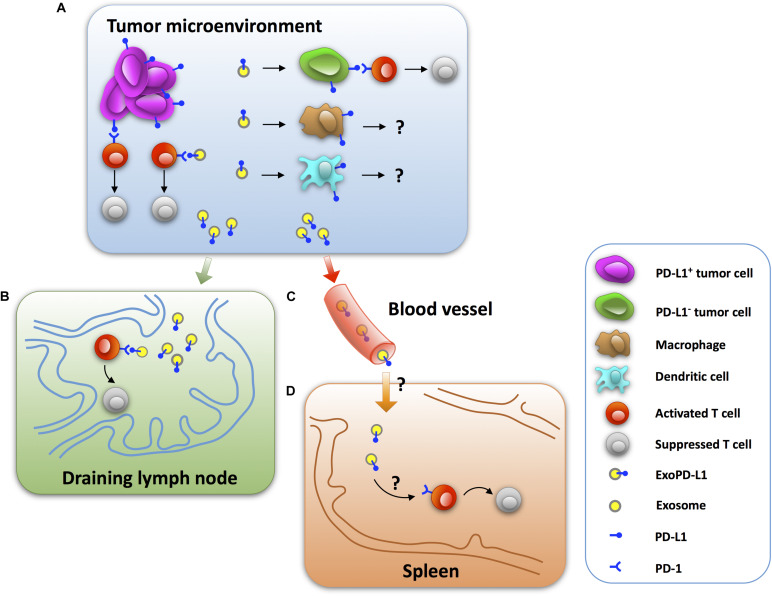
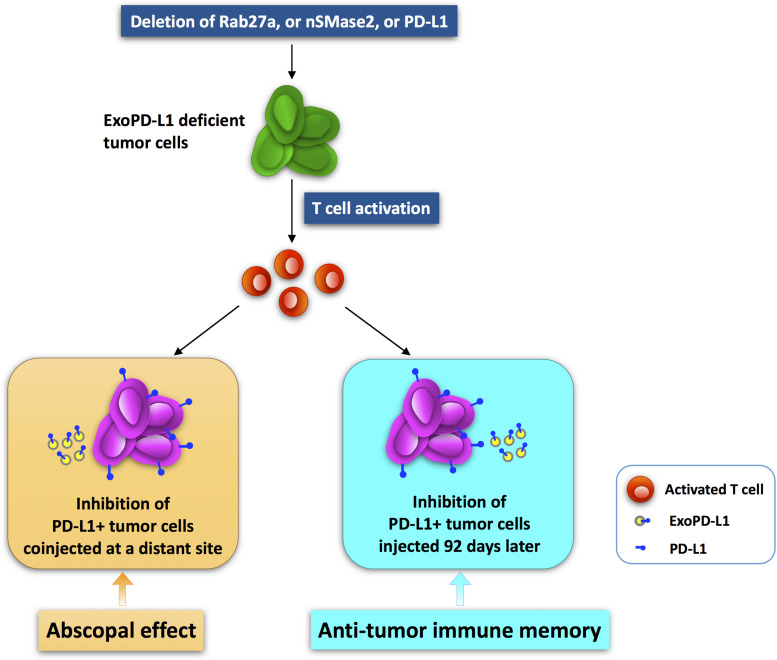
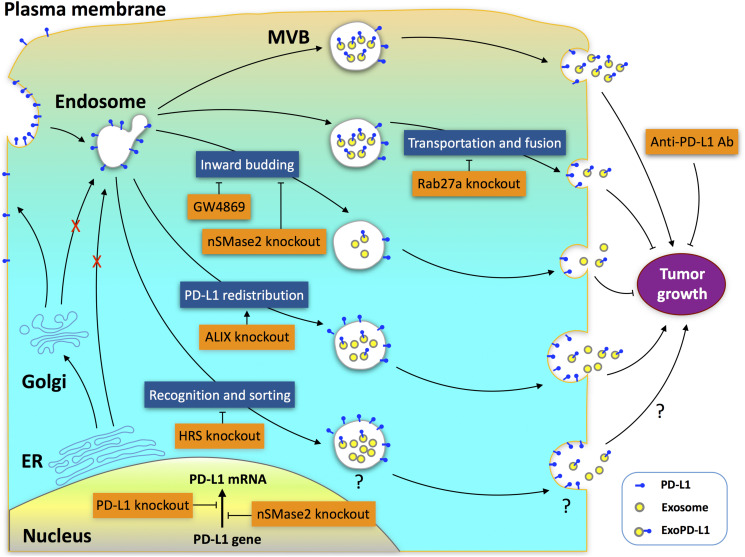
As a classical immune checkpoint molecule, PD-L1 on the surface of tumor cells plays a pivotal role in tumor immunosuppression, primarily by inhibiting the antitumor activities of T cells by binding to its receptor PD-1. PD-1/PD-L1 inhibitors have demonstrated unprecedented promise in treating various human cancers with impressive efficacy. However, a significant portion of cancer patients remains less responsive. Therefore, a better understanding of PD-L1-mediated immune escape is imperative. PD-L1 can be expressed on the surface of tumor cells, but it is also found to exist in extracellular forms, such as on exosomes. Recent studies have revealed the importance of exosomal PD-L1 (ExoPD-L1). As an alternative to membrane-bound PD-L1, ExoPD-L1 produced by tumor cells also plays an important regulatory role in the antitumor immune response. We review the recent remarkable findings on the biological functions of ExoPD-L1, including the inhibition of lymphocyte activities, migration to PD-L1-negative tumor cells and immune cells, induction of both local and systemic immunosuppression, and promotion of tumor growth. We also discuss the potential implications of ExoPD-L1 as a predictor for disease progression and treatment response, sensitive methods for detection of circulating ExoPD-L1, and the novel therapeutic strategies combining the inhibition of exosome biogenesis with PD-L1 blockade in the clinic.
作为一种经典的免疫检查点分子,肿瘤细胞表面的程序性死亡受体配体1(PD-L1)在肿瘤免疫抑制中起关键作用,主要通过与受体程序性死亡受体1(PD-1)结合来抑制T细胞的抗肿瘤活性。PD-1/PD-L1抑制剂在治疗各种人类癌症方面展现出前所未有的前景,疗效显著。然而,相当一部分癌症患者对此反应欠佳。因此,深入了解PD-L1介导的免疫逃逸势在必行。PD-L1可在肿瘤细胞表面表达,但也发现其以细胞外形式存在,如在外泌体上。最近的研究揭示了外泌体PD-L1(ExoPD-L1)的重要性。作为膜结合型PD-L1的替代形式,肿瘤细胞产生的ExoPD-L1在抗肿瘤免疫反应中也发挥着重要的调节作用。我们综述了ExoPD-L1生物学功能的最新显著发现,包括对淋巴细胞活性的抑制、向PD-L1阴性肿瘤细胞和免疫细胞的迁移、局部和全身免疫抑制的诱导以及肿瘤生长的促进。我们还讨论了ExoPD-L1作为疾病进展和治疗反应预测指标的潜在意义、检测循环ExoPD-L1的灵敏方法,以及临床上将外泌体生物合成抑制与PD-L1阻断相结合的新型治疗策略。