Zukancic Danijela, Suys Estelle J A, Pilkington Emily H, Algarni Azizah, Al-Wassiti Hareth, Truong Nghia P
Department of Drug Delivery, Disposition and Dynamics, Monash Institute of Pharmaceutical Sciences, Monash University, Melbourne, VIC 3052, Australia.
Department of Microbiology and Immunology, Peter Doherty Institute for Infection and Immunity, University of Melbourne, Melbourne, VIC 3052, Australia.
Pharmaceutics. 2020 Nov 9;12(11):1068. doi: 10.3390/pharmaceutics12111068.
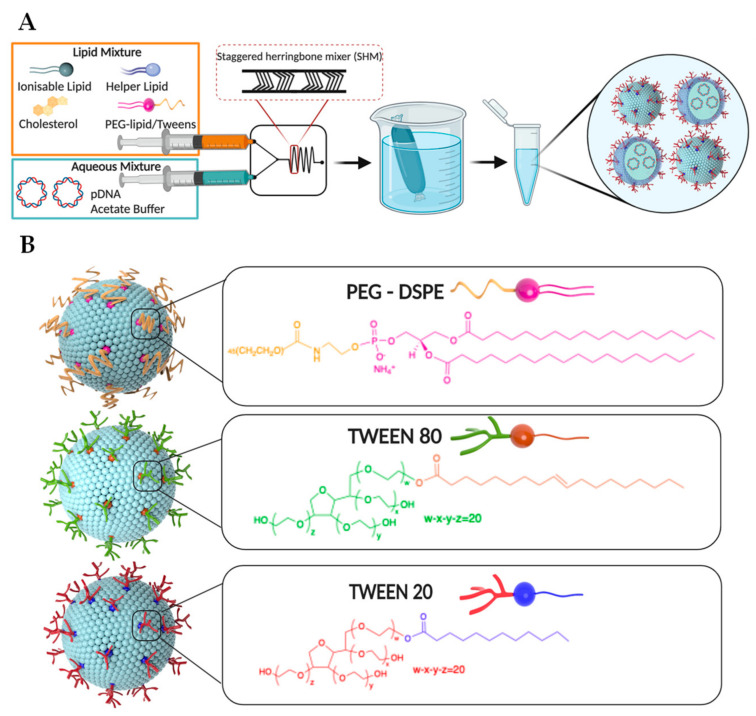
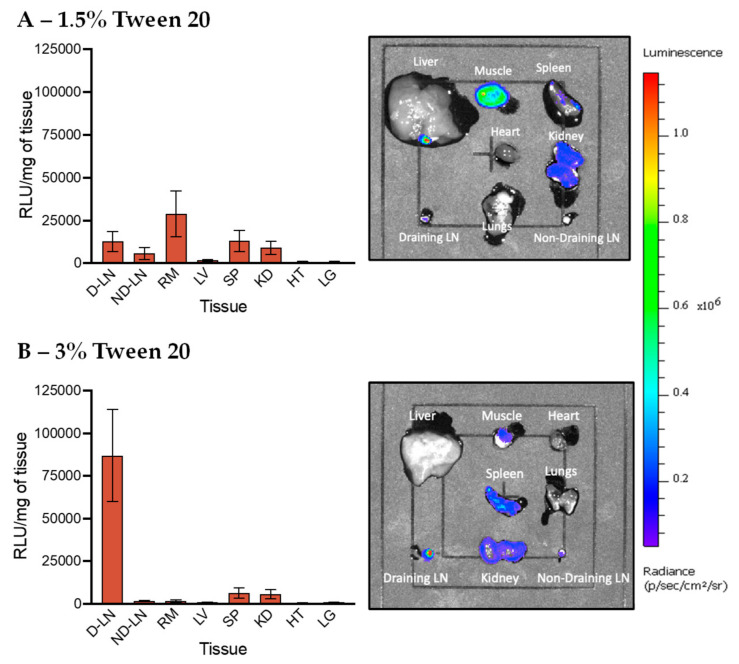
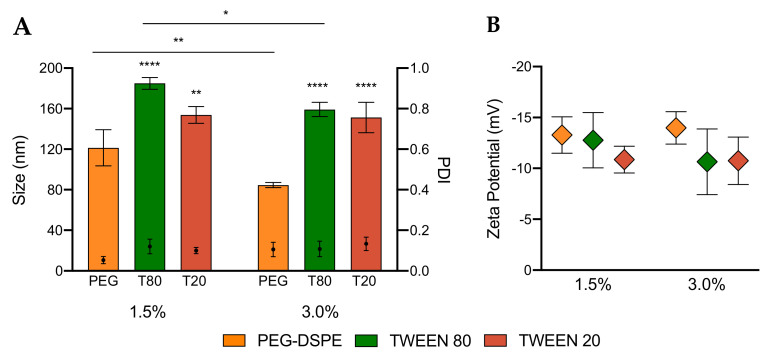
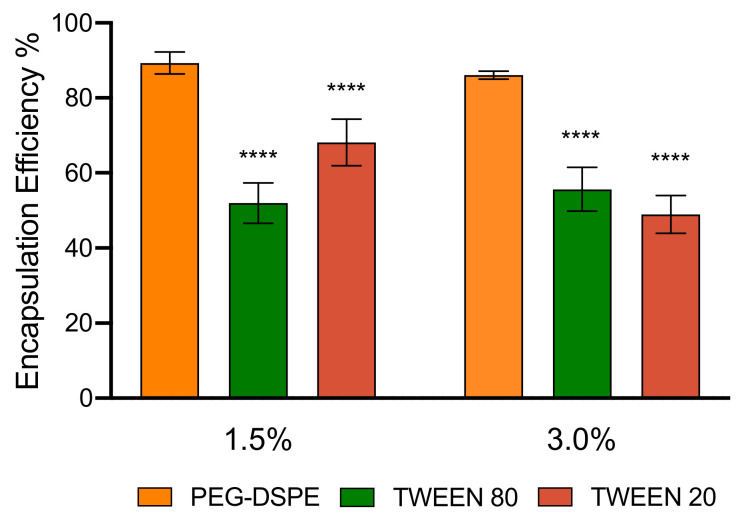
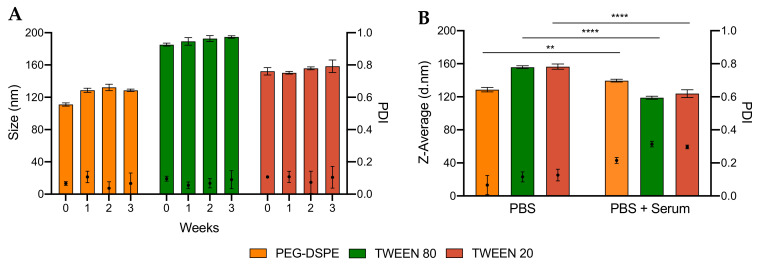
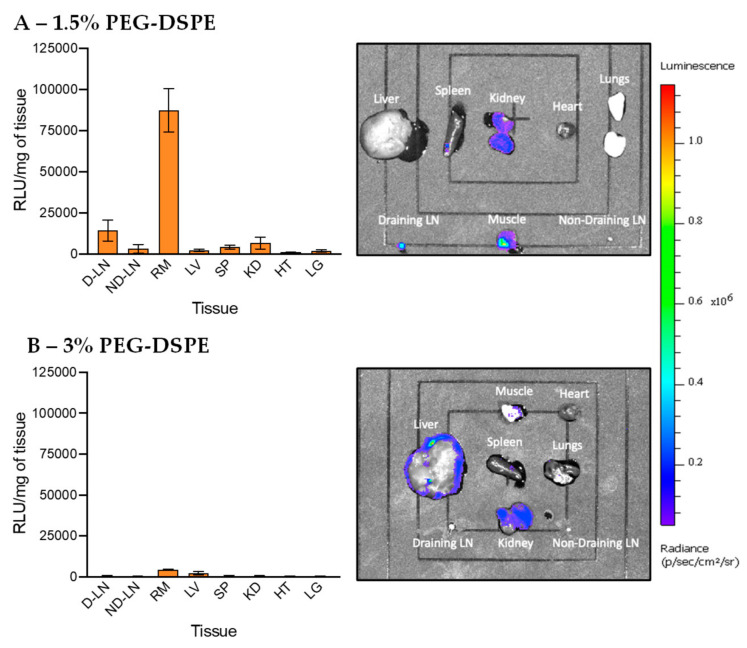
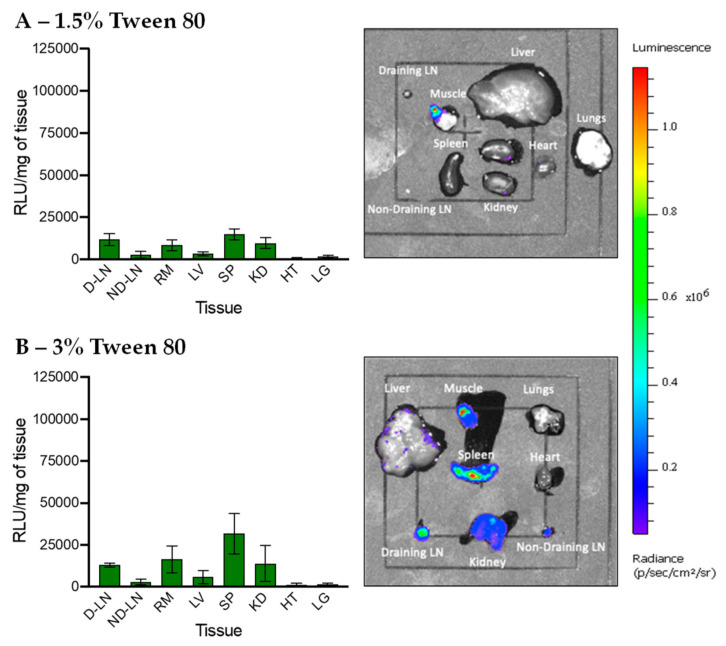
Targeted delivery of nucleic acids to lymph nodes is critical for the development of effective vaccines and immunotherapies. However, it remains challenging to achieve selective lymph node delivery. Current gene delivery systems target mainly to the liver and typically exhibit off-target transfection at various tissues. Here we report novel lipid nanoparticles (LNPs) that can deliver plasmid DNA (pDNA) to a draining lymph node, thereby significantly enhancing transfection at this target organ, and substantially reducing gene expression at the intramuscular injection site (muscle). In particular, we discovered that LNPs stabilized by 3% Tween 20, a surfactant with a branched poly(ethylene glycol) (PEG) chain linking to a short lipid tail, achieved highly specific transfection at the lymph node. This was in contrast to conventional LNPs stabilized with a linear PEG chain and two saturated lipid tails (PEG-DSPE) that predominately transfected at the injection site (muscle). Interestingly, replacing Tween 20 with Tween 80, which has a longer unsaturated lipid tail, led to a much lower transfection efficiency. Our work demonstrates the importance of PEGylation in selective organ targeting of nanoparticles, provides new insights into the structure-property relationship of LNPs, and offers a novel, simple, and practical PEGylation technology to prepare the next generation of safe and effective vaccines against viruses or tumours.
将核酸靶向递送至淋巴结对于开发有效的疫苗和免疫疗法至关重要。然而,实现选择性淋巴结递送仍然具有挑战性。当前的基因递送系统主要靶向肝脏,并且通常在各种组织中表现出脱靶转染。在此,我们报告了一种新型脂质纳米颗粒(LNP),它可以将质粒DNA(pDNA)递送至引流淋巴结,从而显著增强该靶器官的转染,并大幅降低肌肉注射部位(肌肉)的基因表达。特别是,我们发现由3%吐温20稳定的LNP,一种具有连接到短脂质尾巴的支链聚乙二醇(PEG)链的表面活性剂,在淋巴结实现了高度特异性转染。这与用线性PEG链和两条饱和脂质尾巴(PEG-DSPE)稳定的传统LNP形成对比,后者主要在注射部位(肌肉)转染。有趣的是,用具有更长不饱和脂质尾巴的吐温80替代吐温20会导致转染效率大大降低。我们的工作证明了聚乙二醇化在纳米颗粒选择性器官靶向中的重要性,为LNP的结构-性质关系提供了新见解,并提供了一种新颖、简单且实用的聚乙二醇化技术,以制备针对病毒或肿瘤的下一代安全有效的疫苗。