
基于网络的方法鉴定和验证潜在的 miRNA 作为脓毒症及相关肺损伤的生物标志物。
Identification and Validation of Potential miRNAs, as Biomarkers for Sepsis and Associated Lung Injury: A Network-Based Approach.
机构信息
Translational Research Lab, Department of Biotechnology, Faculty of Natural Sciences, Jamia Millia Islamia, New Delhi 110025, India.
Centre for Interdisciplinary Research in Basic Sciences, Jamia Millia Islamia, New Delhi 110025, India.
出版信息
Genes (Basel). 2020 Nov 10;11(11):1327. doi: 10.3390/genes11111327.
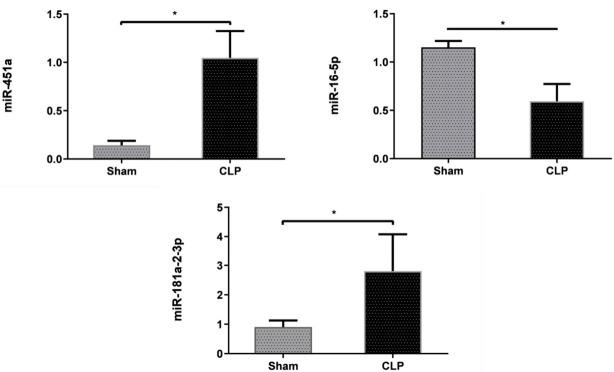
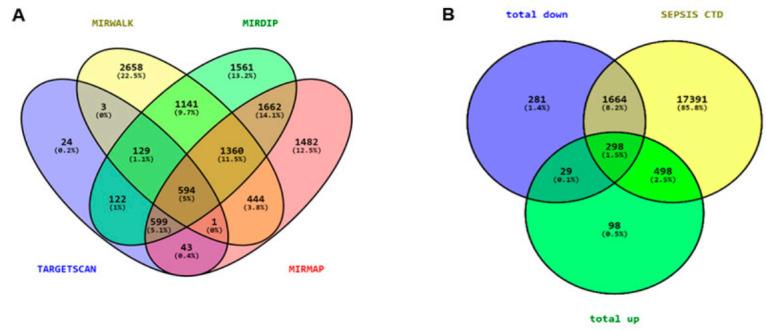
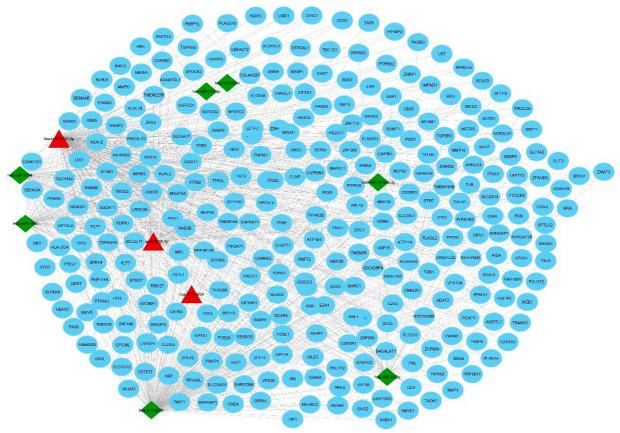
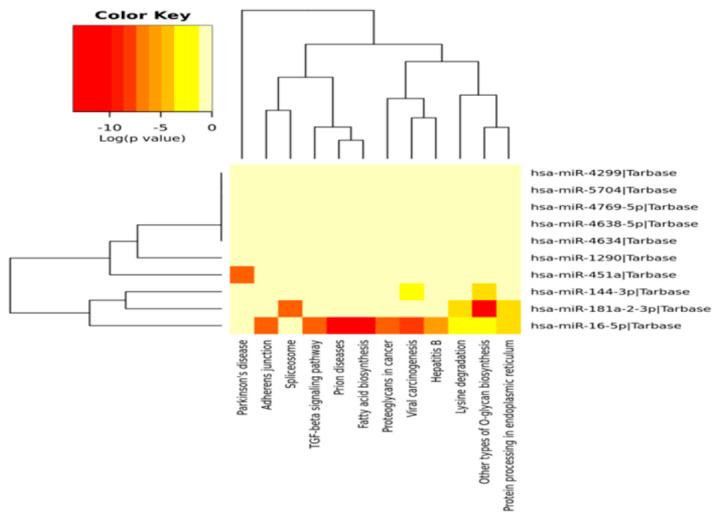
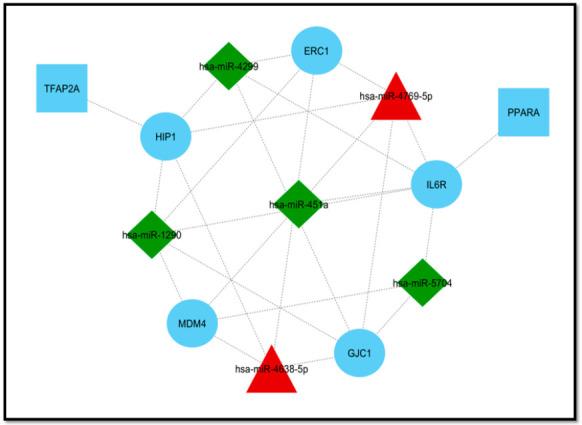
Sepsis is a dysregulated immune response disease affecting millions worldwide. Delayed diagnosis, poor prognosis, and disease heterogeneity make its treatment ineffective. miRNAs are imposingly involved in personalized medicine such as therapeutics, due to their high sensitivity and accuracy. Our study aimed to reveal the biomarkers that may be involved in the dysregulated immune response in sepsis and lung injury using a computational approach and in vivo validation studies. A sepsis miRNA Gene Expression Omnibus (GEO) dataset based on the former analysis of blood samples was used to identify differentially expressed miRNAs (DEMs) and associated hub genes. Sepsis-associated genes from the Comparative Toxicogenomics Database (CTD) that overlapped with identified DEM targets were utilized for network construction. In total, 317 genes were found to be regulated by 10 DEMs (three upregulated, namely miR-4634, miR-4638-5p, and miR-4769-5p, and seven downregulated, namely miR-4299, miR-451a, miR181a-2-3p, miR-16-5p, miR-5704, miR-144-3p, and miR-1290). Overall hub genes (HIP1, GJC1, MDM4, IL6R, and ERC1) and for miR-16-5p (SYNRG, TNRC6B, and LAMTOR3) were identified based on centrality measures (degree, betweenness, and closeness). In vivo validation of miRNAs in lung tissue showed significantly downregulated expression of miR-16-5p corroborating with our computational findings, whereas expression of miR-181a-2-3p and miR-451a were found to be upregulated in contrast to the computational approach. In conclusion, the differential expression pattern of miRNAs and hub genes reported in this study may help to unravel many unexplored regulatory pathways, leading to the identification of critical molecular targets for increased prognosis, diagnosis, and drug efficacy in sepsis and associated organ injuries.
脓毒症是一种免疫失调疾病,影响着全球数百万人。由于诊断延迟、预后不良和疾病异质性,其治疗效果不佳。miRNAs 在个性化医疗(如治疗学)中具有重要作用,因为它们具有高度的敏感性和准确性。我们的研究旨在通过计算方法和体内验证研究揭示可能参与脓毒症和肺损伤中免疫失调反应的生物标志物。使用基于血液样本的先前分析的脓毒症 miRNA 基因表达综合数据集 (GEO) 来识别差异表达的 miRNAs (DEMs) 和相关的枢纽基因。来自比较毒理学基因组数据库 (CTD) 的与鉴定的 DEM 靶标重叠的脓毒症相关基因被用于网络构建。总共发现 317 个基因受到 10 个 DEM 的调节(三个上调,即 miR-4634、miR-4638-5p 和 miR-4769-5p,七个下调,即 miR-4299、miR-181a-2-3p、miR-16-5p、miR-5704、miR-144-3p 和 miR-1290)。基于中心性测度(度、介数和接近度),总体枢纽基因 (HIP1、GJC1、MDM4、IL6R 和 ERC1) 和 miR-16-5p 的枢纽基因 (SYNRG、TNRC6B 和 LAMTOR3) 被识别。在肺组织中对 miRNA 的体内验证表明,miR-16-5p 的表达明显下调,与我们的计算结果一致,而 miR-181a-2-3p 和 miR-451a 的表达则与计算结果相反,呈现上调趋势。总之,本研究报告的 miRNA 和枢纽基因的差异表达模式可能有助于揭示许多未被探索的调控途径,从而确定关键的分子靶点,提高脓毒症及其相关器官损伤的预后、诊断和药物疗效。

 Zotero 插件