GeoTECH Group, CINTECX, Universidade de Vigo, 36310 Vigo, Spain.
Defense University Center, Spanish Naval Academy, Plaza de España s/n, 36900 Marín, Spain.
Sensors (Basel). 2020 Nov 10;20(22):6421. doi: 10.3390/s20226421.
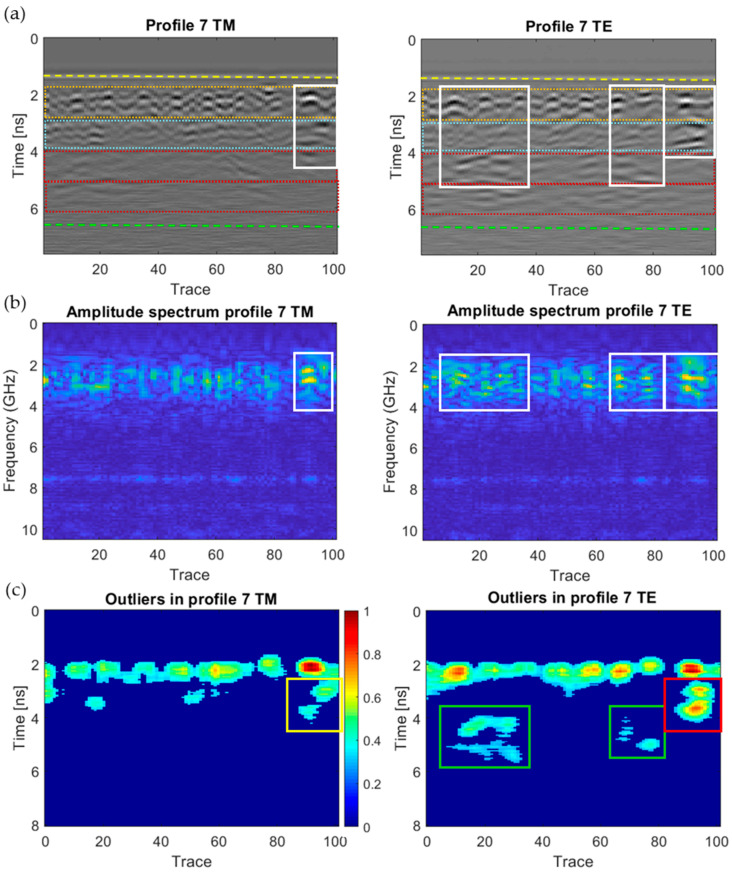
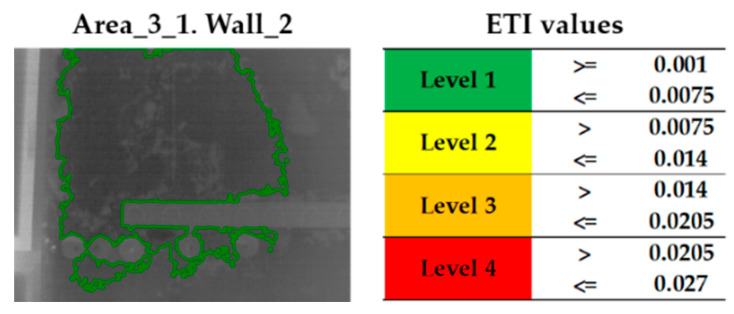
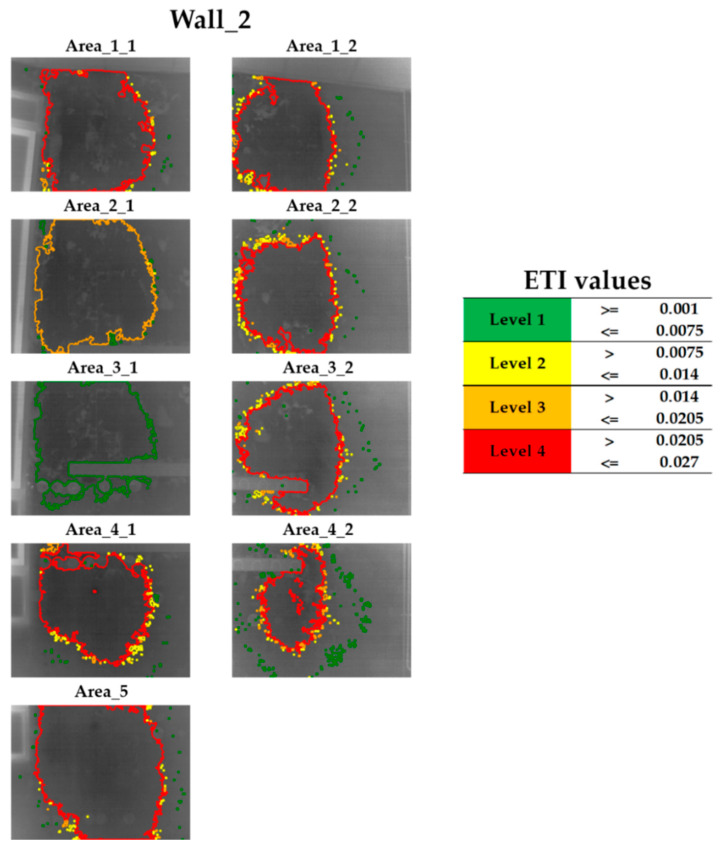
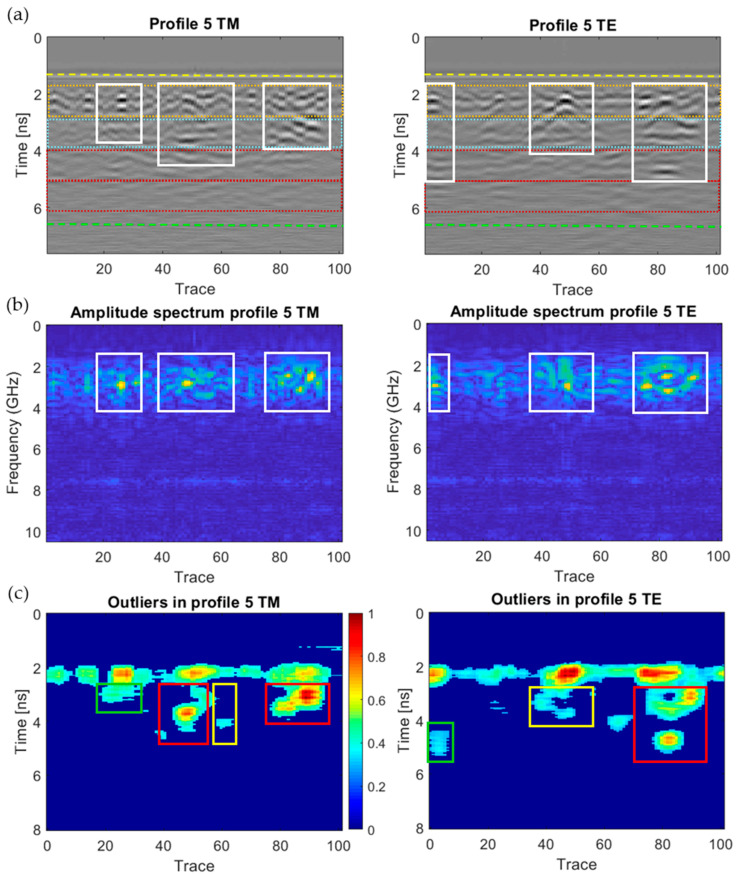
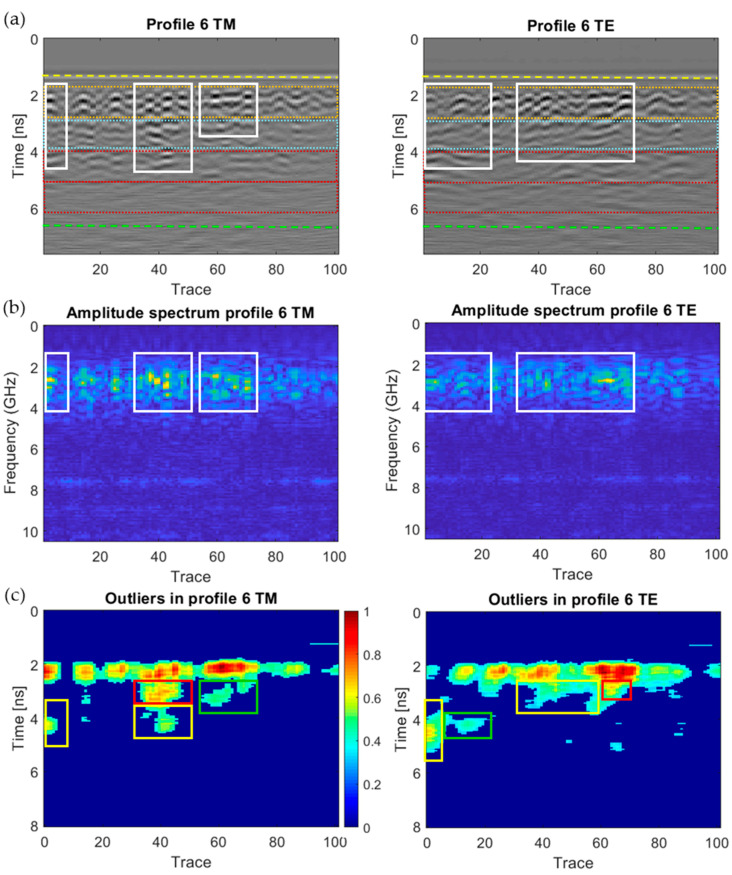
The integrity, comfort, and energy demand of a building can be negatively affected by the presence of moisture in its walls. Therefore, it is essential to identify and characterise this building pathology with the most appropriate technologies to perform the required prevention and maintenance tasks. This paper proposes the joint application of InfraRed Thermography (IRT) and Ground-Penetrating Radar (GPR) for the detection and classification of moisture in interior walls of a building according to its severity level. The IRT method is based on the study of the temperature distribution of the thermal images acquired without an application of artificial thermal excitation for the detection of superficial moisture (less than 15 mm deep in plaster with passive IRT). Additionally, in order to characterise the level of moisture severity, the Evaporative Thermal Index (ETI) was obtained for each of the moisture areas. As for GPR, with measuring capacity from 10 mm up to 30 cm depth with a 2300 MHz antenna, several algorithms were developed based on the amplitude and spectrum of the received signals for the detection and classification of moisture through the inner layers of the wall. In this work, the complementarity of both methods has proven to be an effective approach to investigate both superficial and internal moisture and their severity. Specifically, IRT allowed estimating superficial water movement, whereas GPR allowed detecting points of internal water accumulation. Thus, through the combination of both techniques, it was possible to provide an interpretation of the water displacement from the exterior surface to the interior surface of the wall, and to give a relative depth of water inside the wall. Therefore, it was concluded that more information and greater reliability can be gained by using complementary IRT-GPR, showing the benefits of combining both techniques in the building sector.
墙壁中的水分会对建筑物的完整性、舒适度和能源需求产生负面影响。因此,必须使用最合适的技术识别和描述这种建筑病理学,以执行所需的预防和维护任务。本文提出了联合应用红外热成像(IRT)和探地雷达(GPR)的方法,根据其严重程度检测和分类建筑物内部墙壁中的水分。IRT 方法基于对热图像温度分布的研究,这些热图像是在没有人工热激励的情况下获取的,用于检测表面水分(在抹灰层中深度小于 15 毫米,采用被动 IRT)。此外,为了表征水分严重程度,为每个水分区域获得了蒸发热指数(ETI)。对于 GPR,使用 2300 MHz 天线的测量深度从 10 毫米到 30 厘米,开发了几种算法,这些算法基于接收信号的幅度和频谱,用于通过墙壁的内层检测和分类水分。在这项工作中,两种方法的互补性已被证明是一种有效的方法,可以研究表面和内部水分及其严重程度。具体来说,IRT 允许估计表面水的运动,而 GPR 允许检测内部水积聚的点。因此,通过两种技术的结合,可以提供从外墙表面到墙壁内部表面的水分位移的解释,并给出墙壁内部水的相对深度。因此,得出的结论是,使用互补的 IRT-GPR 可以获得更多的信息和更高的可靠性,展示了在建筑领域结合使用这两种技术的好处。