Department of Internal Medicine, Saint Louis University, St. Louis, USA.
HighTide Therapeutics, Rockville, MD, USA.
Lipids Health Dis. 2020 Nov 12;19(1):239. doi: 10.1186/s12944-020-01406-4.
Reduction in elevated serum cholesterol concentrations is important in the management of individuals at risk of atherosclerotic cardiovascular disease (ASCVD), such as myocardial infarction and thrombotic stroke. Although HMGCoA reductase inhibitors ("statins") are frequently used for this purpose, a significant proportion of patients remain at increased residual risk of ASCVD as they do not adequately address some of the associated co-morbidities such as diabetes and fatty liver disease.
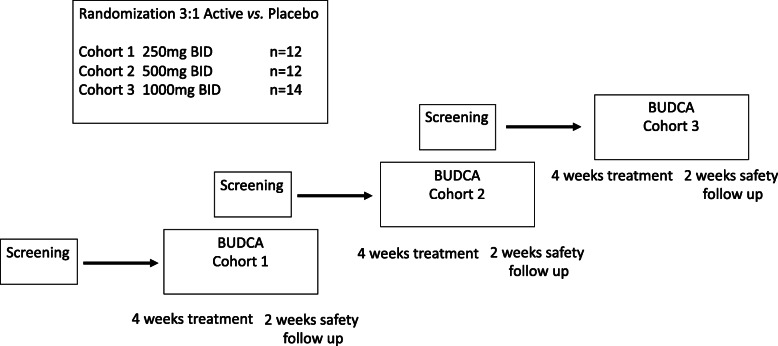
A double-blind, randomized, placebo-controlled, dose ranging study was carried out that compared three doses of berberine ursodeoxycholate (BUDCA) to placebo in a cohort of subjects with a history of hypercholesterolemia and serum LDL cholesterol levels above 2.59 mmol/L (> 99.9 mg/dL). BUDCA was administered in two divided doses each day for 28 days. The primary endpoints of the study were safety and tolerability of this new compound, as well as its effect in lowering serum lipid and lipoprotein concentrations.
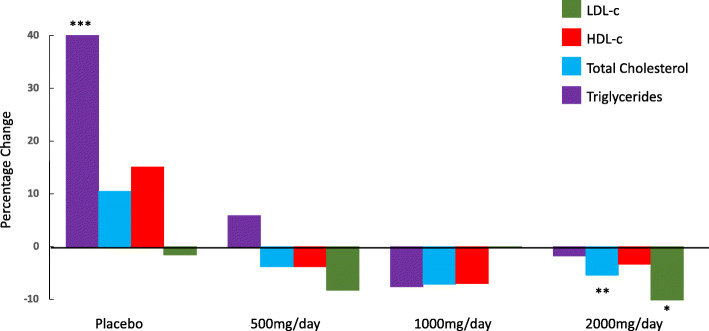
A total of 50 subjects were enrolled into three dose cohorts in this study. BUDCA was generally well tolerated, even at doses of 2000 mg per day (the highest dose group); there were no significant adverse effects reported and this highest dose was associated with significant reductions in LDL cholesterol. By day 28 and with the highest dose of BUDCA, there were significant reductions in the serum concentrations of total cholesterol by 8.2% (P = 0.0004) and LDL cholesterol by 10.4% (P = 0.0006), but no significant changes in triglyceride and HDL cholesterol concentrations.
BUDCA is a new single molecular entity that has a significant but modest effect in safely lowering serum LDL-cholesterol concentrations in individuals with a history of hypercholesterolemia. It has a potential use for treating hypercholesterolemia in individuals who cannot take statins, and possibly as adjunctive to other agents, such as ezetimibe or bempedoic acid.
The study was registered on Clinicaltrials.gov ( NCT03381287 ).
降低升高的血清胆固醇浓度对于管理有发生动脉粥样硬化性心血管疾病(ASCVD)风险的个体(如心肌梗死和血栓性卒中)非常重要。尽管 HMGCoA 还原酶抑制剂(“他汀类药物”)常用于此目的,但由于他汀类药物不能充分解决某些相关合并症,如糖尿病和脂肪肝,因此仍有相当一部分患者存在 ASCVD 的残余风险增加。
进行了一项双盲、随机、安慰剂对照、剂量范围研究,比较了三种剂量的熊去氧胆酸黄连素(BUDCA)与安慰剂在一组有高胆固醇血症史和血清 LDL 胆固醇水平高于 2.59mmol/L(>99.9mg/dL)的受试者中的疗效。BUDCA 每天分两次给药,共 28 天。该研究的主要终点是这种新化合物的安全性和耐受性,以及降低血清脂质和脂蛋白浓度的效果。
这项研究共纳入了 50 名受试者,分为三个剂量组。BUDCA 耐受性良好,即使在每天 2000mg 的最高剂量组也没有出现明显的不良反应,且最高剂量组与 LDL 胆固醇的显著降低相关。在第 28 天,BUDCA 的最高剂量组血清总胆固醇浓度降低了 8.2%(P=0.0004),LDL 胆固醇浓度降低了 10.4%(P=0.0006),而甘油三酯和 HDL 胆固醇浓度无明显变化。
BUDCA 是一种新的单一分子实体,可安全降低有高胆固醇血症史的个体的血清 LDL-胆固醇浓度,且效果显著但温和。对于不能服用他汀类药物的高胆固醇血症患者,它具有治疗作用,也可能作为依折麦布或贝马度酸等其他药物的辅助治疗药物。
该研究在 ClinicalTrials.gov 上注册(NCT03381287)。