Engineering Research Center for New Materials and Precision Treatment Technology of Malignant Tumors Therapy, Dalian Medical University, NO. 467 Zhongshan Road, Dalian, Liaoning, 116027, China.
Engineering Technology Research Center for Translational Medicine, Dalian Medical University, NO. 467 Zhongshan Road, Dalian, Liaoning, 116027, China.
Cell Death Dis. 2020 Nov 12;11(11):972. doi: 10.1038/s41419-020-03179-1.
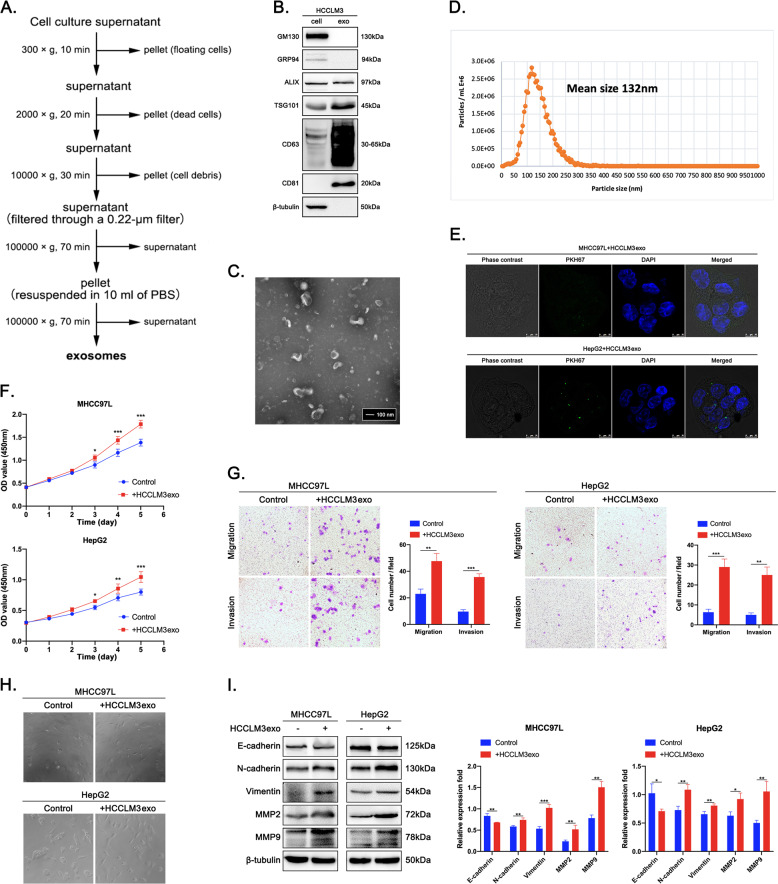
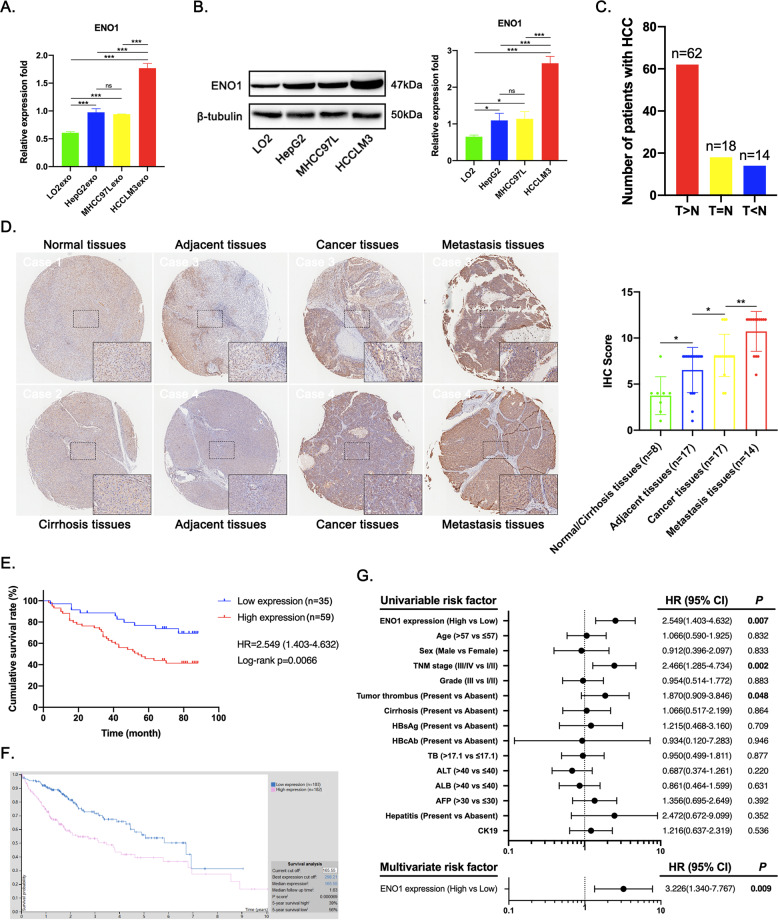
Alpha-enolase (ENO1) has been found to be dysregulated in several human malignancies, including hepatocellular carcinoma (HCC). Although the role of ENO1 as a glycolytic enzyme in HCC cells has been well characterized, little is known about the other roles of ENO1, especially exosome-derived ENO1, in regulating HCC progression. Here, we demonstrated that ENO1 is frequently upregulated in HCC cells or tissues, with even higher expression in highly metastatic HCC cells or metastatic tissues as well as in exosomes derived from highly metastatic sources. Moreover, ENO1 expression is associated with the tumor-node-metastasis (TNM) stage, differentiation grade and poor prognosis in HCC patients. Surprisingly, ENO1 can be transferred between HCC cells via exosome-mediated crosstalk, exhibiting an effect similar to that of ENO1 overexpression in HCC cells, which promoted the growth and metastasis of HCC cells with low ENO1 expression by upregulating integrin α6β4 expression and activating the FAK/Src-p38MAPK pathway. In summary, our data suggest that exosome-derived ENO1 is essential to promoting HCC growth, metastasis, and further patient deterioration. The findings from this study implicate a novel biomarker for the clinical evaluation of HCC progression, especially the prediction of HCC metastatic risk.
α-烯醇化酶(ENO1)在多种人类恶性肿瘤中失调,包括肝细胞癌(HCC)。尽管 ENO1 作为 HCC 细胞中糖酵解酶的作用已得到很好的描述,但对于 ENO1 的其他作用,特别是外泌体衍生的 ENO1,在调节 HCC 进展中的作用知之甚少。在这里,我们证明 ENO1 在 HCC 细胞或组织中经常上调,在高转移性 HCC 细胞或转移性组织以及高转移性来源的外泌体中表达更高。此外,ENO1 表达与 HCC 患者的肿瘤-淋巴结-转移(TNM)分期、分化程度和预后不良相关。令人惊讶的是,ENO1 可以通过外泌体介导的细胞间通讯在 HCC 细胞之间转移,表现出与 HCC 细胞中 ENO1 过表达相似的效果,通过上调整合素 α6β4 表达和激活 FAK/Src-p38MAPK 通路,促进低 ENO1 表达的 HCC 细胞的生长和转移。总之,我们的数据表明,外泌体衍生的 ENO1 对于促进 HCC 的生长、转移和患者病情的进一步恶化是必不可少的。本研究的结果提示了一种用于 HCC 进展临床评估的新型生物标志物,特别是 HCC 转移风险的预测。