Graduate School of Life Sciences, Tohoku University, 6-3 Aoba, Aramaki-aza, Aoba-ku, Sendai, Miyagi, 980-8578, Japan.
Faculty of Science, Yamagata University, 1-4-12 Kojirakawa, Yamagata-shi, Yamagata, 990-8560, Japan.
Sci Rep. 2020 Nov 12;10(1):19622. doi: 10.1038/s41598-020-76164-5.
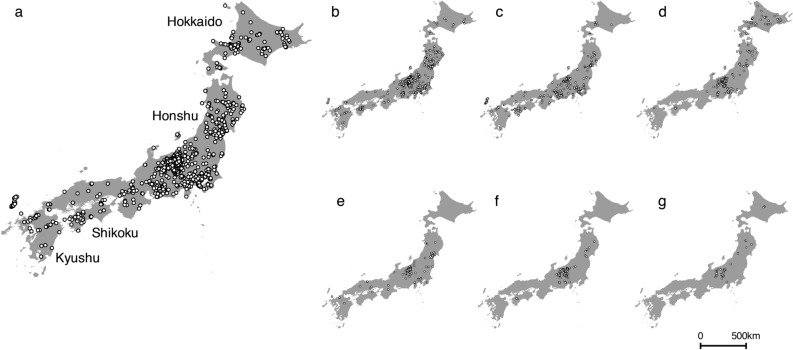
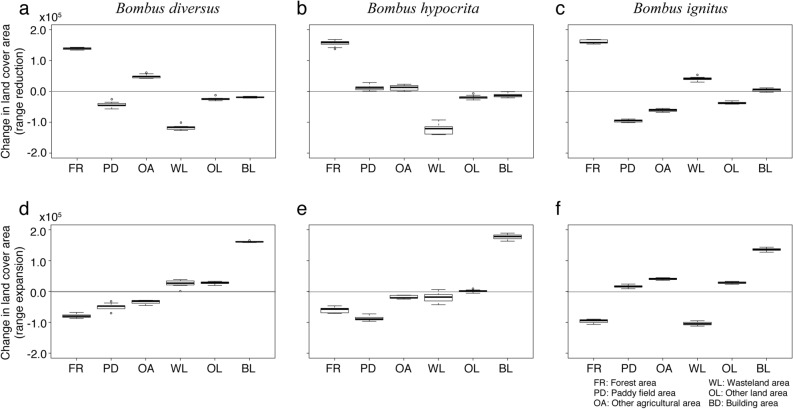
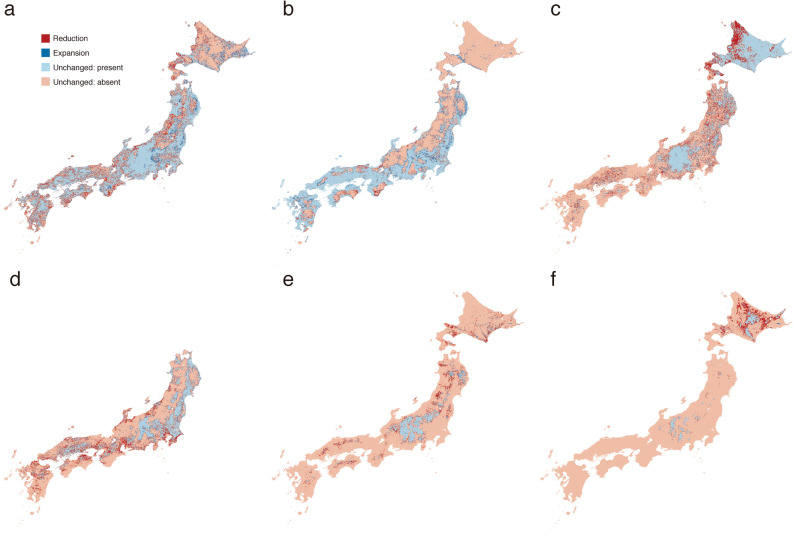
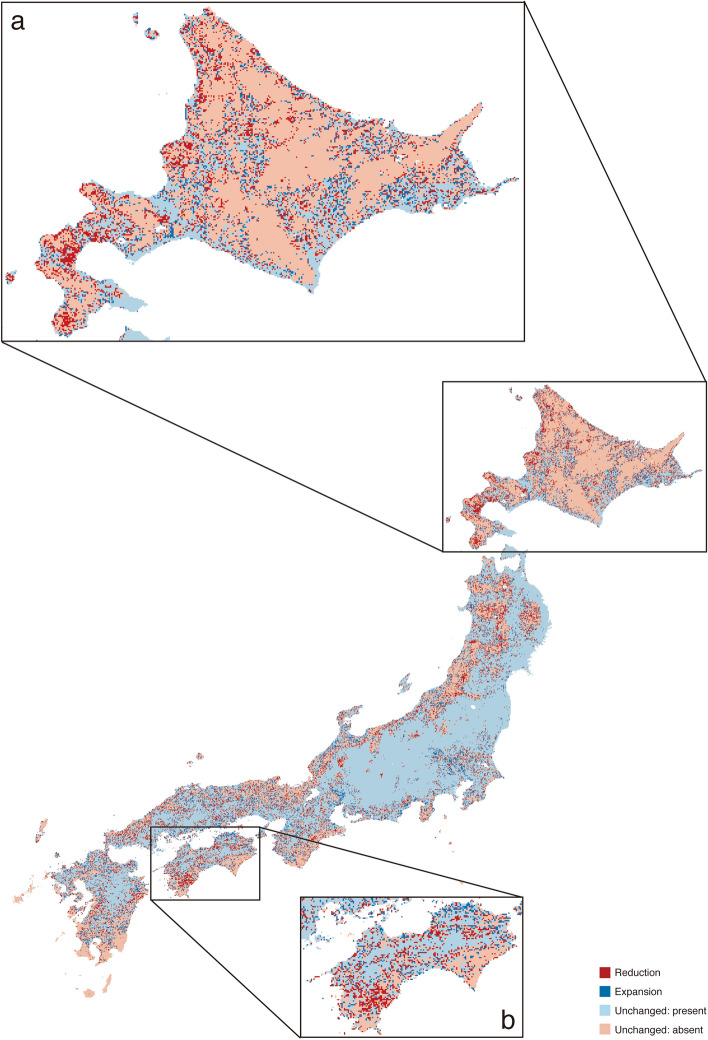
Wild bee decline has been reported worldwide. Some bumblebee species (Bombus spp.) have declined in Europe and North America, and their ranges have shrunk due to climate and land cover changes. In countries with limited historical and current occurrence data, it is often difficult to investigate bumblebee range shifts. Here we estimated the past/present distributions of six major bumblebee species in Japan with species distribution modeling using current occurrence data and past/present climate and land cover data. The differences identified between estimated past and present distributions indicate possible range shifts. The estimated ranges of B. diversus, B. hypocrita, B. ignitus, B. honshuensis, and B. beaticola shrank over the past 26 years, but that of B. ardens expanded. The lower altitudinal limits of the estimated ranges became higher as temperature increased. When focusing on the effects of land cover change, the estimated range of B. diversus slightly shrank due to an increase in forest area. Such increase in forest area may result from the abandonment of agricultural lands and the extension of the rotation time of planted coniferous forests and secondary forests. Managing old planted coniferous forests and secondary forests will be key to bumblebee conservation for adaptation to climate change.
全球范围内都有报道称野生蜜蜂数量正在减少。一些熊蜂物种(Bombus spp.)在欧洲和北美数量减少,由于气候和土地覆盖变化,其分布范围缩小。在那些历史和当前发生数据有限的国家,调查熊蜂分布范围的变化往往很困难。在这里,我们使用物种分布模型,根据当前的发生数据以及过去/现在的气候和土地覆盖数据,估算了日本六种主要熊蜂物种的过去/现在的分布情况。通过比较过去和现在的分布估计值,我们可以确定可能的分布范围变化。在过去的 26 年中,估计的 B. diversus、B. hypocrita、B. ignitus、B. honshuensis 和 B. beaticola 的分布范围缩小,但 B. ardens 的分布范围扩大。随着温度升高,估计范围的海拔下限变高。当关注土地覆盖变化的影响时,由于森林面积增加,B. diversus 的估计范围略有缩小。森林面积的增加可能是由于农业用地的废弃以及人工针叶林和次生林轮作时间的延长所致。管理旧的人工针叶林和次生林将是适应气候变化保护熊蜂的关键。