Department of Anesthesiology and Pain Medicine, Seoul National University Hospital, 101, Daehak-ro, Jongno-gu, Seoul, Republic of Korea, 03080.
Department of Neuropsychiatry, Seoul National University Hospital, 101, Daehak-ro, Jongno-gu, Seoul, Republic of Korea, 03080.
BMC Anesthesiol. 2020 Nov 14;20(1):285. doi: 10.1186/s12871-020-01180-x.
Cerebral oximetry has been widely used to measure regional oxygen saturation in brain tissue, especially during cardiac surgery. Despite its popularity, there have been inconsistent results on the use of cerebral oximetry during cardiac surgery, and few studies have evaluated cerebral oximetry during off pump coronary artery bypass graft surgery (OPCAB).
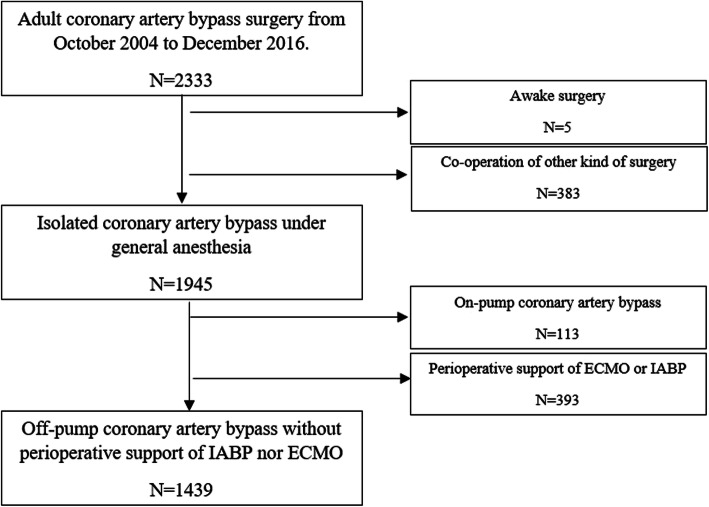
To evaluate the relationship between intraoperative cerebral oximetry and postoperative delirium in patients who underwent OPCAB, we included 1439 patients who underwent OPCAB between October 2004 and December 2016 and among them, 815 patients with sufficient data on regional cerebral oxygen saturation (rSO) were enrolled in this study. We retrospectively analyzed perioperative variables and the reduction in rSO below cut-off values of 75, 70, 65, 60, 55, 50, 45, 40, and 35%. Furthermore, we evaluated the relationship between the reduction in rSO and postoperative delirium.
Delirium occurred in 105 of 815 patients. In both univariable and multivariable analyses, the duration of rSO reduction was significantly longer in patients with delirium at cut-offs of < 50 and 45% (for every 5 min, adjusted odds ratio (OR) 1.007 [95% Confidence interval (CI) 1.001 to 1.014] and adjusted OR 1.012 [1.003 to 1.021]; p = 0.024 and 0.011, respectively). The proportion of patients with a rSO reduction < 45% was significantly higher among those with delirium (adjusted OR 1.737[1.064 to 2.836], p = 0.027).
In patients undergoing OPCAB, intraoperative rSO reduction was associated with postoperative delirium. Duration of rSO less than 50% was 40% longer in the patients with postoperative delirium. The cut-off value of intraoperative rSO that associated with postoperative delirium was 50% for the total patient population and 55% for the patients younger than 68 years.
脑氧饱和度已被广泛用于测量脑组织的区域性氧饱和度,特别是在心脏手术期间。尽管脑氧饱和度监测在心脏手术中得到了广泛应用,但结果并不一致,并且很少有研究评估停跳冠状动脉旁路移植术(OPCAB)期间的脑氧饱和度监测。
为了评估 OPCAB 患者术中脑氧饱和度与术后谵妄之间的关系,我们纳入了 2004 年 10 月至 2016 年 12 月期间接受 OPCAB 的 1439 例患者,其中 815 例患者的区域性脑氧饱和度(rSO)数据足够,纳入本研究。我们回顾性分析了围手术期变量以及 rSO 降低至 75、70、65、60、55、50、45、40 和 35%以下的情况。此外,我们评估了 rSO 降低与术后谵妄之间的关系。
在 815 例患者中,有 105 例发生了谵妄。在单变量和多变量分析中,rSO 降低持续时间在谵妄发生率低于 50%和 45%的患者中明显更长(每 5 分钟,调整后的优势比(OR)分别为 1.007(95%置信区间(CI)为 1.001 至 1.014)和 1.012(95%CI 为 1.003 至 1.021);p=0.024 和 0.011)。在发生谵妄的患者中,rSO 降低<45%的患者比例明显更高(调整后的 OR 为 1.737[1.064 至 2.836],p=0.027)。
在接受 OPCAB 的患者中,术中 rSO 降低与术后谵妄相关。发生术后谵妄的患者 rSO 降低持续时间比未发生术后谵妄的患者长 40%。与术后谵妄相关的术中 rSO 截断值为 50%(总患者人群)和 55%(年龄<68 岁的患者)。