Department of Immunology, H. Lee Moffitt Cancer Center and Research Institute, Tampa, FL, USA; Cancer Biology Ph.D. Program, University of South Florida, Tampa, USA.
Department of Thoracic Oncology, H. Lee Moffitt Cancer Center and Research Institute, Tampa, FL, USA.
Biochem Biophys Res Commun. 2021 Jan 1;534:773-779. doi: 10.1016/j.bbrc.2020.11.001. Epub 2020 Nov 13.
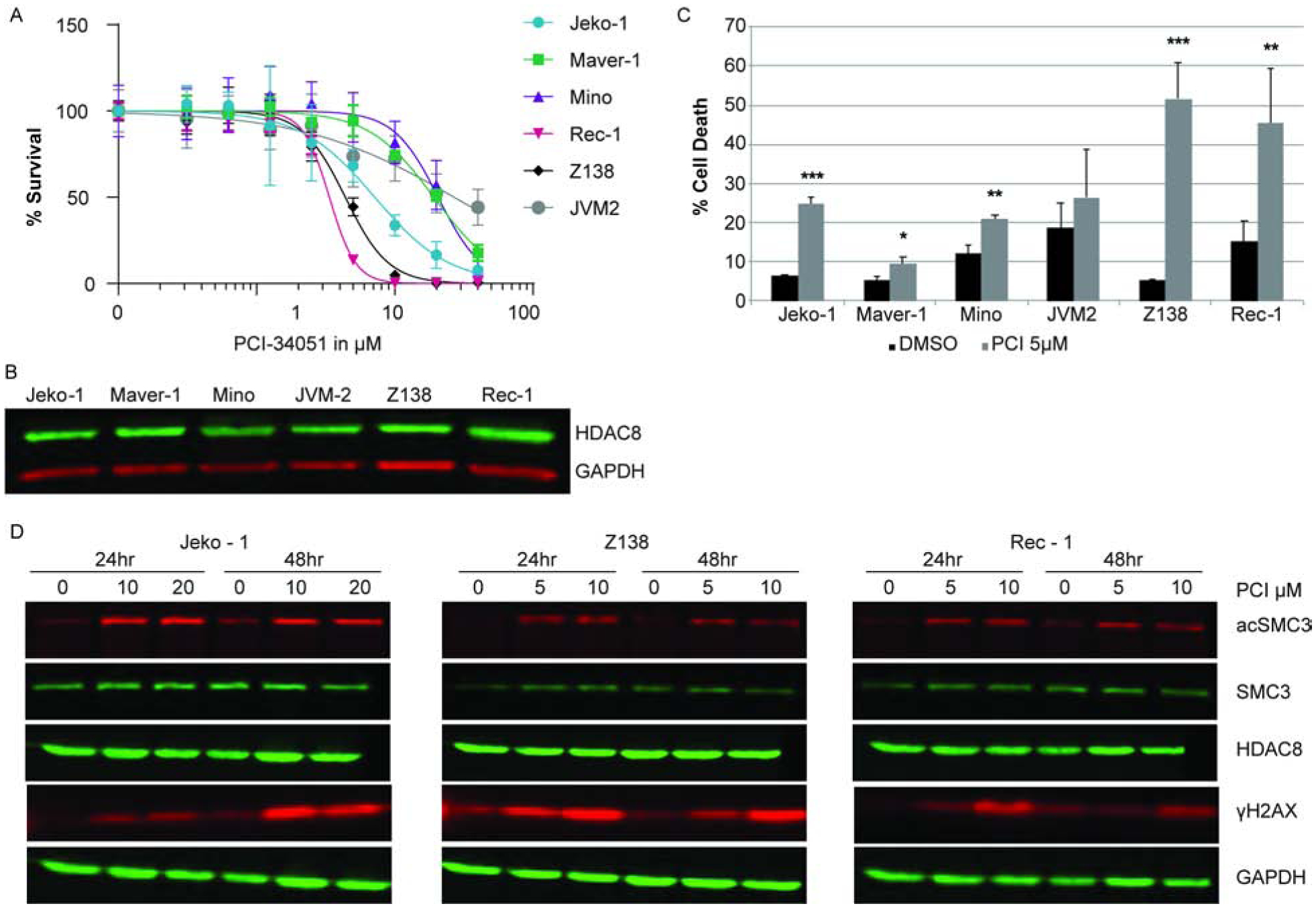
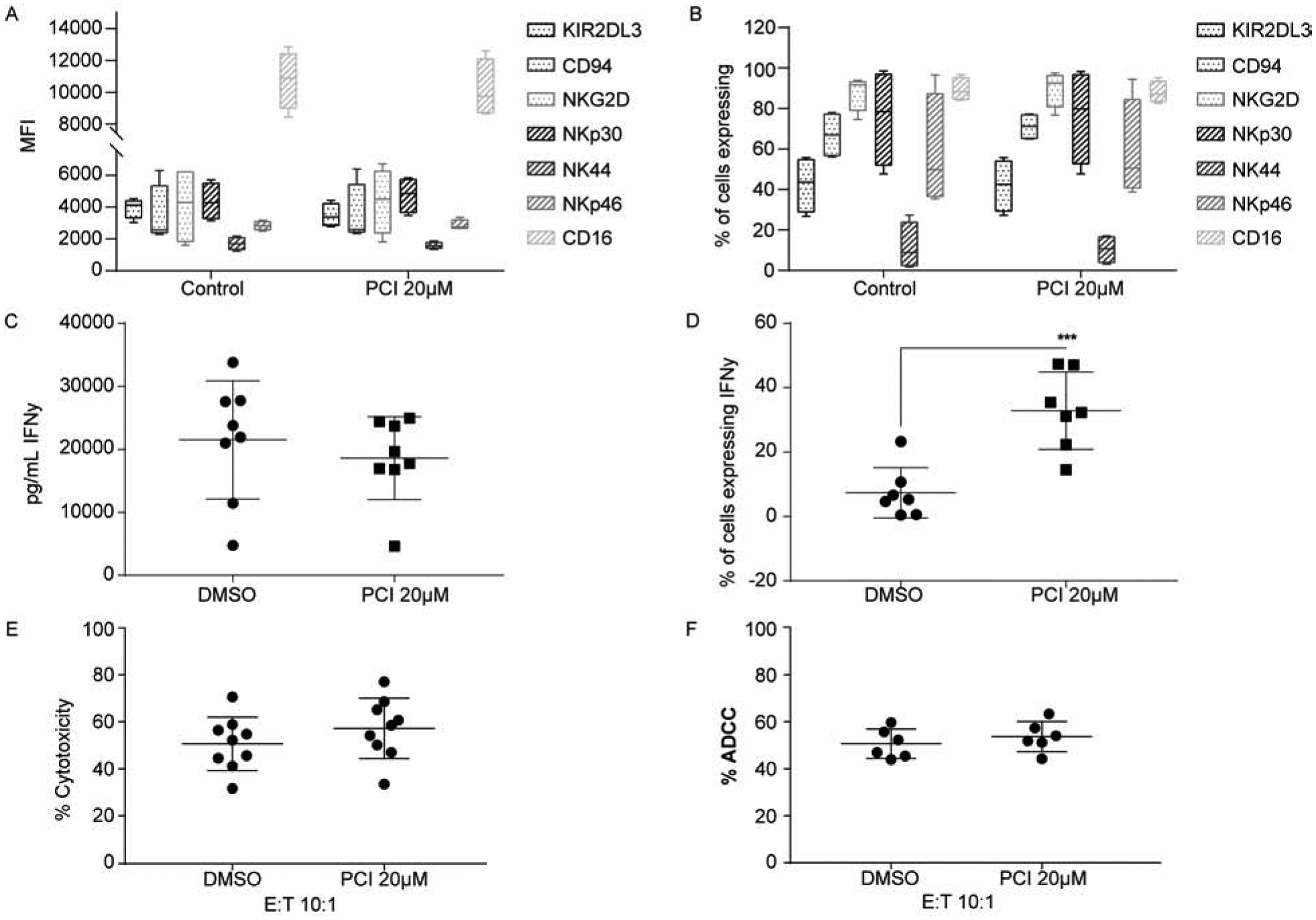
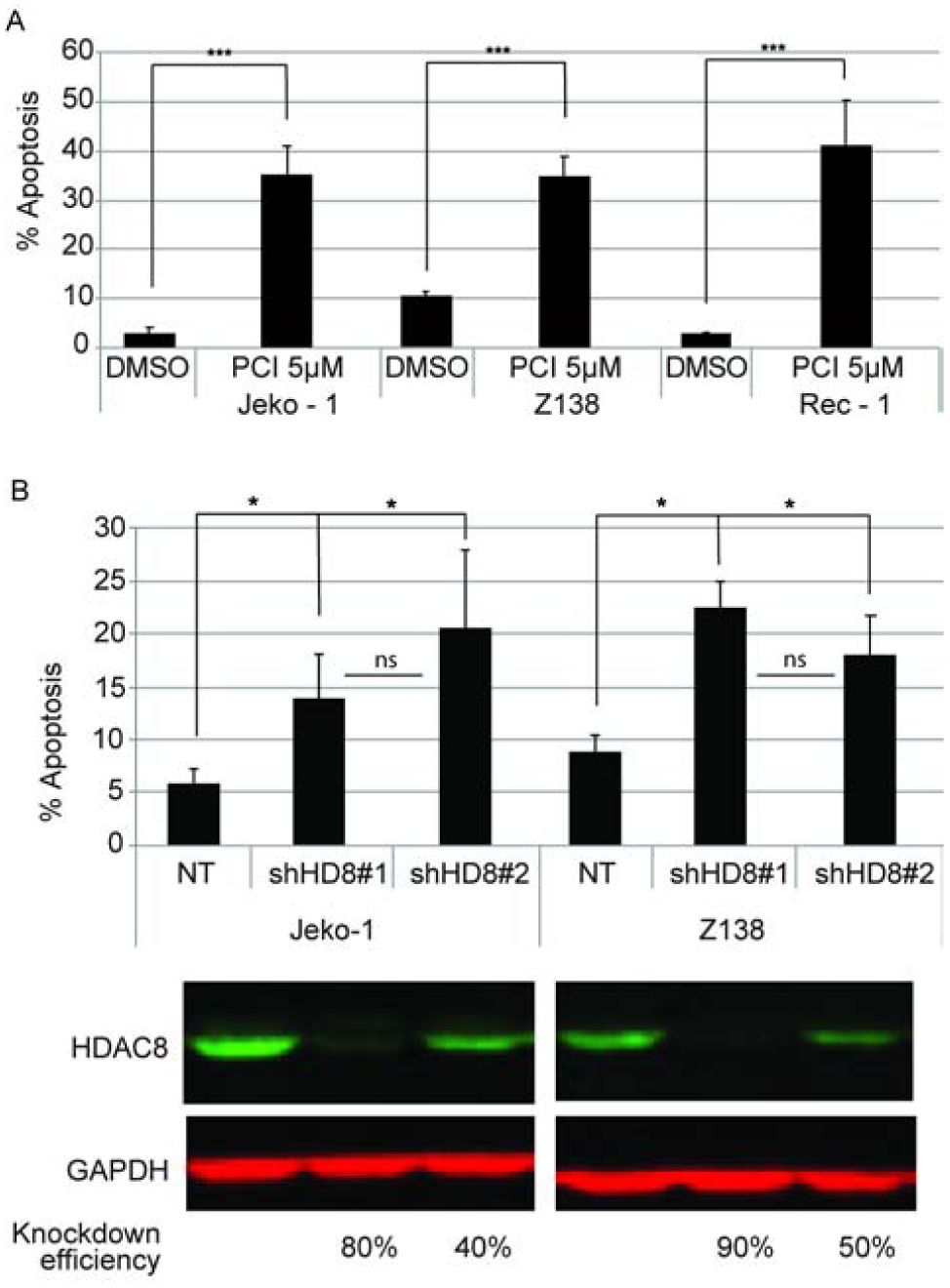
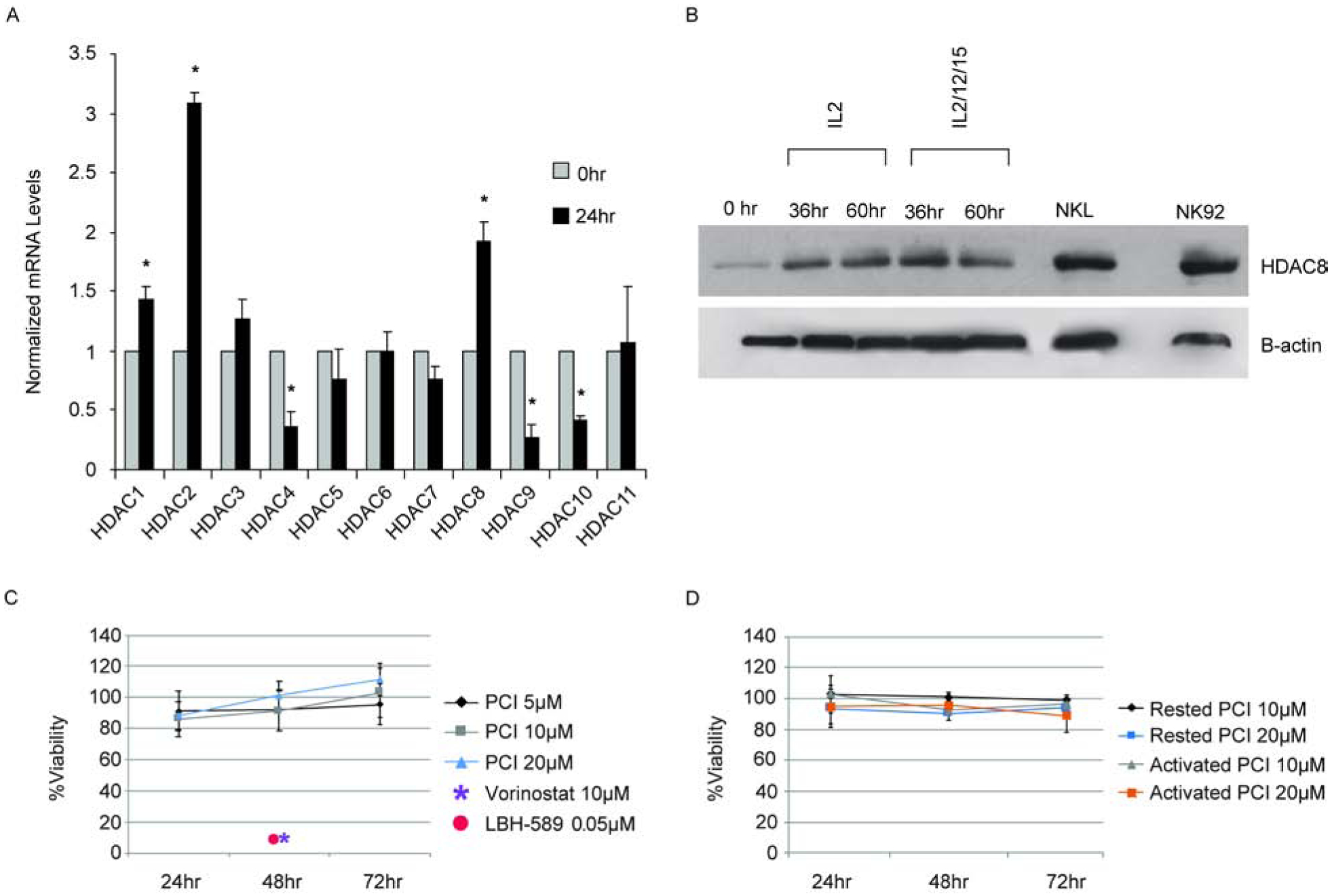
Mantle Cell Lymphoma (MCL) is a non-Hodgkin lymphoma with a median survival rate of five years. Standard treatment with high-dose chemotherapy plus rituximab (anti-CD20 antibody) has extended overall survival although, the disease remains incurable. Histone deacetylases (HDAC) are a family of enzymes that regulate multiple proteins and cellular pathways through post-translational modification. Broad spectrum HDAC inhibitors have shown some therapeutic promise, inducing cell cycle inhibition and apoptosis in leukemia and non-Hodgkin's lymphoma. However, the therapeutic effects of these broad-spectrum HDAC inhibitors can detrimentally dampen Natural Killer (NK) cell cytotoxicity, reduce NK viability, and downregulate activation receptors important for NK mediated anti-tumor responses. Impairment of NK function in MCL patients during therapy potentially limits therapeutic activity of rituximab. Thus, there is an unmet need to decipher specific roles of individual HDACs in order to preserve and/or enhance NK function, while, directly impairing MCL viability. We investigated the impact of HDAC8 in MCL cell lines. Inhibition or genetic loss of HDAC8 caused MCL cells to undergo apoptosis. In contrast, exposure of primary human NK cells to an HDAC8 inhibitor does not alter viability, receptor expression, or antibody dependent cellular cytotoxicity (ADCC). However, an increase in effector cytokine interferon-gamma (IFNγ) producing NK cells was observed in response to HDAC8 inhibition. Taken together these data suggest that selective HDAC8 inhibitors may simultaneously preserve NK functional activity, while impairing MCL tumor growth, establishing a rationale for future clinical evaluation.
套细胞淋巴瘤(MCL)是一种非霍奇金淋巴瘤,中位生存期为五年。高剂量化疗联合利妥昔单抗(抗 CD20 抗体)的标准治疗虽然延长了总生存期,但疾病仍然无法治愈。组蛋白去乙酰化酶(HDAC)是一组通过翻译后修饰调节多种蛋白质和细胞途径的酶。广谱 HDAC 抑制剂显示出一定的治疗潜力,可诱导白血病和非霍奇金淋巴瘤的细胞周期抑制和细胞凋亡。然而,这些广谱 HDAC 抑制剂的治疗效果可能会不利地抑制自然杀伤(NK)细胞的细胞毒性,降低 NK 细胞活力,并下调 NK 介导的抗肿瘤反应的激活受体。在治疗过程中,MCL 患者的 NK 功能受损可能会限制利妥昔单抗的治疗活性。因此,为了保留和/或增强 NK 功能,同时直接损害 MCL 的活力,需要阐明个别 HDAC 的具体作用。我们研究了 HDAC8 在 MCL 细胞系中的作用。HDAC8 的抑制或基因缺失导致 MCL 细胞发生凋亡。相比之下,暴露于 HDAC8 抑制剂的原代人 NK 细胞不会改变其活力、受体表达或抗体依赖性细胞毒性(ADCC)。然而,观察到干扰素-γ(IFNγ)产生 NK 细胞的效应细胞因子增加,以响应 HDAC8 抑制。总之,这些数据表明,选择性 HDAC8 抑制剂可能同时保留 NK 的功能活性,同时损害 MCL 肿瘤生长,为未来的临床评估建立了依据。