Institute of Neuroscience, School of Medicine, Zhejiang University, Hangzhou, China.
Translation Medicine Center, Affiliated Hangzhou First People's Hospital, School of Medicine, Zhejiang University, Hangzhou, China.
Mediators Inflamm. 2020 Oct 31;2020:8796103. doi: 10.1155/2020/8796103. eCollection 2020.
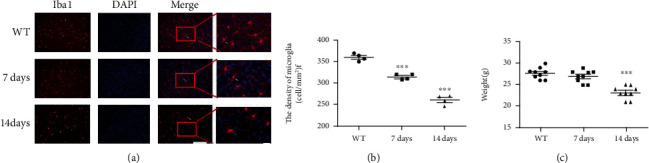
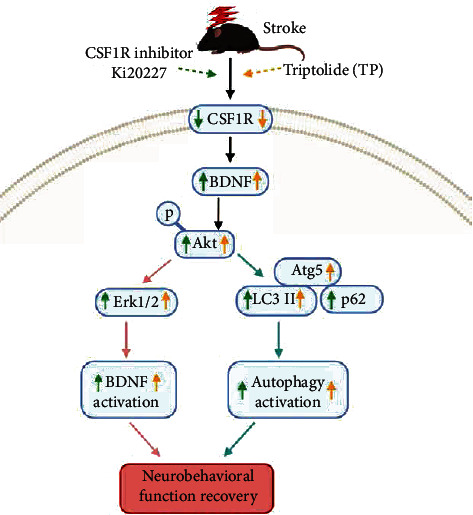
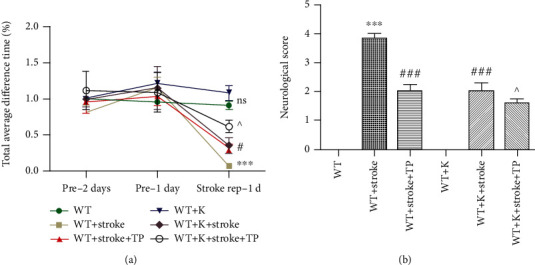
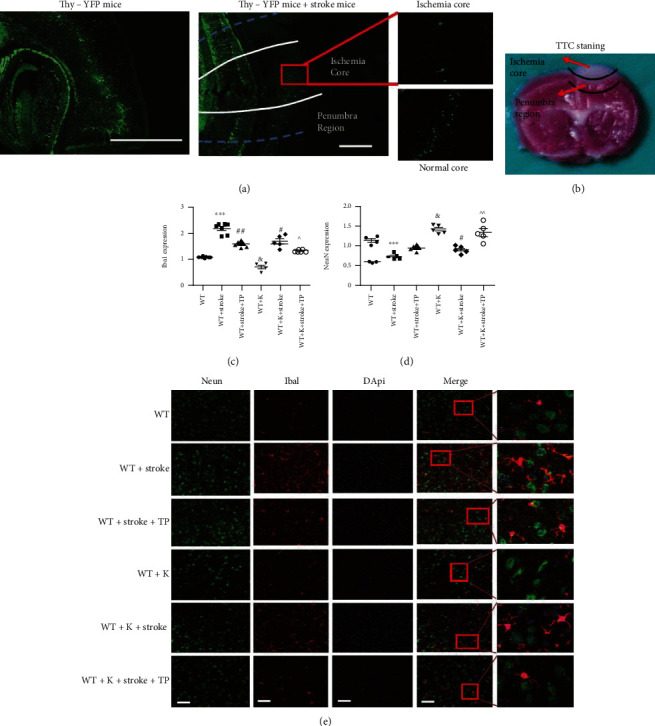
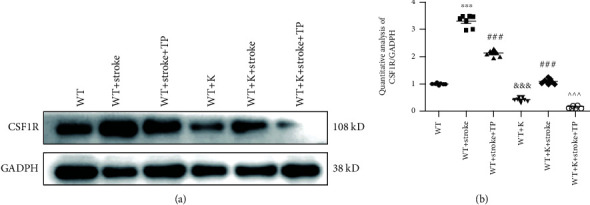
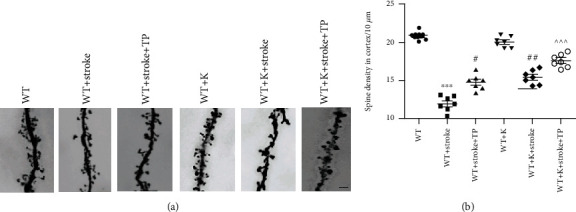
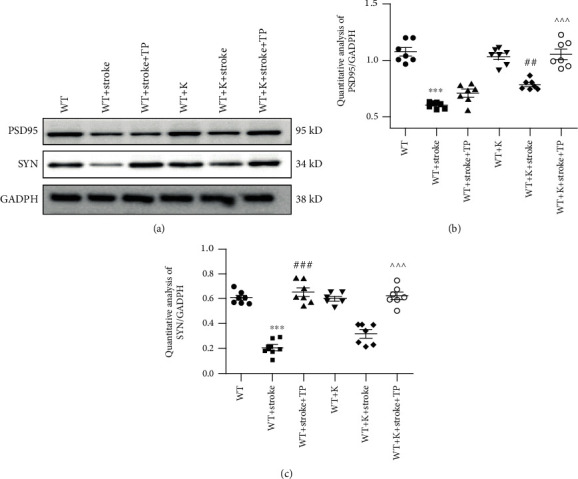
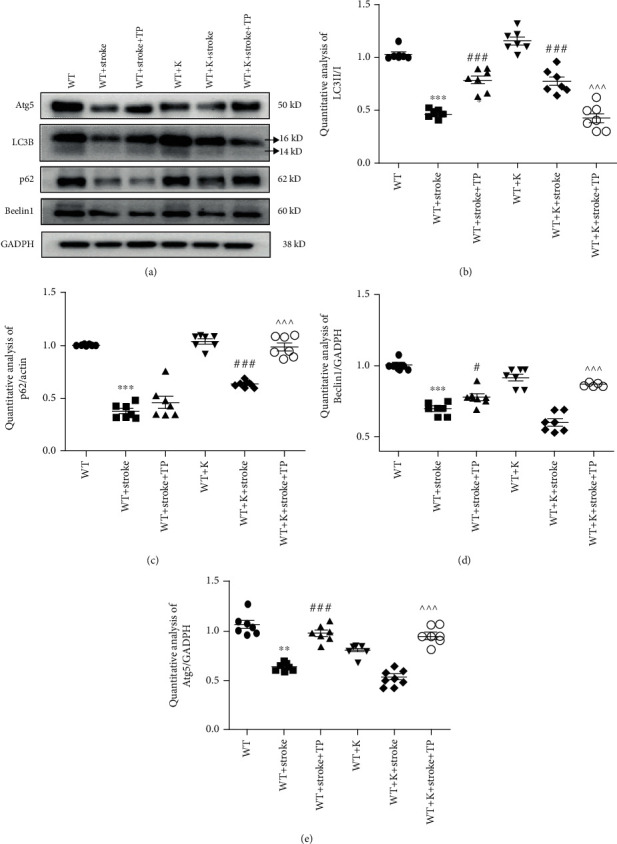
Ki20227, a selective inhibitor of colony-stimulating factor 1 receptor (CSF1R), has been suggested to regulate microglia inflammatory function and neuronal synaptic plasticity. Triptolide (TP) pretreatment has neuroprotective effects through its anti-inflammatory and antiapoptotic features in ischemic stroke mice. However, the underlying mechanism and pathway are presently unclear. We thus investigated the association between neuroprotective effects of combined TP and Ki20227 and BDNF-Akt and autophagy pathways. Ki20227 was administrated for 7 days, and TP was administered once 24 hours prior to building the ischemic stroke model in C57BL/6 mice. Behavioral tests, Golgi staining, immunofluorescence, and western blot analyses were employed to examine neuroprotective effects of TP and Ki20227. TP and Ki20227 pretreatments improved the neurobehavioral function in stroke mice. Synaptic protein expressions and density of dendritic spine density were upregulated in Ki20227 and TP pretreated stroke mice. Further, optimized integration of TP and Ki20227 pretreatments upregulated the NeuN expression and downregulated Iba1 expression after stroke. In addition, both TP and Ki20227 pretreatments significantly upregulated BDNF, p-Akt/Akt, and Erk1/2 protein expressions and autophagy related proteins (LC3II/I, Atg5, and p62), indicating the activation of BDNF and autophagic pathways. Optimized integration of TP and Ki20227 can improve cerebral ischemia by inhibiting CSF1R signal and trigger autophagy and BDNF-Akt signaling pathways to increase dendritic spine density and synaptic protein expressions, which in turn enhances neurobehavioral function.
Ki20227 是一种选择性集落刺激因子 1 受体(CSF1R)抑制剂,被认为可以调节小胶质细胞的炎症功能和神经元的突触可塑性。雷公藤内酯(TP)预处理通过其在缺血性中风小鼠中的抗炎和抗凋亡作用具有神经保护作用。然而,其潜在的机制和途径目前尚不清楚。因此,我们研究了联合应用 TP 和 Ki20227 以及 BDNF-Akt 和自噬途径对神经保护作用的关联。在 C57BL/6 小鼠中构建缺血性中风模型前 24 小时给予 Ki20227 治疗 7 天,给予 TP 一次。采用行为测试、高尔基染色、免疫荧光和 Western blot 分析来检测 TP 和 Ki20227 的神经保护作用。TP 和 Ki20227 预处理改善了中风小鼠的神经行为功能。Ki20227 和 TP 预处理的中风小鼠的突触蛋白表达和树突棘密度增加。此外,优化整合 TP 和 Ki20227 预处理后,中风后上调 NeuN 表达,下调 Iba1 表达。此外,TP 和 Ki20227 预处理均显著上调 BDNF、p-Akt/Akt 和 Erk1/2 蛋白表达和自噬相关蛋白(LC3II/I、Atg5 和 p62),表明 BDNF 和自噬途径的激活。优化整合 TP 和 Ki20227 可以通过抑制 CSF1R 信号并触发自噬和 BDNF-Akt 信号通路来改善脑缺血,从而增加树突棘密度和突触蛋白表达,进而增强神经行为功能。