Sridhar Adithya, Ponnuchamy Muthamilselvi, Kumar Ponnusamy Senthil, Kapoor Ashish
Department of Chemical Engineering, College of Engineering and Technology, Faculty of Engineering and Technology, SRM Institute of Science and Technology, SRM Nagar, Kattankulathur, 603203 Kanchipuram, Chennai, India.
Department of Chemical Engineering, Sri Sivasubramaniya Nadar College of Engineering, Chennai, 603110 India.
Environ Chem Lett. 2021;19(2):1715-1735. doi: 10.1007/s10311-020-01126-2. Epub 2020 Nov 9.
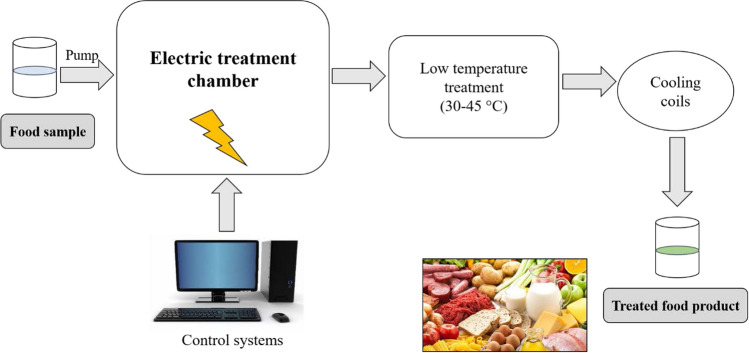
Food wastage is a major issue impacting public health, the environment and the economy in the context of rising population and decreasing natural resources. Wastage occurs at all stages from harvesting to the consumer, calling for advanced techniques of food preservation. Wastage is mainly due to presence of moisture and microbial organisms present in food. Microbes can be killed or deactivated, and cross-contamination by microbes such as the coronavirus disease 2019 (COVID-19) should be avoided. Moisture removal may not be feasible in all cases. Preservation methods include thermal, electrical, chemical and radiation techniques. Here, we review the advanced food preservation techniques, with focus on fruits, vegetables, beverages and spices. We emphasize electrothermal, freezing and pulse electric field methods because they allow both pathogen reduction and improvement of nutritional and physicochemical properties. Ultrasound technology and ozone treatment are suitable to preserve heat sensitive foods. Finally, nanotechnology in food preservation is discussed.
在人口不断增长和自然资源日益减少的背景下,食物浪费是一个影响公众健康、环境和经济的重大问题。从收获到消费的各个阶段都会出现浪费现象,这就需要先进的食品保鲜技术。浪费主要是由于食物中存在水分和微生物。微生物可以被杀死或灭活,并且应避免诸如2019冠状病毒病(COVID-19)等微生物的交叉污染。在所有情况下去除水分可能都不可行。保鲜方法包括热、电、化学和辐射技术。在此,我们综述先进的食品保鲜技术,重点关注水果、蔬菜、饮料和香料。我们强调电热、冷冻和脉冲电场方法,因为它们既能减少病原体,又能改善营养和物理化学性质。超声技术和臭氧处理适用于保鲜热敏性食品。最后,讨论了食品保鲜中的纳米技术。