Department of Movement Sciences and Wellbeing, University of Naples Parthenope, Naples, Italy.
Centro di Ricerca Interdipartimentale nelle Attività Motorie e Sportive (CRIAMS)-Sport Medicine Centre, University of Pavia, Voghera, Italy.
Front Immunol. 2020 Oct 28;11:574029. doi: 10.3389/fimmu.2020.574029. eCollection 2020.
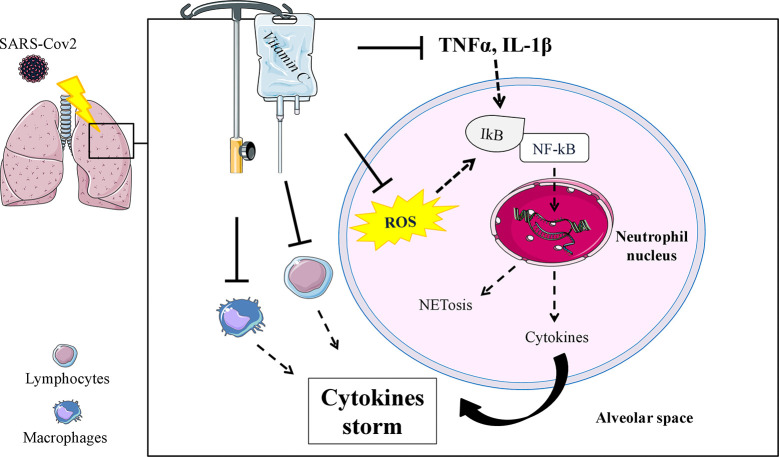
From Pauling's theories to the present, considerable understanding has been acquired of both the physiological role of vitamin C and of the impact of vitamin C supplementation on the health. Although it is well known that a balanced diet which satisfies the daily intake of vitamin C positively affects the immune system and reduces susceptibility to infections, available data do not support the theory that oral vitamin C supplements boost immunity. No current clinical recommendations support the possibility of significantly decreasing the risk of respiratory infections by using high-dose supplements of vitamin C in a well-nourished general population. Only in restricted subgroups (e.g., athletes or the military) and in subjects with a low plasma vitamin C concentration a supplementation may be justified. Furthermore, in categories at high risk of infection (i.e., the obese, diabetics, the elderly, etc.), a vitamin C supplementation can modulate inflammation, with potential positive effects on immune response to infections. The impact of an extra oral intake of vitamin C on the duration of a cold and the prevention or treatment of pneumonia is still questioned, while, based on critical illness studies, vitamin C infusion has recently been hypothesized as a treatment for COVID-19 hospitalized patients. In this review, we focused on the effects of vitamin C on immune function, summarizing the most relevant studies from the prevention and treatment of common respiratory diseases to the use of vitamin C in critical illness conditions, with the aim of clarifying its potential application during an acute SARS-CoV2 infection.
从 Pauling 的理论到现在,人们已经对维生素 C 的生理作用以及维生素 C 补充剂对健康的影响有了相当的了解。尽管众所周知,均衡的饮食满足了维生素 C 的每日摄入量,这对免疫系统有积极影响,降低了感染的易感性,但现有数据并不支持口服维生素 C 补充剂能增强免疫力的理论。目前没有临床建议支持在营养良好的普通人群中使用大剂量维生素 C 补充剂来显著降低呼吸道感染风险的可能性。只有在特定亚组(例如运动员或军人)和血浆维生素 C 浓度低的人群中,补充才是合理的。此外,在感染风险高的人群(即肥胖者、糖尿病患者、老年人等)中,维生素 C 补充剂可以调节炎症,对感染的免疫反应产生潜在的积极影响。额外口服维生素 C 对感冒持续时间和预防或治疗肺炎的影响仍存在争议,而基于危重病研究,最近有人假设维生素 C 输注可作为 COVID-19 住院患者的治疗方法。在这篇综述中,我们重点关注了维生素 C 对免疫功能的影响,总结了从预防和治疗常见呼吸道疾病到在危重病情况下使用维生素 C 的最相关研究,目的是阐明其在急性 SARS-CoV2 感染期间的潜在应用。