Department of Biomedicine, University of Basel, Basel, Switzerland.
Front Immunol. 2020 Oct 28;11:585070. doi: 10.3389/fimmu.2020.585070. eCollection 2020.
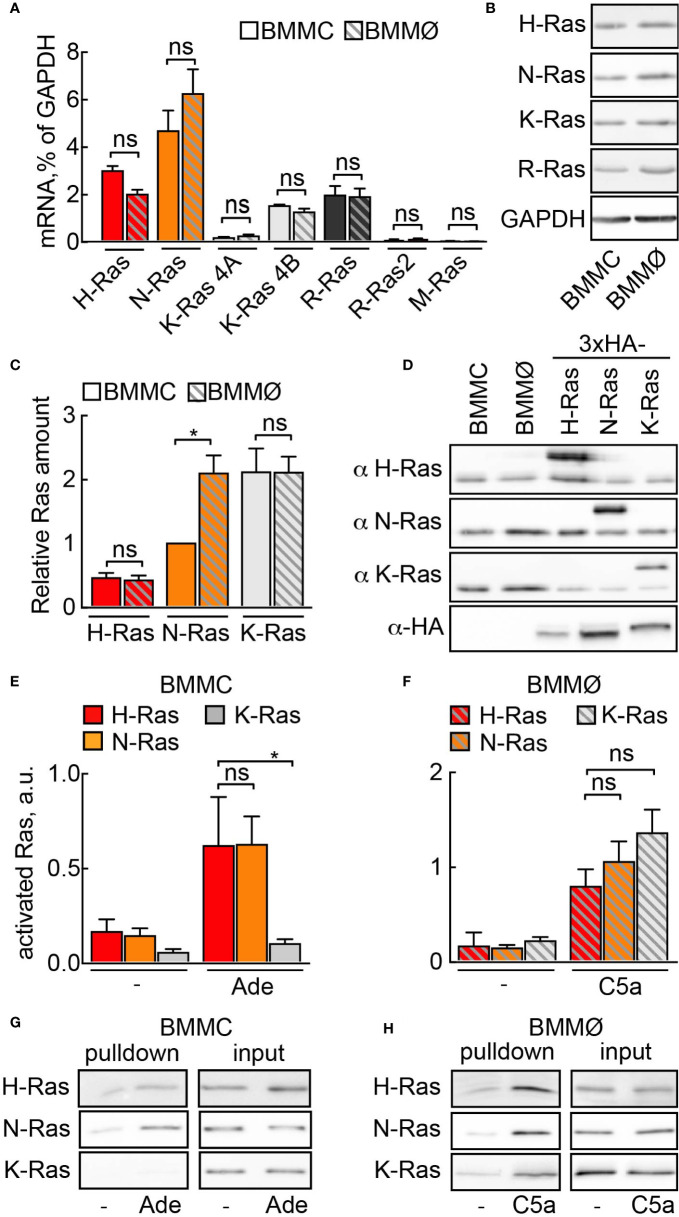
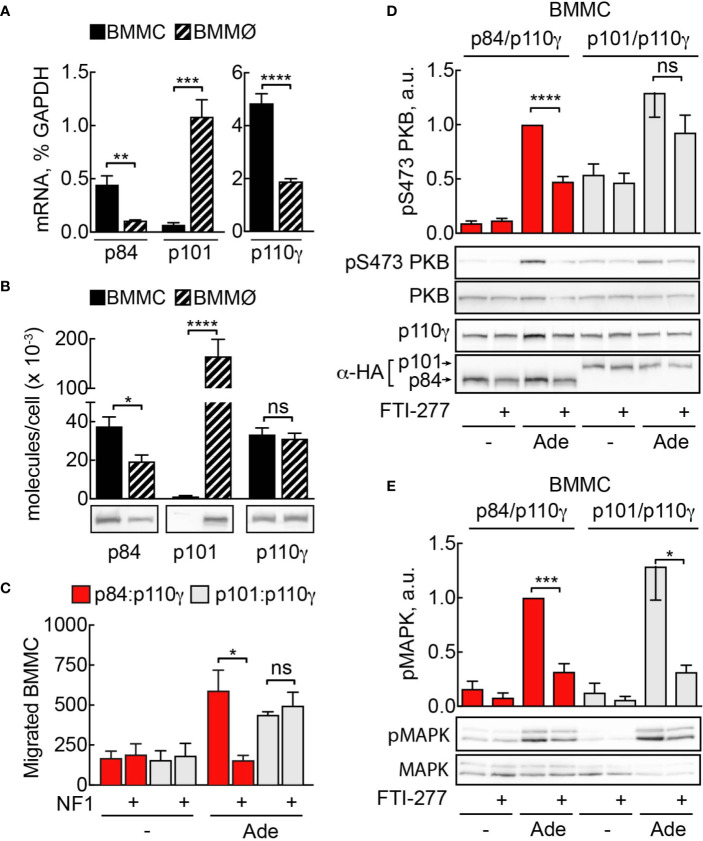
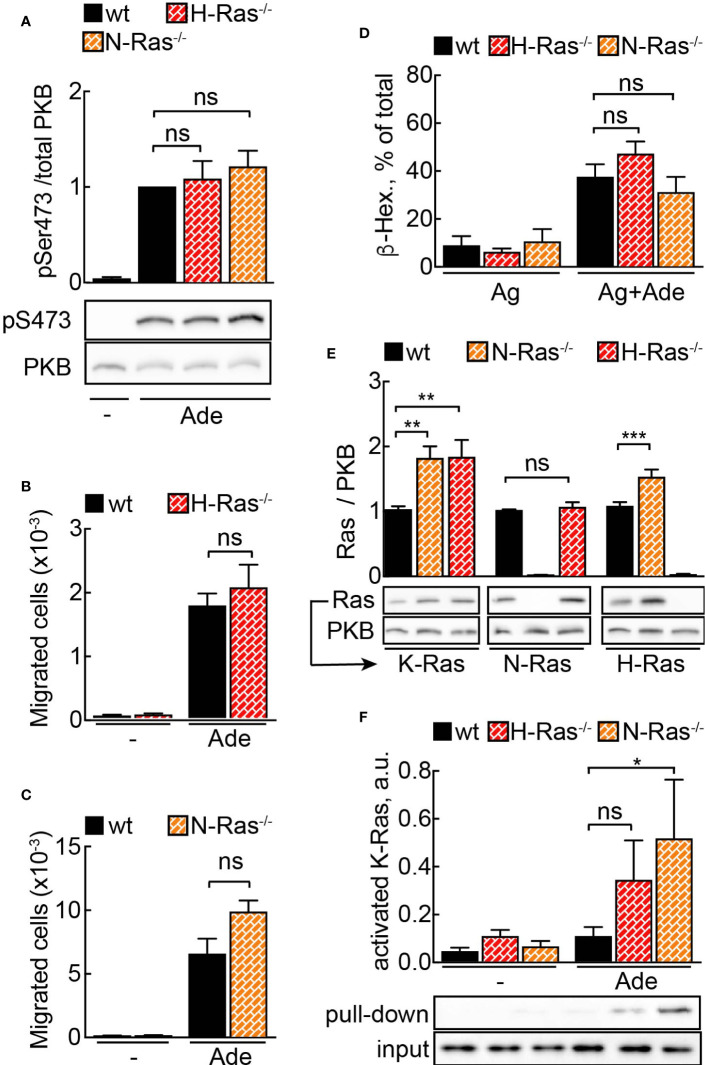
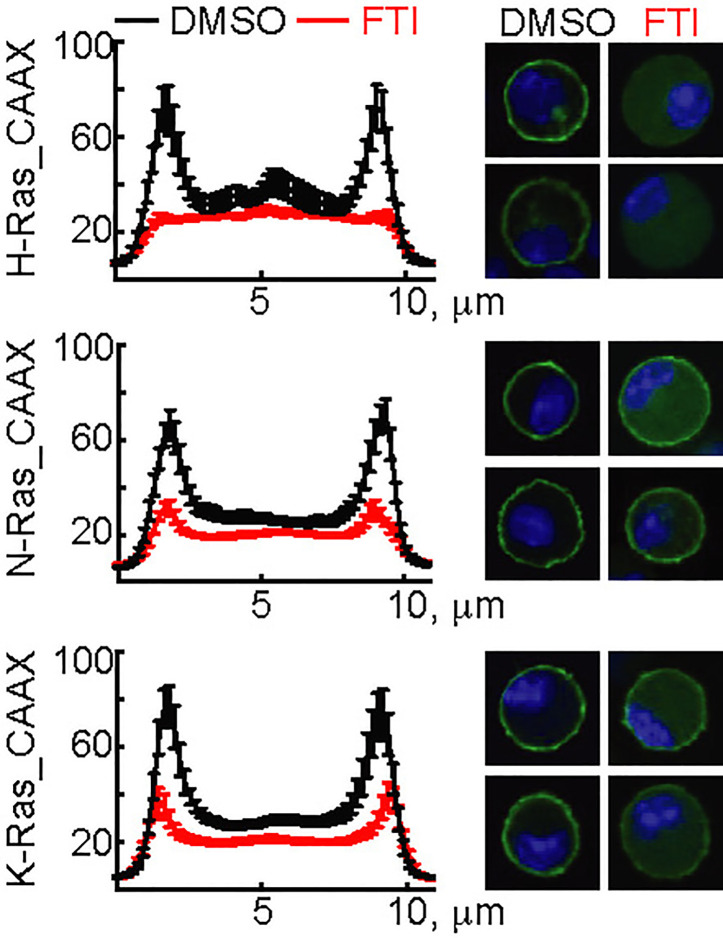
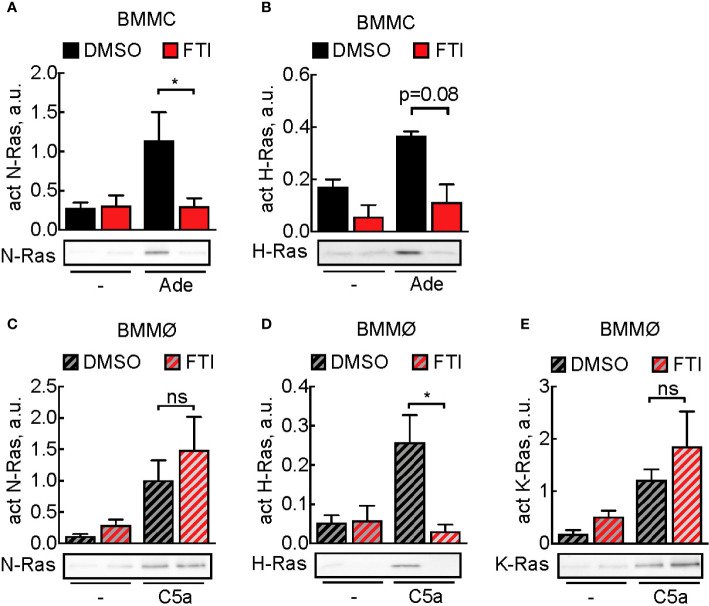
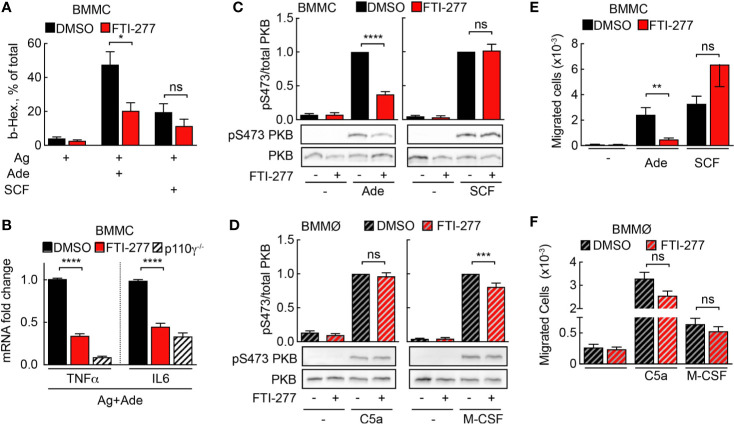
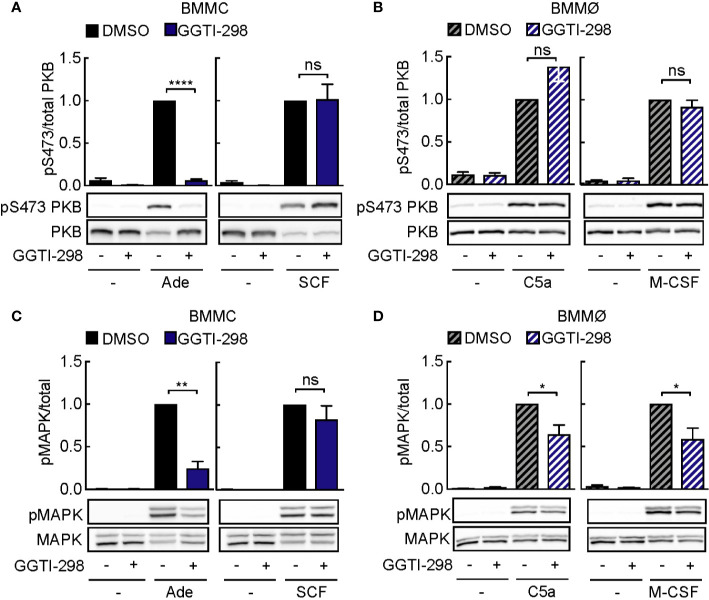
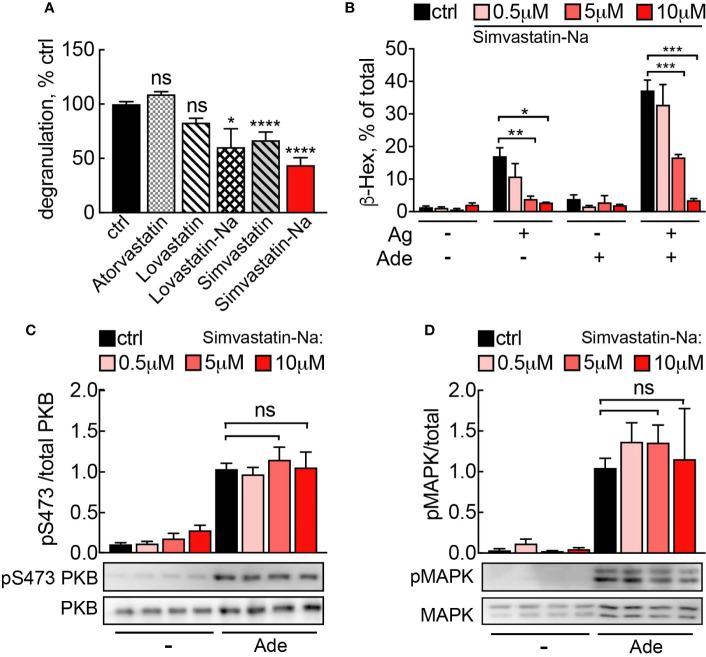
Mast cells are the major effector cells in immunoglobulin E (IgE)-mediated allergy. The high affinity IgE receptor FcRI, as well as G protein-coupled receptors (GPCRs) on the mast cell surface signals to phosphoinositide 3-kinase (PI3K) to initiate degranulation, cytokine release, and chemotaxis. PI3K is therefore considered as a target for treatment of allergic disorders. However, leukocyte PI3K is key to many functions in innate and adaptive immunity, and attenuation of host defense mechanisms is an expected adverse effect that complicates treatment of chronic illnesses. PI3K operates as a p110/p84 or p110/p101 complex, where p110/p84 requires Ras activation. Here we investigated if modulation of Ras-isoprenylation could target PI3K activity to attenuate PI3K-dependent mast cell responses without impairment of macrophage functions. In murine bone marrow-derived mast cells, GPCR stimulation triggers activation of N-Ras and H-Ras isoforms, which is followed by the phosphorylation of protein kinase B (PKB/Akt) relayed through PI3K. Although K-Ras is normally not activated in Ras wild-type cells, it is able to compensate for genetically deleted N- and H-Ras isoforms. Inhibition of Ras isoprenylation with farnesyltransferase inhibitor FTI-277 leads to a significant reduction of mast cell degranulation, cytokine production, and migration. Complementation experiments expressing PI3K adaptor proteins p84 or p101 demonstrated a differential sensitivity towards Ras-inhibition depending on PI3K complex composition. Mast cell responses are exclusively p84-dependent and were effectively controlled by FTI-277. Similar results were obtained when GTP-Ras was inactivated by overexpression of the GAP-domain of Neurofibromin-1 (NF-1). Unlike mast cells, macrophages express p84 and p101 but are p101-dominated and thus remain functional under treatment with FTI-277. Our work demonstrates that p101 and p84 have distinct physiological roles, and that Ras dependence of PI3K signaling differs between cell types. FTI-277 reduces GPCR-activated PI3K responses in p84-expressing but not p101-containing bone marrow derived cells. However, prenylation inhibitors have pleiotropic effects beyond Ras and non-tolerable side-effects that disfavor further clinical validation. Statins are, however, clinically well-established drugs that have previously been proposed to block mast cell degranulation by interference with protein prenylation. We show here that Simvastatin inhibits mast cell degranulation, but that this does not occur Ras-PI3K pathway alterations.
肥大细胞是免疫球蛋白 E (IgE)介导过敏反应的主要效应细胞。高亲和力 IgE 受体 FcRI 以及肥大细胞表面的 G 蛋白偶联受体 (GPCR) 信号转导至磷酯酰肌醇 3-激酶 (PI3K),从而启动脱颗粒、细胞因子释放和趋化作用。因此,PI3K 被认为是治疗过敏疾病的靶点。然而,白细胞 PI3K 是先天和适应性免疫中许多功能的关键,而宿主防御机制的减弱是治疗慢性疾病所预期的不良反应,这使治疗复杂化。PI3K 作为 p110/p84 或 p110/p101 复合物发挥作用,其中 p110/p84 需要 Ras 激活。在这里,我们研究了 Ras 异戊烯化的调节是否可以靶向 PI3K 活性,从而减轻 PI3K 依赖性肥大细胞反应,而不损害巨噬细胞功能。在鼠骨髓来源的肥大细胞中,GPCR 刺激触发 N-Ras 和 H-Ras 同工型的激活,随后通过 PI3K 传递蛋白激酶 B (PKB/Akt) 的磷酸化。尽管正常情况下 Ras 野生型细胞中不激活 K-Ras,但它能够补偿基因缺失的 N-和 H-Ras 同工型。用法尼基转移酶抑制剂 FTI-277 抑制 Ras 异戊烯化可导致肥大细胞脱颗粒、细胞因子产生和迁移显著减少。表达 PI3K 衔接蛋白 p84 或 p101 的互补实验表明,PI3K 复合物组成的差异决定了对 Ras 抑制的敏感性。肥大细胞反应完全依赖于 p84,并且可以通过 FTI-277 有效控制。当用神经纤维瘤蛋白-1 (NF-1) 的 GAP 结构域过表达使 GTP-Ras 失活时,也获得了类似的结果。与肥大细胞不同,巨噬细胞表达 p84 和 p101,但以 p101 为主,因此在用 FTI-277 治疗下仍保持功能。我们的工作表明,p101 和 p84 具有不同的生理作用,并且 PI3K 信号转导的 Ras 依赖性在细胞类型之间存在差异。FTI-277 可减少 p84 表达但不减少 p101 表达的骨髓来源细胞中 GPCR 激活的 PI3K 反应。然而,类异戊二烯化抑制剂除了 Ras 之外还有多种作用,并且具有不可耐受的副作用,这不利于进一步的临床验证。他汀类药物是临床上已被广泛应用的药物,先前曾被提议通过干扰蛋白质类异戊二烯化来阻断肥大细胞脱颗粒。我们在这里表明,辛伐他汀抑制肥大细胞脱颗粒,但这不是通过 Ras-PI3K 途径改变发生的。