Karimzadeh Parvaneh, Keramatipour Mohammad, Karamzade Arezou, Pourbakhtyaran Elham
Pediatric Neurology Research Center, Research Institute for Children's Health, Shahid Beheshti University of Medical Sciences, Tehran, Iran.
Pediatric Neurology Department, Mofid Children's Hospital, Faculty of Medicine, Shahid Beheshti University of Medical Sciences, Tehran, Iran.
Iran J Child Neurol. 2020 Fall;14(4):111-116.
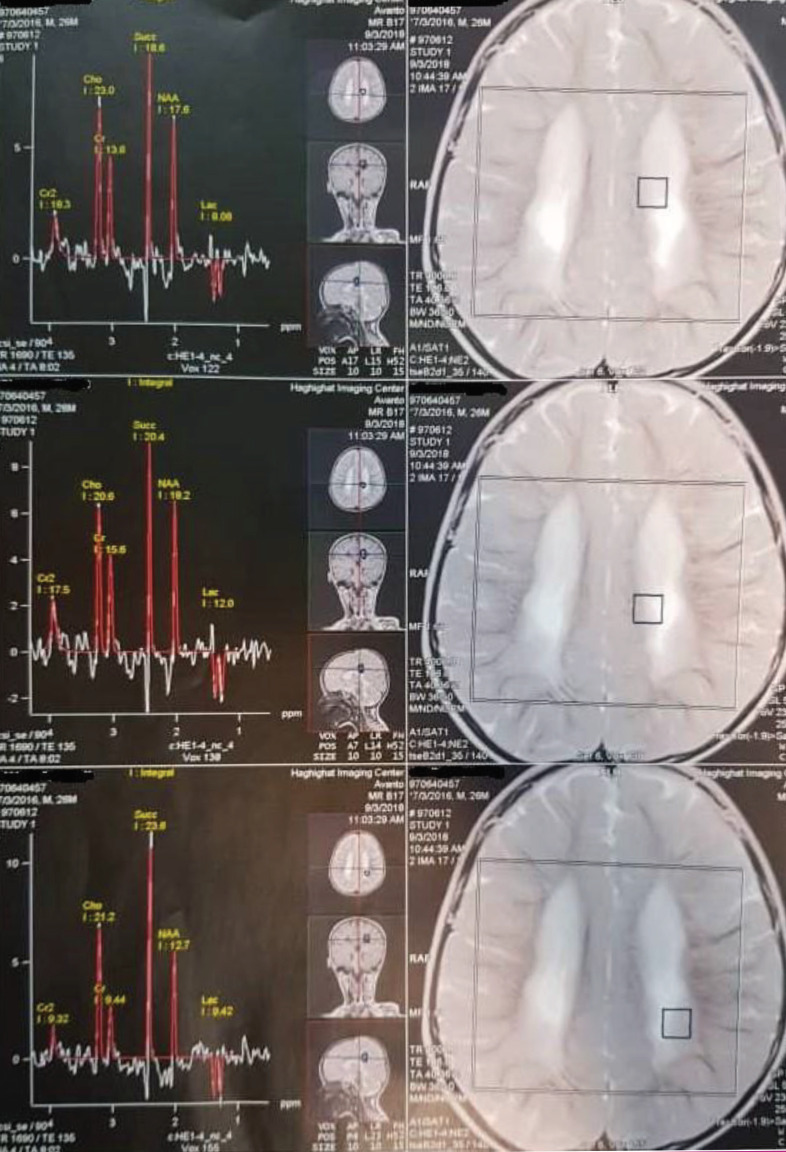
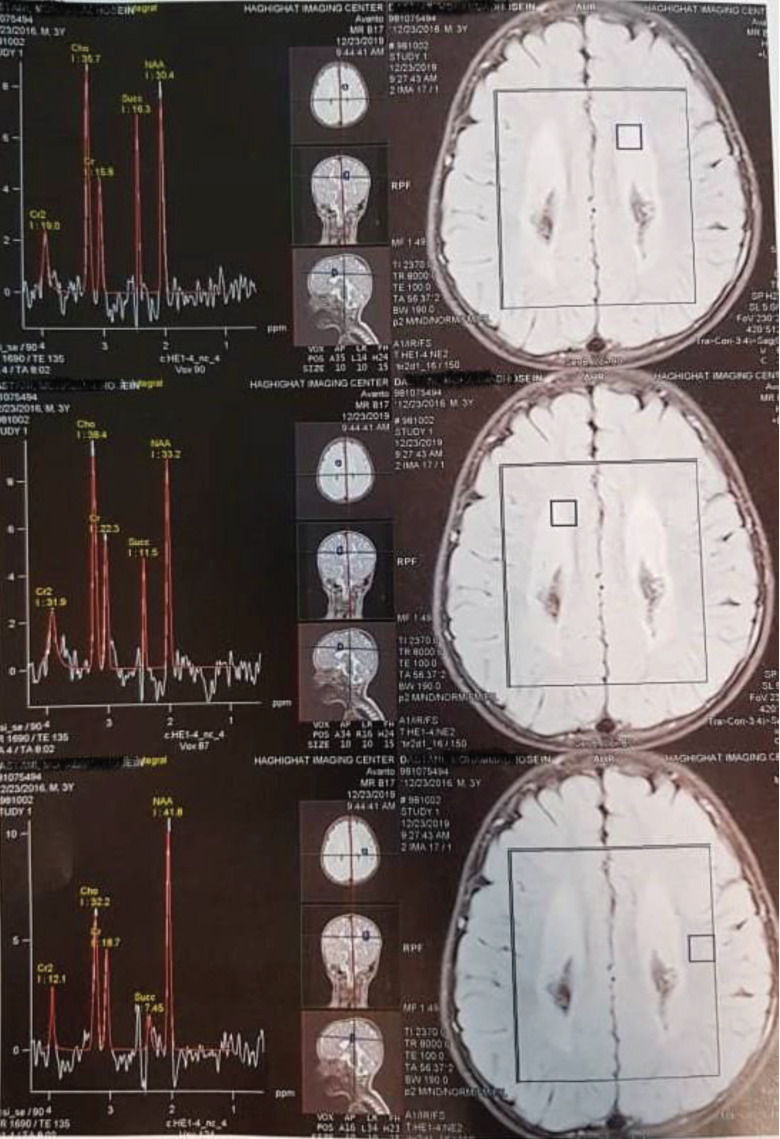
Succinate dehydrogenase (SDH) deficiency is a rare autosomal recessive neurometabolic disorder that causes brain insult, neurodevelopmental delay, exercise intolerance, and cardiomyopathy. A 25-month-old boy was referred to our neurometabolic center due to developmental regression after injecting the influenza vaccine when he was 10 months old. Magnetic resonance imaging (MRI) showed high signal changes in the brain white matter, and magnetic resonance spectroscopy (MRS) detected a high succinate peak at 2.4 parts per million (ppm). The evaluation of urine organic acids showed a significant elevated succinic acid and whole exome sequencing, confirming SDH. Treatment with a mitochondrial cocktail was initiated, and remarkable improvement was observed. SDH deficiency as a treatable neurometabolic disorder should be considered in any patients with developmental disorders, accompanied by hyperintensity in white matter (as similar to leukodystrophia). Further evaluation is recommended since outcomes depend on early diagnosis and treatment.
琥珀酸脱氢酶(SDH)缺乏症是一种罕见的常染色体隐性神经代谢紊乱疾病,可导致脑损伤、神经发育迟缓、运动不耐受和心肌病。一名25个月大的男孩在10个月大时接种流感疫苗后出现发育倒退,被转诊至我们的神经代谢中心。磁共振成像(MRI)显示脑白质有高信号变化,磁共振波谱(MRS)在百万分之2.4(ppm)处检测到高琥珀酸峰。尿有机酸评估显示琥珀酸显著升高,并进行了全外显子测序,确诊为SDH。开始使用线粒体鸡尾酒疗法进行治疗,观察到显著改善。对于任何伴有白质高信号(类似于脑白质营养不良)的发育障碍患者,都应考虑SDH缺乏症作为一种可治疗的神经代谢紊乱疾病。由于治疗效果取决于早期诊断和治疗,建议进一步评估。