Section of Hematology Oncology, Boston University School of Medicine, Boston, MA, United States.
Front Cell Infect Microbiol. 2020 Oct 22;10:563850. doi: 10.3389/fcimb.2020.563850. eCollection 2020.
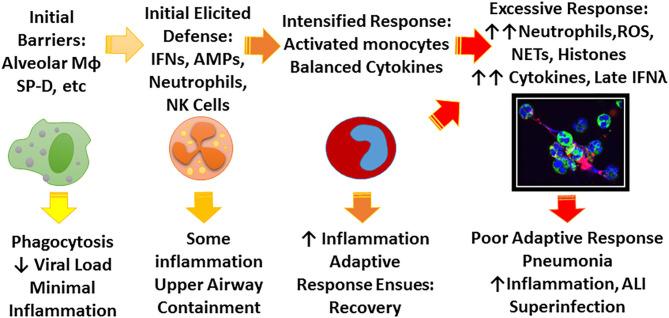
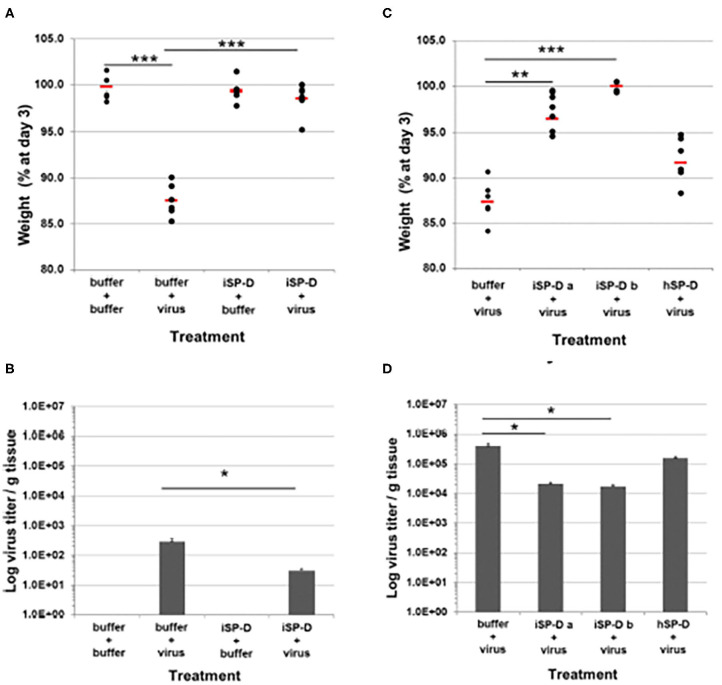
There is abundant evidence that the innate immune response to influenza A virus (IAV) is highly complex and plays a key role in protection against IAV induced infection and illness. Unfortunately it also clear that aspects of innate immunity can lead to severe morbidity or mortality from IAV, including inflammatory lung injury, bacterial superinfection, and exacerbation of reactive airways disease. We review broadly the virus and host factors that result in adverse outcomes from IAV and show evidence that inflammatory responses can become damaging even apart from changes in viral replication , with special focus on the positive and adverse effects of neutrophils and monocytes. We then evaluate in detail the role of soluble innate inhibitors including surfactant protein D and antimicrobial peptides that have a potential dual capacity for down-regulating viral replication and also inhibiting excessive inflammatory responses and how these innate host factors could possibly be harnessed to treat IAV infection. Where appropriate we draw comparisons and contrasts the SARS-CoV viruses and IAV in an effort to point out where the extensive knowledge existing regarding severe IAV infection could help guide research into severe COVID 19 illness or vice versa.
有大量证据表明,机体对甲型流感病毒(IAV)的固有免疫反应非常复杂,在抵御 IAV 感染和疾病方面发挥着关键作用。不幸的是,固有免疫的某些方面也可能导致 IAV 引起的严重发病率或死亡率,包括炎症性肺损伤、细菌继发感染和气道疾病恶化。我们广泛回顾了导致 IAV 不良结局的病毒和宿主因素,并提供了证据表明,炎症反应即使在病毒复制没有变化的情况下也可能造成损害,特别关注中性粒细胞和单核细胞的积极和消极影响。然后,我们详细评估了可溶性固有抑制剂的作用,包括表面活性剂蛋白 D 和抗菌肽,它们具有下调病毒复制和抑制过度炎症反应的双重能力,以及这些固有宿主因素如何可能被用于治疗 IAV 感染。在适当的情况下,我们比较和对比了 SARS-CoV 病毒和 IAV,旨在指出存在的关于严重 IAV 感染的广泛知识如何帮助指导严重 COVID-19 疾病的研究,或者反之亦然。