Greenway Jacob, Gilreath Nicole, Patel Sagar, Horimatsu Tetsuo, Moses Mary, Kim David, Reid Lauren, Ogbi Mourad, Shi Yang, Lu Xin-Yun, Shukla Mrinal, Lee Richard, Huo Yuqing, Young Lufei, Kim Ha Won, Weintraub Neal L
Departments of Medicine, College of Nursing at Augusta University, Augusta, GA, United States.
Vascular Biology Center, Medical College of Georgia, College of Nursing at Augusta University, Augusta, GA, United States.
Front Cardiovasc Med. 2020 Oct 30;7:595011. doi: 10.3389/fcvm.2020.595011. eCollection 2020.
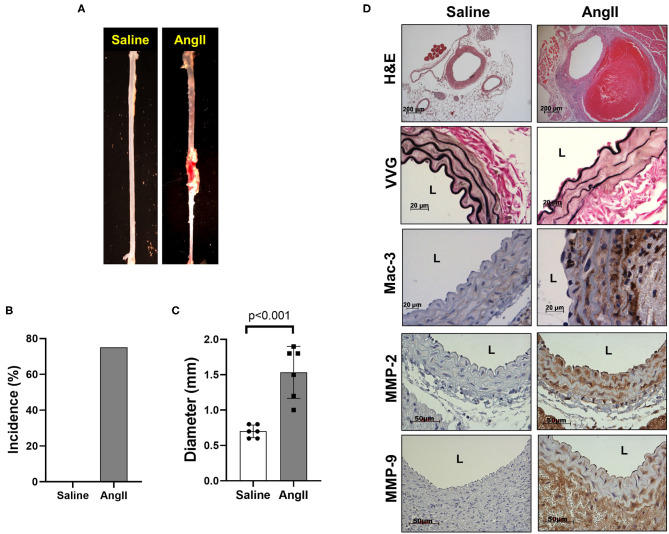
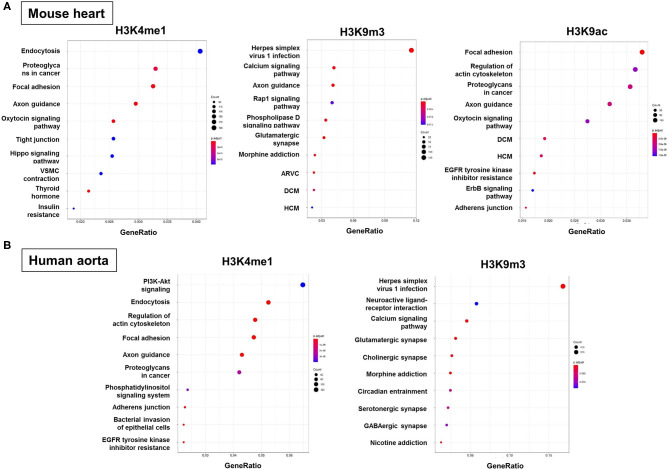
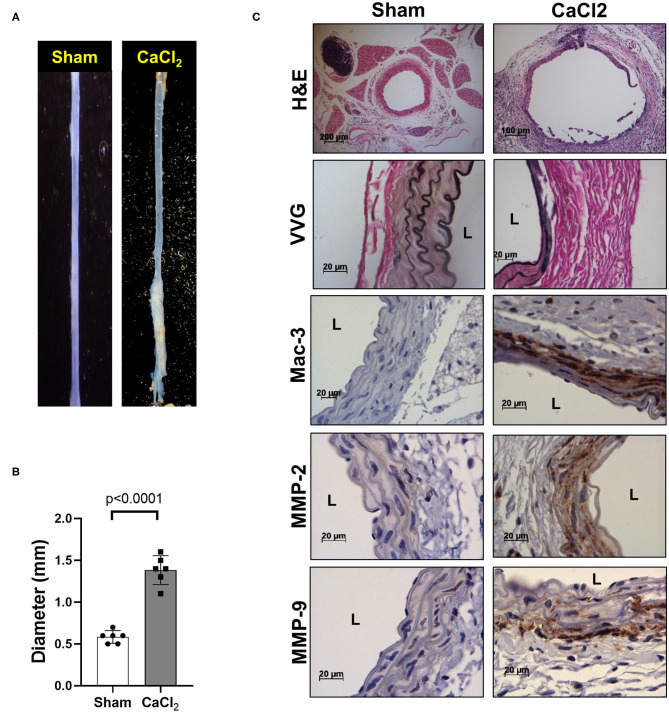
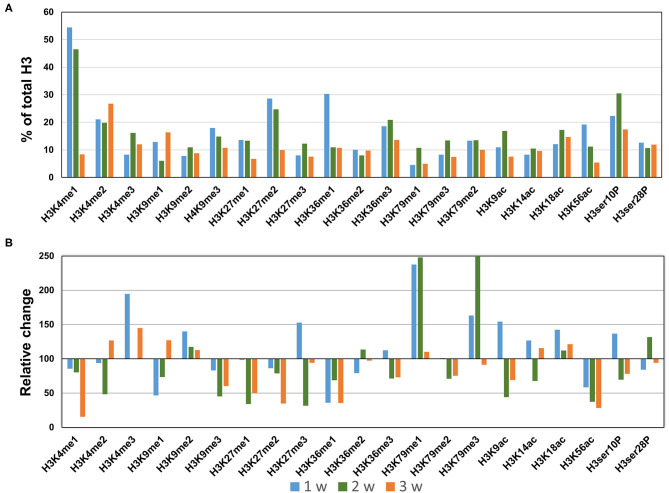
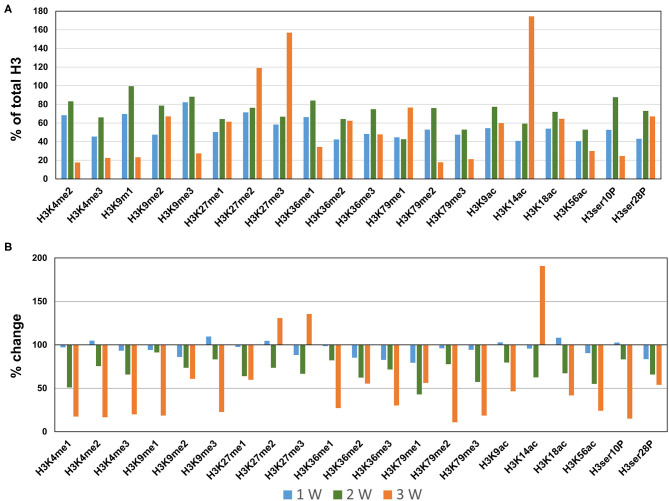
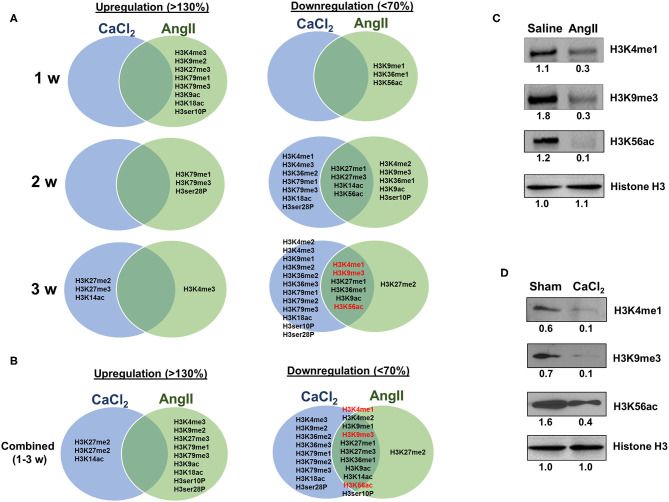
Abdominal aortic aneurysms (AAA) are characterized by localized inflammation, extracellular matrix degradation, and apoptosis of smooth muscle cells, which together lead to progressive and irreversible aortic dilation. Major risk factors for AAA include smoking and aging, both of which prominently alter gene expression via epigenetic mechanisms, including histone methylation (me) and acetylation (ac).However, little is known about epigenomic dynamics during AAA formation. Here, we profiled histone modification patterns in aortic tissues during AAA formation in two distinct mouse models; (1) angiotensin II (AngII) infusion in low density lipoprotein receptor (LDLR) knockout (KO) mice, and (2) calcium chloride (CaCl) application in wild type mice. AAA formed in both models, in conjunction with enhanced macrophage infiltration, elastin degradation and matrix metalloproteinases expression as evaluated by immunohistochemistry. To investigate the histone modification patterns during AAA formation, total histone proteins were extracted from AAA tissues, and histone H3 modifications were quantified using profiling kits. Intriguingly, we observed dynamic changes in histone H3 modifications of lysine (K) residues at different time points during AAA formation. In mature aneurysmal tissues at 3 weeks after AngII infusion, we detected reduced K4/K27/K36 monomethylation, K9 trimethylation K9, and K9/K56 acetylation (<70%), and increased K4 trimethylation (>130%). Conversely, in CaCl-induced AAA, K4/K9/K27/K36/K79 monomethylation and K9/K18/K56 acetylation were reduced in AAA tissues, whereas K27 di-/tri-methylation and K14 acetylation were upregulated. Interestingly, K4/K27/K36 monomethylation, K9 trimethylation, and K9/K56 acetylation were commonly downregulated in both animal models, while no H3 modifications were uniformly upregulated. Western blot of AAA tissues confirmed markedly reduced levels of key H3 modifications, including H3K4me1, H3K9me3, and H3K56ac. Furthermore, pathway enrichment analysis using an integrative bioinformatics approach identified specific molecular pathways, including endocytosis, exon guidance and focal adhesion signaling, that may potentially be linked to these histone H3 modifications during AAA formation. Dynamic modifications of histone H3 occur during AAA formation in both animal models. We identified 6 discreet H3 modifications that are consistently downregulated in both models, suggesting a possible role in AAA pathobiology. Identifying the functional mechanisms may facilitate development of novel strategies for AAA prevention or treatment.
腹主动脉瘤(AAA)的特征是局部炎症、细胞外基质降解和平滑肌细胞凋亡,这些共同导致主动脉进行性和不可逆的扩张。AAA的主要危险因素包括吸烟和衰老,这两者均通过表观遗传机制显著改变基因表达,包括组蛋白甲基化(me)和乙酰化(ac)。然而,关于AAA形成过程中的表观基因组动态变化知之甚少。在此,我们在两种不同的小鼠模型中分析了AAA形成过程中主动脉组织中的组蛋白修饰模式;(1)在低密度脂蛋白受体(LDLR)基因敲除(KO)小鼠中输注血管紧张素II(AngII),以及(2)在野生型小鼠中应用氯化钙(CaCl)。两种模型中均形成了AAA,免疫组织化学评估显示巨噬细胞浸润增强、弹性蛋白降解和基质金属蛋白酶表达增加。为了研究AAA形成过程中的组蛋白修饰模式,从AAA组织中提取总组蛋白,并使用分析试剂盒对组蛋白H3修饰进行定量。有趣的是,我们观察到AAA形成过程中不同时间点赖氨酸(K)残基的组蛋白H3修饰发生了动态变化。在AngII输注后3周的成熟动脉瘤组织中,我们检测到K4/K27/K36单甲基化、K9三甲基化K9和K9/K56乙酰化降低(<70%),以及K4三甲基化增加(>130%)。相反,在CaCl诱导的AAA中,AAA组织中K4/K9/K27/K36/K79单甲基化和K9/K18/K56乙酰化降低,而K27二/三甲基化和K14乙酰化上调。有趣地是,在两种动物模型中,K4/K27/K36单甲基化、K9三甲基化和K9/K56乙酰化均普遍下调,而没有H3修饰被一致上调。AAA组织的蛋白质印迹证实关键H3修饰水平显著降低,包括H3K4me1、H3K9me3和H3K56ac。此外,使用综合生物信息学方法进行的通路富集分析确定了特定的分子通路,包括内吞作用、外显子引导和粘着斑信号传导,这些通路可能在AAA形成过程中与这些组蛋白H3修饰潜在相关。在两种动物模型的AAA形成过程中均发生了组蛋白H3的动态修饰。我们确定了6种在两种模型中均持续下调的离散H3修饰,表明其在AAA病理生物学中可能发挥作用。确定其功能机制可能有助于开发预防或治疗AAA的新策略。