Furuta Kunimaro, Guo Qianqian, Hirsova Petra, Ibrahim Samar H
Division of Gastroenterology and Hepatology, Mayo Clinic, Rochester, MN 55905, USA.
Division of Pediatric Gastroenterology and Hepatology, Mayo Clinic, Rochester, MN 55905, USA.
Biology (Basel). 2020 Nov 12;9(11):395. doi: 10.3390/biology9110395.
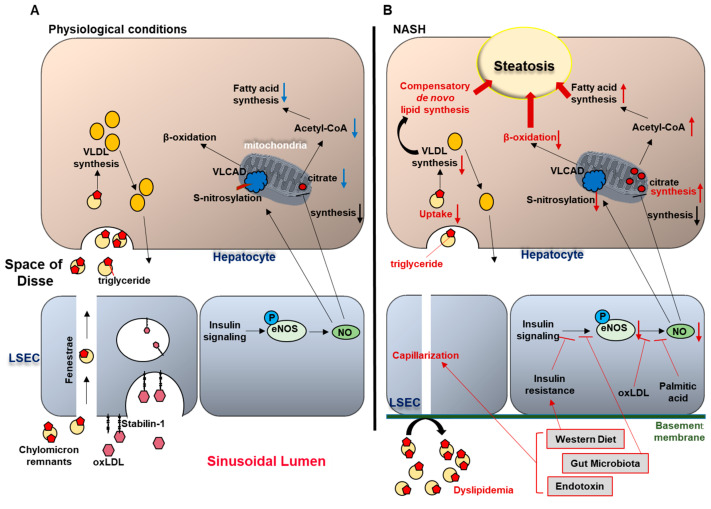
Nonalcoholic steatohepatitis (NASH) has become a growing public health problem worldwide, yet its pathophysiology remains unclear. Liver sinusoidal endothelial cells (LSEC) have unique morphology and function, and play a critical role in liver homeostasis. Emerging literature implicates LSEC in many pathological processes in the liver, including metabolic dysregulation, inflammation, angiogenesis, and carcinogenesis. In this review, we highlight the current knowledge of the role of LSEC in each of the progressive phases of NASH pathophysiology (steatosis, inflammation, fibrosis, and the development of hepatocellular carcinoma). We discuss processes that have important roles in NASH progression including the detrimental transformation of LSEC called "capillarization", production of inflammatory and profibrogenic mediators by LSEC as well as LSEC-mediated angiogenesis. The current review has a special emphasis on LSEC adhesion molecules, and their key role in the inflammatory response in NASH. Moreover, we discuss the pathogenic role of extracellular vesicles and their bioactive cargos in liver intercellular communication, inflammation, and fibrosis. Finally, we highlight LSEC-adhesion molecules and derived bioactive product as potential therapeutic targets for human NASH.
非酒精性脂肪性肝炎(NASH)已成为全球日益严重的公共卫生问题,但其病理生理学仍不清楚。肝窦内皮细胞(LSEC)具有独特的形态和功能,在肝脏内环境稳态中起关键作用。新出现的文献表明LSEC参与肝脏的许多病理过程,包括代谢失调、炎症、血管生成和致癌作用。在本综述中,我们重点介绍了目前关于LSEC在NASH病理生理学各进展阶段(脂肪变性、炎症、纤维化和肝细胞癌的发生)中作用的认识。我们讨论了在NASH进展中起重要作用的过程,包括LSEC的有害转变即“毛细血管化”、LSEC产生炎症和促纤维化介质以及LSEC介导的血管生成。本综述特别强调LSEC黏附分子及其在NASH炎症反应中的关键作用。此外,我们讨论了细胞外囊泡及其生物活性货物在肝脏细胞间通讯、炎症和纤维化中的致病作用。最后,我们强调LSEC黏附分子及其衍生的生物活性产物作为人类NASH潜在治疗靶点的重要性。