Department of Biochemistry, Institute for Biological Research "Siniša Stanković", National Institute of Republic of Serbia, University of Belgrade, 142 Despot Stefan Blvd, 11060 Belgrade, Serbia.
Department of Physiology, Institute for Biological Research "Siniša Stanković", National Institute of Republic of Serbia, University of Belgrade, 142 Despot Stefan Blvd, 11060 Belgrade, Serbia.
Nutrients. 2020 Nov 12;12(11):3470. doi: 10.3390/nu12113470.
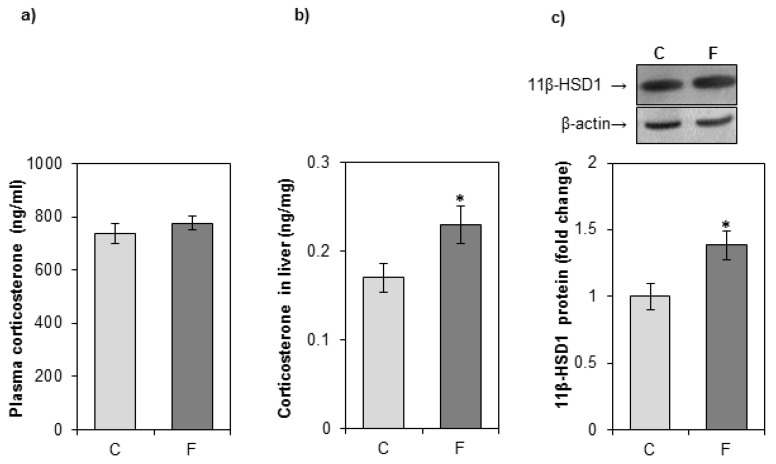
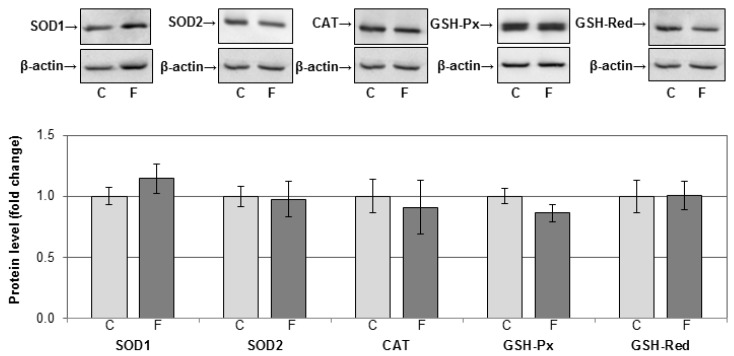
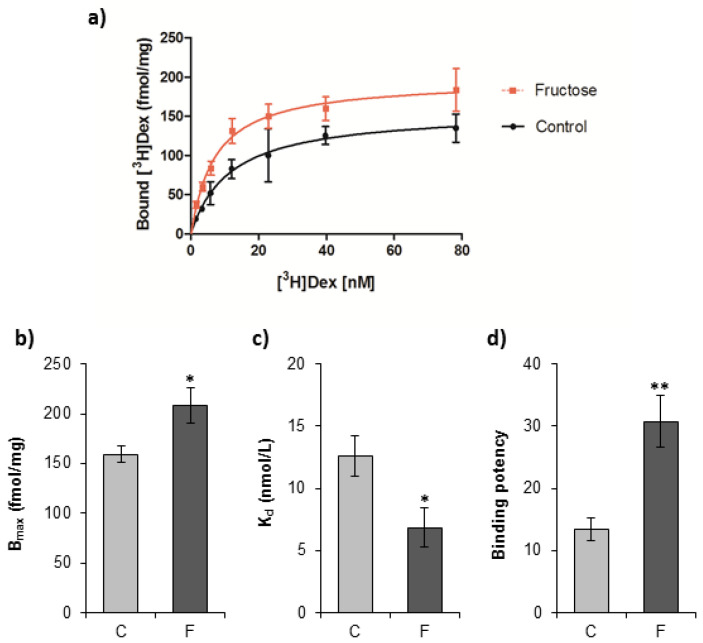
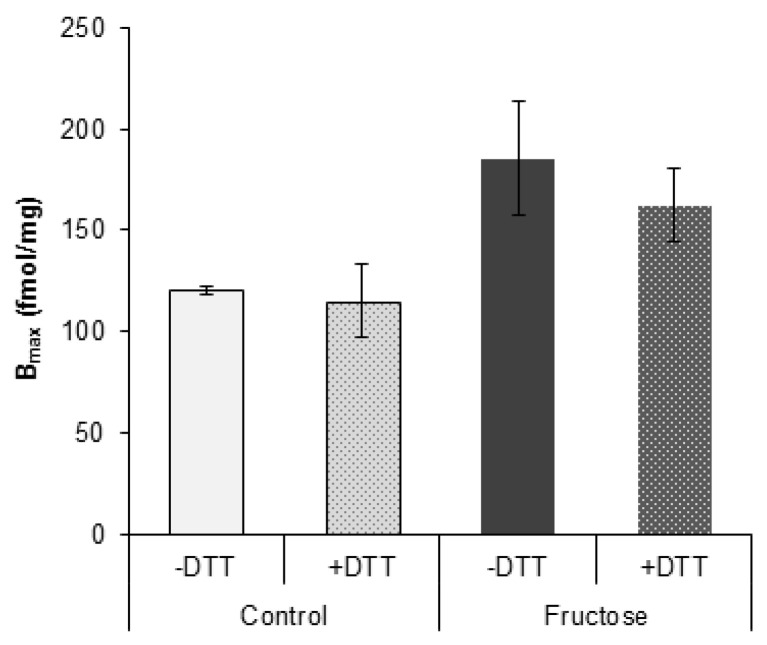
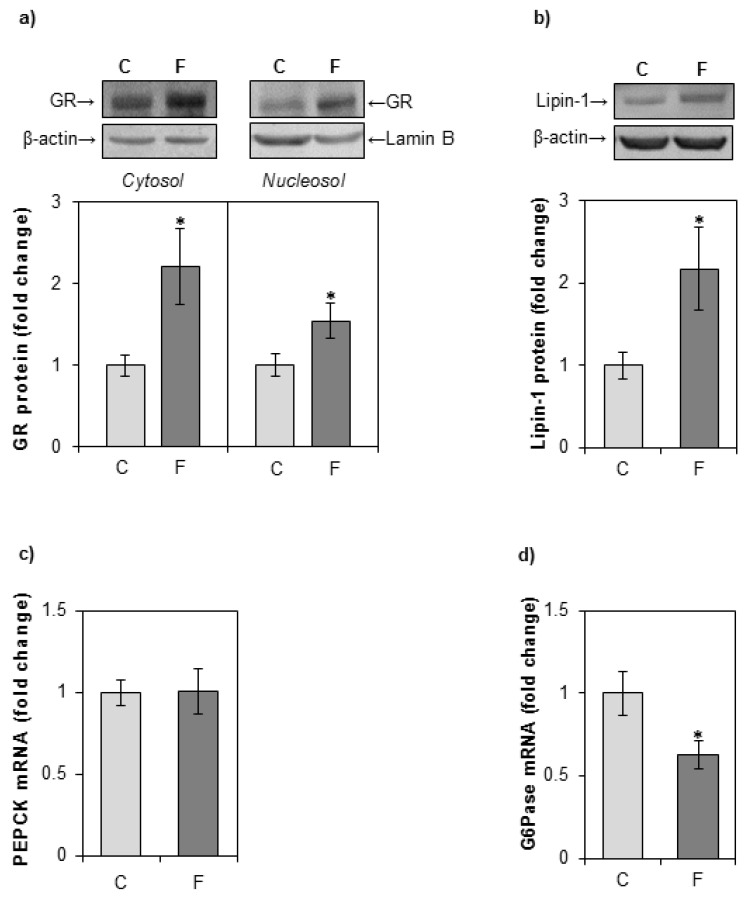
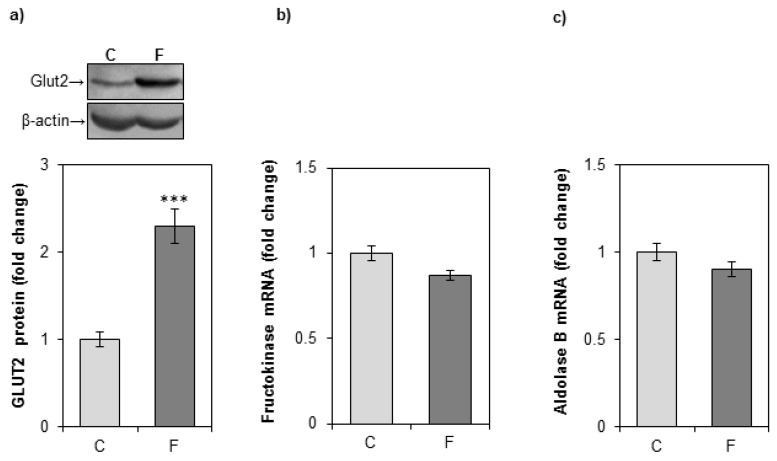
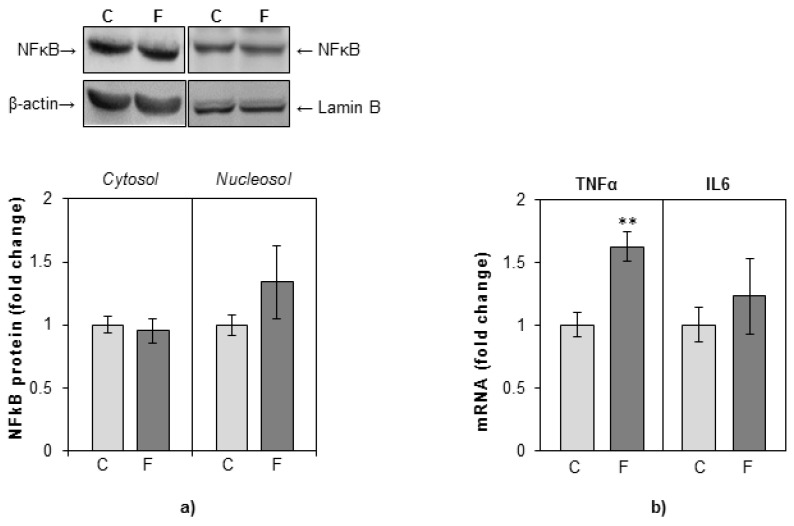
The effects of early-life fructose consumption on hepatic signaling pathways and their relation to the development of metabolic disorders in later life are not fully understood. To investigate whether fructose overconsumption at a young age induces alterations in glucocorticoid signaling that might contribute to development of metabolic disturbances, we analysed glucocorticoid receptor hormone-binding parameters and expression of its target genes involved in gluconeogenesis (phosphoenolpyruvate carboxykinase and glucose-6-phosphatase) and lipid metabolism (lipin-1), as well as redox and inflammatory status in the liver of female rats subjected to a fructose-rich diet immediately after weaning. The fructose diet increased hepatic corticosterone concentration, 11β-hydroxysteroid dehydrogenase type 1 level, glucocorticoid receptor protein level and hormone-binding activity, as well as lipin-1 level. The expression of glucose-6-phosphatase was reduced in fructose-fed rats, while phosphoenolpyruvate carboxykinase remained unaltered. The fructose-rich diet increased the level of fructose transporter GLUT2, while the expression of fructolytic enzymes fructokinase and aldolase B remained unaltered. The diet also affected pro-inflammatory pathways, but had no effect on the antioxidant defence system. In conclusion, a fructose-rich diet applied immediately after weaning promoted lipogenesis and enhanced hepatic glucocorticoid signaling, possibly to protect against inflammatory damage, but without an effect on gluconeogenesis and antioxidant enzymes. Yet, prolonged treatment might ultimately lead to more pronounced metabolic disturbances.
幼年时期果糖摄入对肝信号通路的影响及其与成年后代谢紊乱发生的关系尚不完全清楚。为了研究幼年时期果糖过度摄入是否会引起糖皮质激素信号的改变,而这种改变可能有助于代谢紊乱的发生,我们分析了糖皮质激素受体激素结合参数和参与糖异生(磷酸烯醇丙酮酸羧激酶和葡萄糖-6-磷酸酶)和脂代谢(脂联素-1)的靶基因的表达,以及易发生代谢紊乱的雌性大鼠肝脏中的氧化还原和炎症状态。在断奶后立即给予富含果糖的饮食后,果糖饮食增加了肝脏皮质酮浓度、11β-羟类固醇脱氢酶 1 水平、糖皮质激素受体蛋白水平和激素结合活性以及脂联素-1 水平。果糖喂养大鼠的葡萄糖-6-磷酸酶表达减少,而磷酸烯醇丙酮酸羧激酶保持不变。果糖丰富的饮食增加了果糖转运蛋白 GLUT2 的水平,而果糖激酶和醛缩酶 B 的表达保持不变。该饮食还影响了促炎途径,但对抗氧化防御系统没有影响。总之,在断奶后立即给予富含果糖的饮食会促进脂肪生成,并增强肝脏糖皮质激素信号,可能是为了防止炎症损伤,但对糖异生和抗氧化酶没有影响。然而,长期治疗最终可能会导致更明显的代谢紊乱。