Department of Urology, Gangnam Severance Hospital, Yonsei University College of Medicine, Seoul 06229, Korea.
Int J Mol Sci. 2020 Nov 12;21(22):8540. doi: 10.3390/ijms21228540.
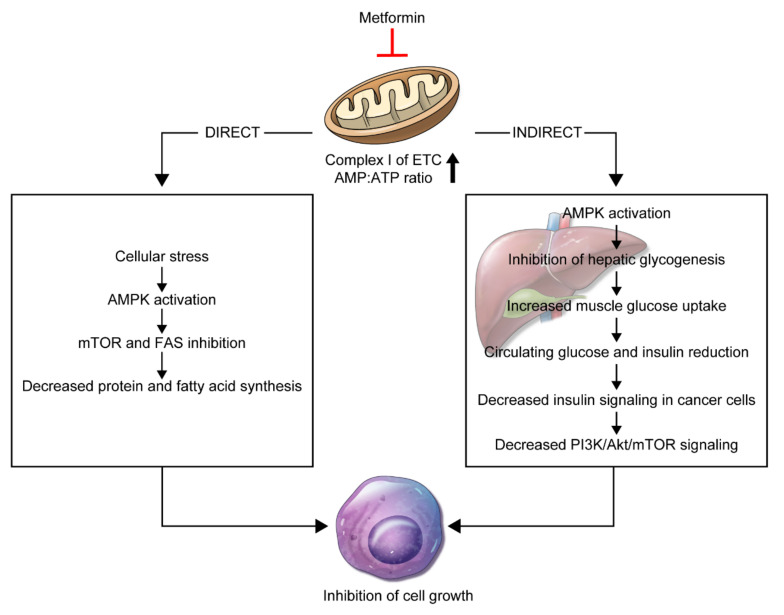
Metformin, an oral biguanide used for first-line treatment of type 2 diabetes mellitus, has attracted attention for its anti-proliferative and anti-cancer effects in several solid tumors, including prostate cancer (PCa). Liver kinase B1 (LKB1) and adenosine monophosphate-activated protein kinase (AMPK) activation, inhibition of the mammalian target of rapamycin (mTOR) activity and protein synthesis, induction of apoptosis and autophagy by p53 and p21, and decreased blood insulin level have been suggested as direct anti-cancer mechanisms of metformin. Research has shown that PCa development and progression are associated with metabolic syndrome and its components. Therefore, reduction in the risk of PCa and improvement in survival in metformin users may be the results of the direct anti-cancer mechanisms of the drug or the secondary effects from improvement of metabolic syndrome. In contrast, some research has suggested that there is no association between metformin use and PCa incidence or survival. In this comprehensive review, we summarize updated evidence on the relationship between metformin use and oncological effects in patients with PCa. We also highlight ongoing clinical trials evaluating metformin as an adjuvant therapy in novel drug combinations in various disease settings.
二甲双胍是一种用于治疗 2 型糖尿病的口服双胍类药物,它在几种实体肿瘤中,包括前列腺癌(PCa),具有抗增殖和抗癌作用,引起了人们的关注。肝激酶 B1(LKB1)和单磷酸腺苷激活蛋白激酶(AMPK)的激活、哺乳动物雷帕霉素靶蛋白(mTOR)活性和蛋白质合成的抑制、p53 和 p21 诱导的细胞凋亡和自噬,以及降低的血胰岛素水平被认为是二甲双胍的直接抗癌机制。研究表明,PCa 的发生和发展与代谢综合征及其成分有关。因此,二甲双胍使用者患 PCa 的风险降低和生存率提高可能是药物直接抗癌机制的结果,也可能是代谢综合征改善的继发效应。相比之下,一些研究表明,二甲双胍的使用与 PCa 的发病率或生存率之间没有关联。在这篇综合综述中,我们总结了关于二甲双胍使用与 PCa 患者肿瘤学效应之间关系的最新证据。我们还强调了正在进行的临床试验,评估二甲双胍作为各种疾病治疗中新型药物联合治疗的辅助疗法。