Faculty of Medicine, Dalhousie University, 1459 Oxford Street, Halifax, Nova Scotia, B3H 4R2, Canada.
Division of Otolaryngology - Head and Neck Surgery, Dalhousie University, Dickson Building, QEII Health Sciences Centre, 5820 University Avenue, Halifax, Nova Scotia, B3H 2Y9, Canada.
J Otolaryngol Head Neck Surg. 2020 Nov 16;49(1):78. doi: 10.1186/s40463-020-00469-8.
Distant metastasis in thyroid cancer significantly reduces survival in patients with well-differentiated thyroid carcinoma (WDTC). There is limited information available to clinicians regarding pathological features that confer a higher risk of distant metastasis (DM). This study aimed to identify patient and tumor factors that were associated with the development of DM over time in patients with WDTC.
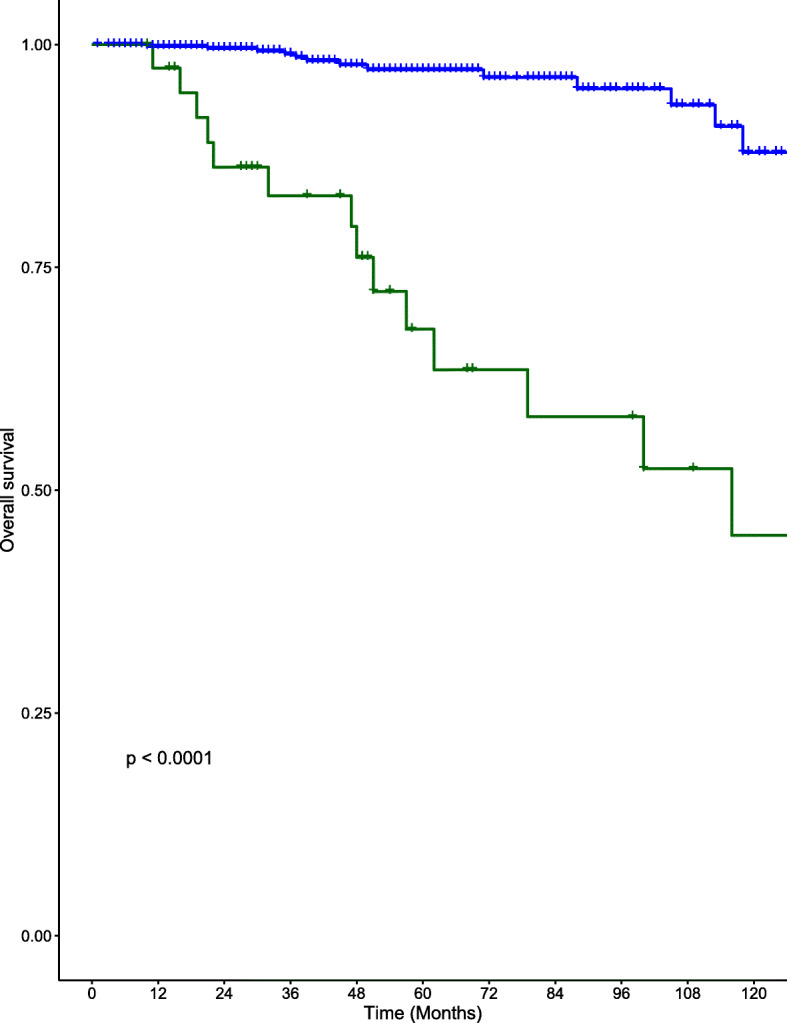
A retrospective cohort analysis of patients with WDTC (n = 584) at our institution was performed between 2007 and 2017. A total of 39 patients with DM and 529 patients with no DM (NDM) were included. Patient demographics, tumor characteristics and patient survival were compared between the DM and NDM groups using a univariate analysis. Multivariate Cox-proportional hazards model was used to evaluate the risk of developing distant metastasis over time. Kaplan-Meier analysis was used to compare survival between the DM and NDM groups.
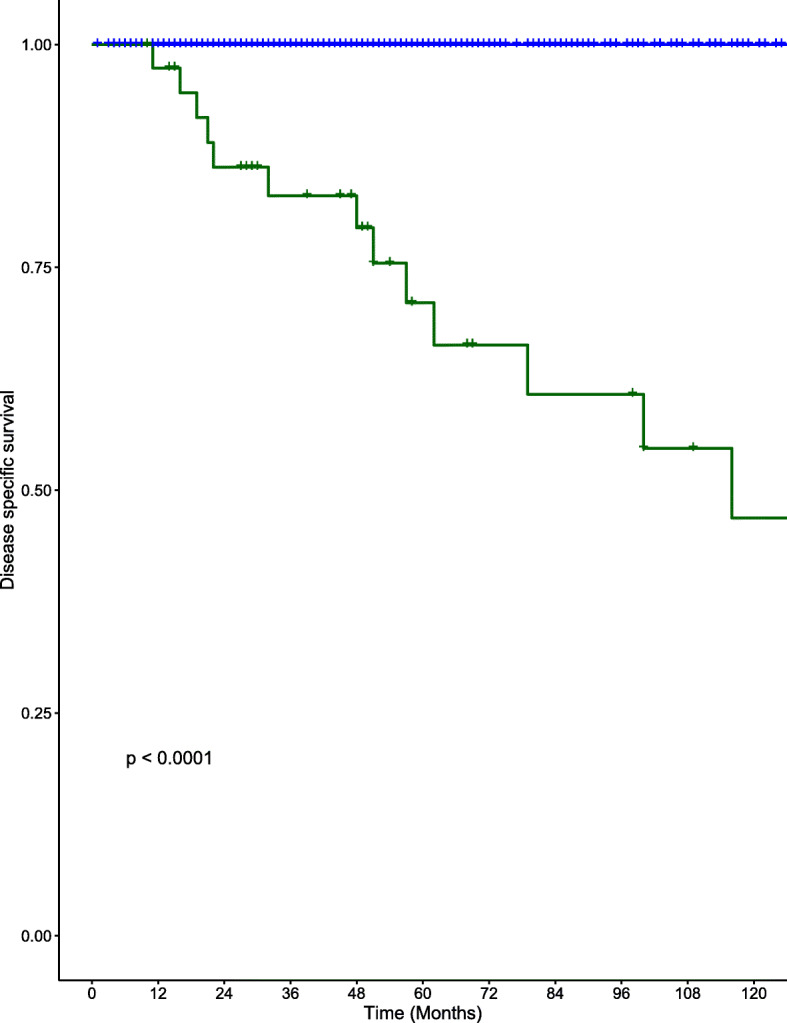
Distant metastasis had a substantial impact on disease-specific survival (DSS) at 5 and 10-years in the DM group; 71.0% (SE 8.4%) and 46.9% (SE 11.6%) respectively, compared to 100% survival in the NDM group (p < 0.001). The DM group had significantly higher proportions of males, lymphovascular invasion (LVI), nodal metastasis (NM), large tumor size (TS), extrathyroidal extension (ETE), positive resection margins, multifocality, follicular thyroid cancer (FTC), tall cell variant of papillary thyroid cancer (PTC), and Hurthle cell carcinoma (HCC), when compared to the NDM group (p < 0.05). A TS ≥ 2 cm (Hazard Ratio (HR) 1.370), NM (HR 3.806) and FTC (HR 7.068) were associated with a significantly increased hazard of developing distant metastasis in patients with WDTC.
TS ≥ 2 cm, NM and FTC are associated with a significantly increased propensity for developing DM in our cohort of WDTC patients.
甲状腺癌远处转移显著降低分化型甲状腺癌(WDTC)患者的生存率。对于哪些病理特征会增加远处转移(DM)风险,临床医生获得的信息有限。本研究旨在确定 WDTC 患者随时间发展 DM 的相关患者和肿瘤因素。
对我院 2007 年至 2017 年间的 WDTC 患者进行回顾性队列分析。共纳入 39 例 DM 患者和 529 例无 DM(NDM)患者。采用单因素分析比较 DM 组和 NDM 组患者的人口统计学特征、肿瘤特征和患者生存情况。采用多变量 Cox 比例风险模型评估随时间发生远处转移的风险。Kaplan-Meier 分析用于比较 DM 组和 NDM 组之间的生存情况。
DM 组患者的远处转移对疾病特异性生存(DSS)有显著影响,5 年和 10 年的 DSS 分别为 71.0%(SE 8.4%)和 46.9%(SE 11.6%),而 NDM 组患者的 DSS 为 100%(p<0.001)。与 NDM 组相比,DM 组男性、血管淋巴管侵犯(LVI)、淋巴结转移(NM)、肿瘤较大(TS)、甲状腺外侵犯(ETE)、切缘阳性、多灶性、滤泡状甲状腺癌(FTC)、甲状腺乳头状癌高细胞变异型(PTC)和 Hurthle 细胞癌(HCC)的比例显著更高(p<0.05)。TS≥2cm(危险比(HR)1.370)、NM(HR 3.806)和 FTC(HR 7.068)与 WDTC 患者发生远处转移的风险显著增加相关。
在我们的 WDTC 患者队列中,TS≥2cm、NM 和 FTC 与发生 DM 的风险显著增加相关。