QIMR Berghofer Medical Research Institute, Herston, Queensland, Australia
The University of Queensland, Brisbane, Queensland, Australia.
Antimicrob Agents Chemother. 2021 Jan 20;65(2). doi: 10.1128/AAC.01423-20.
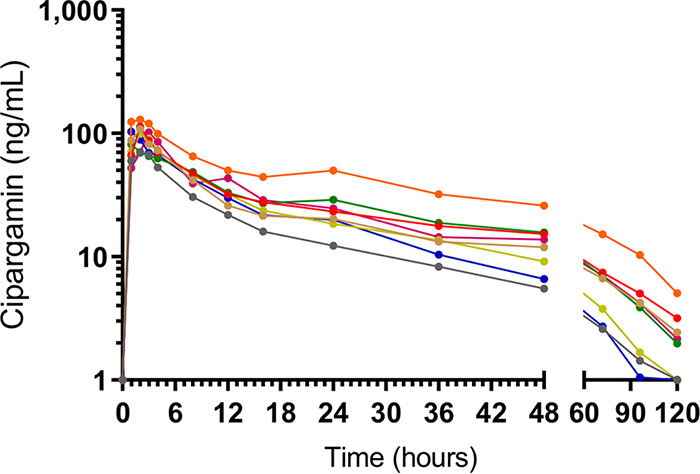
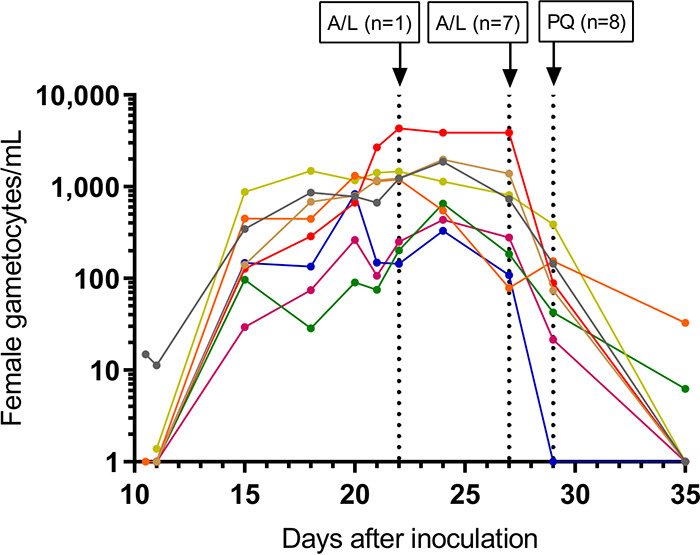
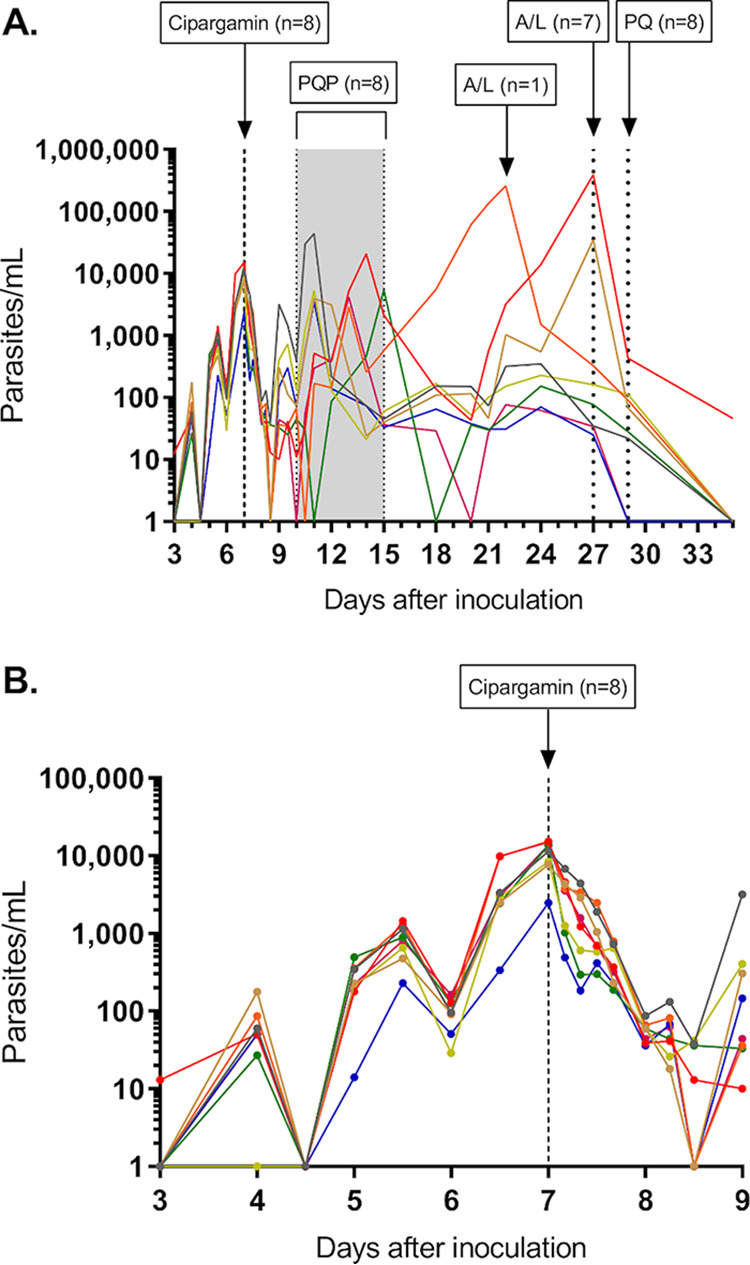
The spiroindolone cipargamin, a new antimalarial compound that inhibits ATP4, is currently in clinical development. This study aimed to characterize the antimalarial activity of cipargamin in healthy volunteers experimentally infected with blood-stage Eight subjects were intravenously inoculated with parasite-infected erythrocytes and received a single oral dose of 10 mg cipargamin 7 days later. Blood samples were collected to monitor the development and clearance of parasitemia and plasma cipargamin concentrations. Parasite regrowth was treated with piperaquine monotherapy to clear asexual parasites, while allowing gametocyte transmissibility to mosquitoes to be investigated. An initial rapid decrease in parasitemia occurred in all participants following cipargamin dosing, with a parasite clearance half-life of 3.99 h. As anticipated from the dose selected, parasite regrowth occurred in all 8 subjects 3 to 8 days after dosing and allowed the pharmacokinetic/pharmacodynamic relationship to be determined. Based on the limited data from the single subtherapeutic dose cohort, a MIC of 11.6 ng/ml and minimum parasiticidal concentration that achieves 90% of maximum effect of 23.5 ng/ml were estimated, and a single 95-mg dose (95% confidence interval [CI], 50 to 270) was predicted to clear 10 parasites/ml. Low gametocyte densities were detected in all subjects following piperaquine treatment, which did not transmit to mosquitoes. Serious adverse liver function changes were observed in three subjects, which led to premature study termination. The antimalarial activity characterized in this study supports the further clinical development of cipargamin as a new treatment for malaria, although the hepatic safety profile of the compound warrants further evaluation. (This study has been registered at ClinicalTrials.gov under identifier NCT02543086.).
螺旋吲哚酮类化合物西泊加敏,一种新的抗疟化合物,可抑制 ATP4,目前正在临床开发中。本研究旨在描述健康志愿者中实验性感染血期疟原虫后西泊加敏的抗疟活性。
八名志愿者经静脉接种寄生虫感染的红细胞,并在 7 天后口服单剂量 10mg 西泊加敏。采集血样以监测寄生虫血症的发展和清除以及西泊加敏的血浆浓度。用哌喹单药治疗寄生虫再生长以清除无性体寄生虫,同时允许调查配子体向蚊子的传播能力。
西泊加敏给药后,所有参与者的寄生虫血症均迅速下降,寄生虫清除半衰期为 3.99 小时。正如预期的那样,从所选剂量来看,所有 8 名参与者在给药后 3 至 8 天内寄生虫再生长,并确定了药代动力学/药效学关系。基于单次亚治疗剂量队列的有限数据,估计 MIC 为 11.6ng/ml,实现最大效应 90%的最小杀寄生虫浓度为 23.5ng/ml,预测单次 95mg 剂量(95%置信区间 [CI],50 至 270)可清除 10 个寄生虫/ml。在所有接受哌喹治疗的患者中,均检测到低水平的配子体密度,但未传播给蚊子。在三名患者中观察到严重的肝功能变化不良,导致研究提前终止。
在本研究中描述的抗疟活性支持进一步开发西泊加敏作为疟疾的新治疗方法,尽管该化合物的肝安全性概况需要进一步评估。(本研究已在 ClinicalTrials.gov 上注册,标识符为 NCT02543086。)